Joe Adonis: The Charming Prince of the Underworld
Joe Adonis loved luxury the way some gangsters loved violence.
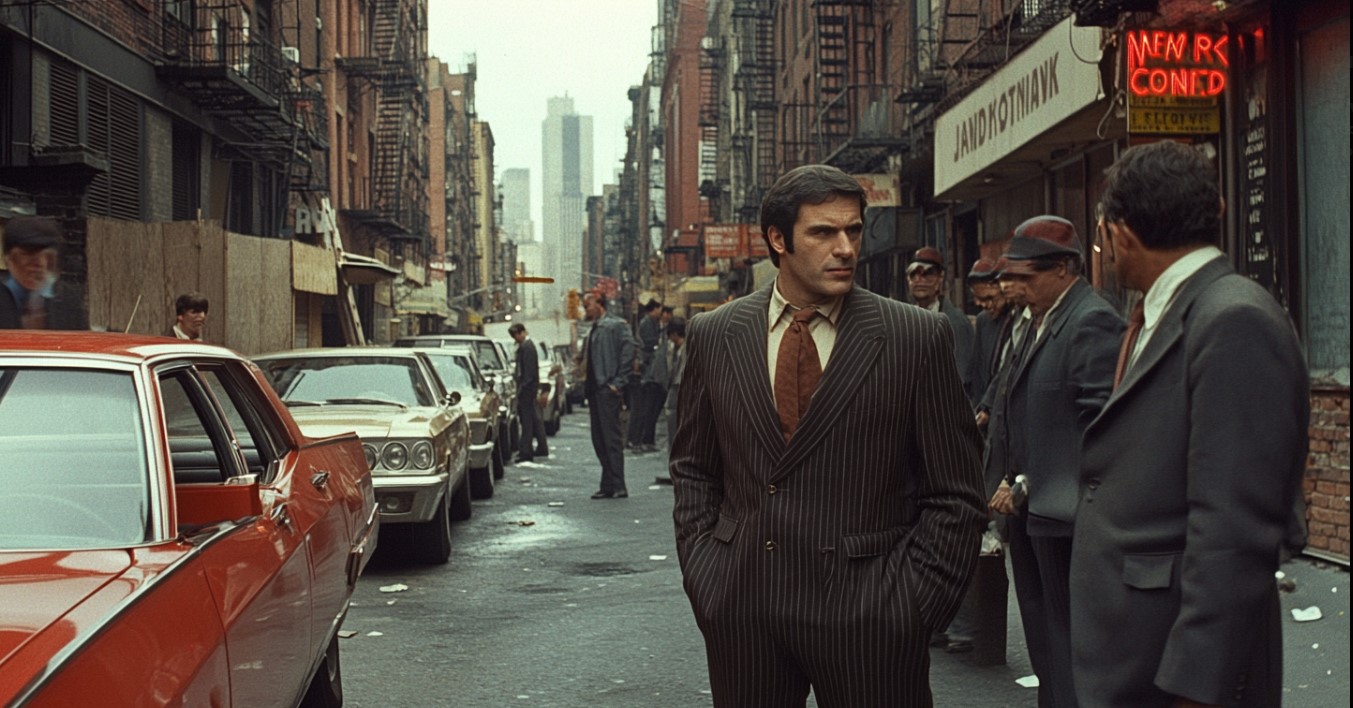
Silk suits. Imported cigars. Champagne. Nightclubs glowing beneath Manhattan neon. Expensive women. Faster cars. Better restaurants. Joe Adonis moved through the American underworld less like a street thug and more like a prince who believed elegance itself was a form of power.
Behind the polished image stood one of the most influential gangsters of the twentieth century.
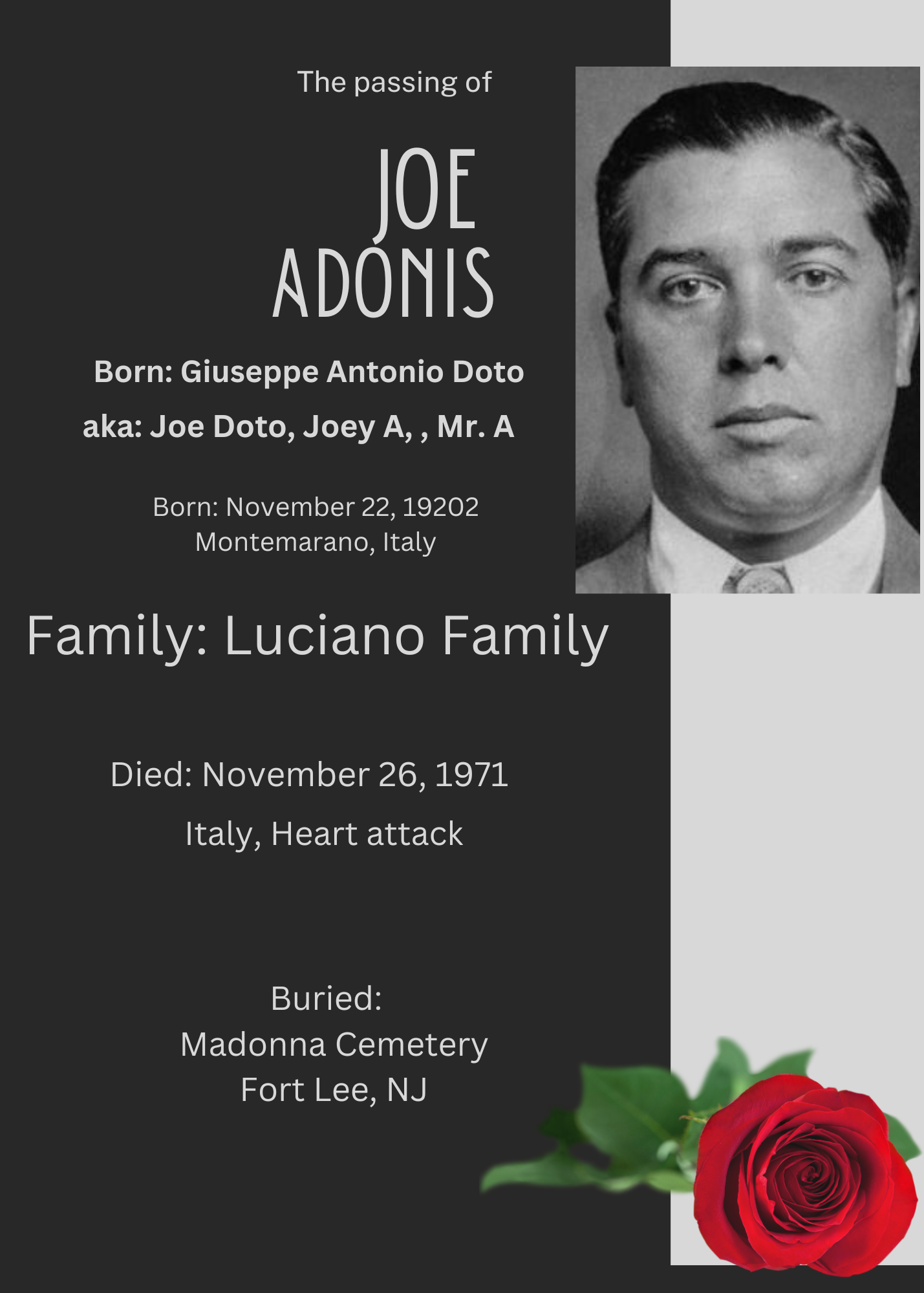
Born Giuseppe Antonio Doto and later known publicly as Joe Adonis, he became a central figure in the transformation of organized crime during Prohibition and the decades that followed. He worked beside men like Charles “Lucky” Luciano, Frank Costello, and Meyer Lansky during the creation of the modern national syndicate.
Adonis was not remembered primarily for brutality, though violence surrounded him constantly.
He was remembered for sophistication.
He cultivated the image of a man who had already won.
From Naples to New Jersey
Joe Adonis was born Giuseppe Antonio Doto in 1902 near Naples, Italy. His family immigrated to the United States while he was still a child, eventually settling in New Jersey among growing Italian immigrant communities shaped by poverty, labor exploitation, and political corruption.
Like many young immigrants during the era, Doto found that legitimate opportunities moved slowly while criminal opportunities moved fast.
Street gangs offered money, protection, and status unavailable elsewhere.
By his teenage years, Doto had entered organized crime circles connected to gambling, theft, extortion, and bootlegging operations. He quickly developed friendships with rising underworld figures including Luciano and future Mafia leaders connected to New York’s expanding criminal landscape.
At some point, he adopted the name “Joe Adonis,” reportedly inspired by the handsome figure from Greek mythology.
The choice reflected his personality perfectly.
He understood image instinctively.
Prohibition and the Luciano Generation
The arrival of Prohibition in 1920 transformed organized crime into one of the largest underground industries in American history. Illegal liquor generated fortunes while corrupt politicians and police officers quietly protected the flow of money.
Adonis thrived during the period.
He became heavily involved in bootlegging operations connected to Luciano’s growing criminal organization. Unlike old-world Mafia bosses obsessed with rigid Sicilian traditions, Luciano’s generation embraced modernization, cooperation, and national expansion.
Adonis fit naturally into that environment.
He socialized comfortably with Italians, Jews, Irish gangsters, businessmen, entertainers, and politicians alike. He projected charm instead of menace, though few doubted his willingness to use violence when necessary.
Underneath the expensive suits remained a hardened criminal shaped by brutal streets.
During the violent Castellammarese War of the early 1930s, Luciano and his allies moved against old-style Mafia bosses like Giuseppe “Joe the Boss” Masseria and Salvatore Maranzano.
Adonis aligned himself firmly with Luciano’s faction.
When Luciano reorganized organized crime through The Commission after the war, Adonis emerged as one of the important national syndicate figures benefiting from the new structure.
The Mafia was becoming corporate.
Adonis looked perfectly suited for the boardroom.
Gambling, Nightclubs, and the High Life
Unlike gangsters who preferred staying hidden in neighborhood social clubs, Adonis embraced luxury openly.
He became deeply connected to gambling operations, high-end nightclubs, illegal casinos, and entertainment venues throughout New York and New Jersey. Wealthy politicians, athletes, entertainers, and businessmen frequently crossed paths with organized crime figures in these glamorous environments.
Adonis excelled socially.
He possessed movie-star looks, confidence, and polished manners unusual among stereotypical gangsters. Reporters often described him as suave, elegant, and cultured. Women found him magnetic. Public fascination with celebrity gangsters during the 1930s and 1940s only amplified his reputation.
Yet beneath the glamour remained organized crime’s harsher realities.
Gambling rackets depended on intimidation, corruption, and violence. Competitors disappeared. Witnesses stayed silent. Police officers accepted envelopes. Judges looked away.
Men like Adonis operated successfully because entire systems around them were compromised.
He understood how deeply corruption reached into American institutions.
And he profited from it.
Hollywood Connections and Public Fascination
Adonis became one of the earliest gangsters to cultivate celebrity culture aggressively.
He attended elite parties, socialized with entertainers, and developed a reputation as a sophisticated underworld figure rather than a street-level thug. Hollywood during the era often romanticized gangsters, especially those who projected style and charisma.
Adonis encouraged the mythology.
He dressed impeccably, frequented luxury establishments, and carried himself with aristocratic confidence. Newspaper photographers loved him because he looked more like a leading actor than a Mafia executive.
But visibility created danger.
Older Mafia bosses valued secrecy because secrecy protected survival. The more famous organized crime figures became, the more aggressively politicians and prosecutors pursued them.
Adonis sometimes seemed too comfortable under the spotlight.
The Kefauver Hearings and National Exposure
By the early 1950s, public concern about organized crime exploded during the televised Kefauver Hearings led by Senator Estes Kefauver.
The hearings exposed organized crime to millions of Americans watching television.
Adonis became one of the era’s recognizable underworld faces.
Federal investigators portrayed him as part of a national criminal syndicate controlling gambling, corruption, and interstate rackets. While the Mafia had operated for decades partly in shadows, the hearings dragged major gangsters into public view dramatically.
Adonis disliked the scrutiny intensely.
Unlike some gangsters who enjoyed defying investigators publicly, he understood the long-term danger of government attention. The hearings marked a turning point in federal attitudes toward organized crime.
The era of political denial was ending.
Washington could no longer pretend the Mafia did not exist.
Deportation and Exile
Despite years of influence and wealth, Adonis carried a vulnerability many immigrant gangsters feared constantly: deportation.
Federal authorities eventually targeted him aggressively on immigration grounds. Though he had spent most of his life in America, Adonis never became a U.S. citizen.
That mistake proved catastrophic.
In 1956, after prolonged legal battles and mounting government pressure, Adonis was deported to Italy.
The punishment devastated him.
For men like Adonis, America represented not only wealth but identity. He had helped shape American organized crime, American nightlife, and American gambling culture. Exile felt like erasure.
Italy no longer truly belonged to him.
But America no longer wanted him either.
He settled uneasily in Milan and later Naples, reportedly struggling emotionally with isolation and declining influence. The glamorous underworld prince who once dominated New York nightlife suddenly found himself aging far from the empire he helped build.
The exile exposed something gangsters rarely admitted publicly:
Power is often geographic.
Remove a man from his territory, and much of his influence evaporates.
Death and the End of an Era
Joe Adonis died in Italy in 1971 from a heart attack while in a barber shop.
The ending felt strangely quiet for a man who had lived so publicly for decades.
By then, organized crime itself had evolved again. The old Prohibition generation was fading. New federal laws, surveillance techniques, wiretaps, and organized crime prosecutions increasingly targeted the Mafia’s infrastructure.
The glamorous nightclub era of gangster celebrity was disappearing.
Still, Adonis left a lasting imprint on American organized crime culture.
The Legacy of Joe Adonis
Joe Adonis represented the polished face of the early national syndicate era.
He was not merely a gangster.
He was part socialite, part businessman, part celebrity, and part political operator moving through an America intoxicated by wealth, nightlife, and corruption during the mid-twentieth century.
Unlike colder strategists such as Meyer Lansky or ruthless power-seekers like Vito Genovese, Adonis built influence partly through charm and image.
But charm alone never sustains organized crime.
Behind every glamorous nightclub stood extortion.
Behind every elegant gambling room stood intimidation.
Behind every smiling photograph stood violence waiting quietly in the background.
Joe Adonis understood how to sell the illusion of sophistication while operating inside one of America’s most ruthless criminal systems. He embodied a moment when organized crime dressed itself in tailored suits and moved confidently beside politicians, celebrities, and businessmen under the glow of Manhattan nightlife.
For a while, he made the underworld look glamorous.
That glamour concealed the darkness underneath.
Buried at: Madonna Cemetery and Mausoleum, Fort Lee, NJ