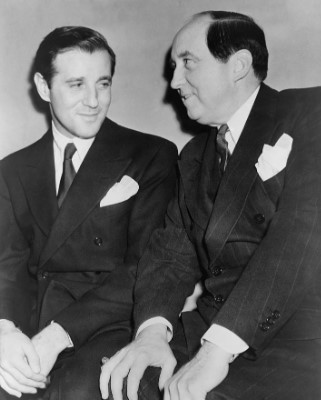
Jerry Giesler: Hollywood’s Defender and Bugsy Siegel’s Lifeline
Article 3 of a 5-part series: “Mob Mouthpieces: The Lawyers Who Danced with the Devil”
In Los Angeles, reputation was often more valuable than truth.
The city ran on image. Movie studios manufactured fantasy, publicists repaired scandal, and powerful men learned that appearances could be every bit as important as reality. When legal trouble threatened to destroy carefully constructed careers, one attorney stood above all others. His name was Jerry Giesler.
For decades, Giesler served as Hollywood’s premier criminal defense lawyer. His clients included actors, directors, producers, and celebrities whose personal troubles generated front-page headlines. He became known as the man who could navigate the intersection of law, publicity, and public opinion better than almost anyone in America.
Yet among the movie stars and socialites who filled his client roster, one name stood apart from the rest.
Benjamin “Bugsy” Siegel was not a celebrity created by Hollywood. He was a celebrity created by organized crime.
When Giesler agreed to defend him, he entered a world where violence lurked behind glamour, where fortunes were built on illegal enterprises, and where attorney-client privilege became one more layer of secrecy surrounding one of America’s most notorious gangsters.
The relationship between lawyer and mobster would reveal the uncomfortable tension that exists whenever a gifted attorney represents a man whose reputation has become larger than life.
The Gangster Who Craved the Spotlight
Most organized crime figures preferred to operate in the shadows.
They accumulated power quietly, avoided publicity whenever possible, and relied upon fear rather than fame to maintain control. Bugsy Siegel was different. Handsome, charismatic, and impeccably dressed, he enjoyed attention. He socialized with actors and actresses, attended elite parties, and cultivated friendships with influential people throughout Southern California.
To many observers, he appeared more like a movie star than a gangster.
The image was misleading.
Before arriving in California, Siegel had built a reputation as one of the most feared and violent figures in organized crime. He rose through the ranks alongside powerful underworld figures such as Meyer Lansky and Charles Luciano. Law enforcement agencies connected him to gambling operations, extortion schemes, labor racketeering, and numerous acts of violence, although convictions remained frustratingly rare.
That inability to secure convictions became part of his legend.
Newspaper readers saw a man who seemed immune to consequences. Investigators suspected him of crimes they could rarely prove. The public viewed him as a dangerous outlaw wrapped in the trappings of wealth and sophistication.
By the early 1940s, Bugsy Siegel had become one of the most recognizable gangsters in America, and recognition brought legal scrutiny.
Enter Jerry Giesler
Jerry Giesler built his reputation on defending high-profile clients whose names already carried enormous public weight. He possessed a calm courtroom demeanor, a sharp legal mind, and an extraordinary ability to dismantle a prosecutor’s case. Unlike attorneys who relied upon theatrics, Giesler projected confidence through preparation and precision.
That skill set made him valuable to celebrities.
It also made him valuable to mobsters.
When Siegel found himself facing serious legal jeopardy, Giesler offered something beyond legal representation. He offered credibility. A defendant represented by a little-known attorney looked like a criminal fighting for survival. A defendant represented by Jerry Giesler looked like someone entitled to the full protections of the legal system.
For organized crime figures seeking respectability, that distinction mattered.
Gangsters have always understood the power of appearances. They wore expensive suits, bought luxurious homes, and surrounded themselves with symbols of legitimacy. Hiring one of California’s most respected defense attorneys fit neatly into that strategy.
Whether intentionally or not, Giesler helped place a veneer of respectability over a man whose reputation was built upon violence and intimidation.
The Greenberg Murder Trial
The defining chapter of Giesler’s relationship with Siegel emerged in 1944 when authorities charged the gangster with the murder of Harry Greenberg.
Greenberg, a former associate, had been gunned down in what appeared to be a classic underworld execution. The case attracted enormous attention because prosecutors believed they finally had an opportunity to convict one of the nation’s most infamous mobsters.
For law enforcement, the trial represented more than a murder prosecution. It represented a chance to demonstrate that organized crime figures could be held accountable despite their wealth, influence, and intimidation tactics.
Giesler approached the case with a straightforward objective.
He did not need to prove that Siegel was innocent. He only needed to show that the prosecution could not prove guilt beyond a reasonable doubt.
Witness testimony became the focal point of the trial. Credibility was challenged. Contradictions were highlighted. Inconsistencies were carefully exposed before the jury. Piece by piece, Giesler weakened the prosecution’s narrative until certainty became difficult to achieve.
The strategy worked.
Siegel was acquitted.
To Giesler, the verdict represented a successful defense based upon the fundamental principles of the American legal system. To many members of the public, however, the outcome looked very different. They saw another notorious gangster walk out of a courtroom untouched.
The acquittal preserved more than Siegel’s freedom.
It reinforced his growing mythology as a criminal figure who could never be brought to justice.
When Defense Becomes Legend
Every criminal defendant is entitled to legal representation.
The principle is among the most important foundations of American justice. Without it, unpopular defendants would be denied fair trials, constitutional protections would become conditional, and guilt would be determined by reputation rather than evidence.
Jerry Giesler understood that principle completely.
The difficulty arises when the client has already become a cultural symbol.
Bugsy Siegel was no ordinary defendant. Newspapers covered his activities with fascination. Reporters chronicled his romances and business ventures. Hollywood embraced his image as a sophisticated outlaw. By the time he entered a courtroom, much of the public had already formed opinions about who he was.
Every legal victory therefore carried consequences beyond the courtroom.
Each acquittal strengthened the perception that Siegel was untouchable. Every successful defense enhanced the mystique surrounding his name. The more authorities failed to convict him, the larger the legend became.
Giesler did not create that legend, but his courtroom victories undeniably became part of it.
The attorney defended a client. History remembers that he also helped preserve a myth.
Privilege and the Underworld
Attorney-client privilege exists to protect honesty.
Clients must be free to discuss their circumstances openly with counsel if attorneys are to provide effective representation. The privilege encourages transparency and safeguards the constitutional right to a fair defense.
When the client is a powerful organized crime figure, however, the relationship takes on additional complexity.
Organized crime depends upon secrecy. Information has value, and knowledge can become dangerous. Lawyers often find themselves in possession of details that remain forever hidden from public view. They hear stories, explanations, suspicions, and fears that never appear in court records.
There is no evidence that Jerry Giesler crossed ethical boundaries or knowingly facilitated criminal enterprises. His reputation remained largely intact throughout his career, and he was widely respected within the legal profession.
Yet his representation of Siegel demonstrates how proximity itself can become significant.
A lawyer does not have to participate in criminal activity to become part of its history. Sometimes merely standing beside a notorious figure during pivotal moments is enough to secure a place in the narrative.
Hollywood and Organized Crime
Los Angeles in the 1940s provided fertile ground for blurred boundaries.
The entertainment industry revolved around image management, while organized crime increasingly sought legitimacy through business ventures, political connections, and social influence. Both worlds understood the importance of storytelling. Both relied heavily upon public perception.
Bugsy Siegel moved comfortably between those environments. He attended celebrity gatherings, invested in business projects, and cultivated relationships with influential people. His ambition extended beyond traditional criminal enterprises. He wanted acceptance, status, and recognition.
Jerry Giesler occupied a similarly unique position.
As Hollywood’s premier defense attorney, he regularly represented clients whose reputations required protection. He understood the mechanics of public image perhaps better than any lawyer of his generation.
When attorney and gangster crossed paths, the relationship became a fascinating reflection of Los Angeles itself—a city where reality and performance often became difficult to separate.
The End of Bugsy
On June 20, 1947, Bugsy Siegel was sitting inside a Beverly Hills home when a gunman opened fire through a window.
The attack was swift and devastating. Siegel died almost instantly. Although the murder officially remains unsolved, historians generally believe organized crime leaders ordered the killing after becoming dissatisfied with financial losses associated with the Flamingo Hotel in Las Vegas.
The irony was impossible to ignore.
The man who had survived investigations, prosecutions, and years of underworld conflict ultimately fell victim to the same criminal world that had elevated him.
His death ended a life, but it did not end the legend.
Books, films, documentaries, and television programs continued to transform Siegel into a cultural icon. The gangster became part of American folklore, and the courtroom victories that helped sustain his reputation became part of that story.
The Gentleman and the Gangster
Jerry Giesler never served organized crime. He never attended Mafia meetings, brokered criminal alliances, or operated as an adviser to underworld bosses. His role was far simpler and far more complicated at the same time.
He was a defense attorney doing his job.
He stood between the government and his client. He challenged evidence. He protected constitutional rights. He demanded that prosecutors meet their burden of proof.
Those responsibilities form the foundation of American justice.
Yet history often judges outcomes more than intentions. When Bugsy Siegel walked free after the Greenberg murder trial, many Americans did not see a triumph of due process. They saw another gangster escape accountability.
That perception remains part of Giesler’s legacy.
In the noir world of organized crime history, lawyers rarely carry guns and seldom participate directly in violence. Their influence operates differently. They shape narratives, challenge accusations, and sometimes help preserve the public image of men whose reputations are built on fear.
Jerry Giesler represented a man.
History remembers that he helped defend a legend.
The distinction is subtle, but it remains one of the most enduring ethical questions surrounding attorneys who choose to stand beside notorious clients.
References
Jerry Giesler — Jerry Giesler’s Famous Criminal Cases (1954); Los Angeles Times archives; California State Bar historical records.
Benjamin “Bugsy” Siegel — Federal Bureau of Investigation organized crime files; Nevada gaming history records; Los Angeles Police Department historical investigations.
Harry Greenberg Murder Trial — Los Angeles County Superior Court records; Associated Press coverage; Los Angeles Times archives.
Organized Crime in California — California Department of Justice historical reports; FBI organized crime records.
Las Vegas and the Flamingo Hotel — Nevada State Archives; gaming industry historical histories; biographies of Bugsy Siegel and Meyer Lansky.
Attorney–Client Privilege — American Bar Association ethics opinions; legal scholarship regarding criminal defense representation and professional responsibility.