The Westies’ Union Wars: When Labor Racketeering Turned Hell’s Kitchen Into a Mob Paycheck
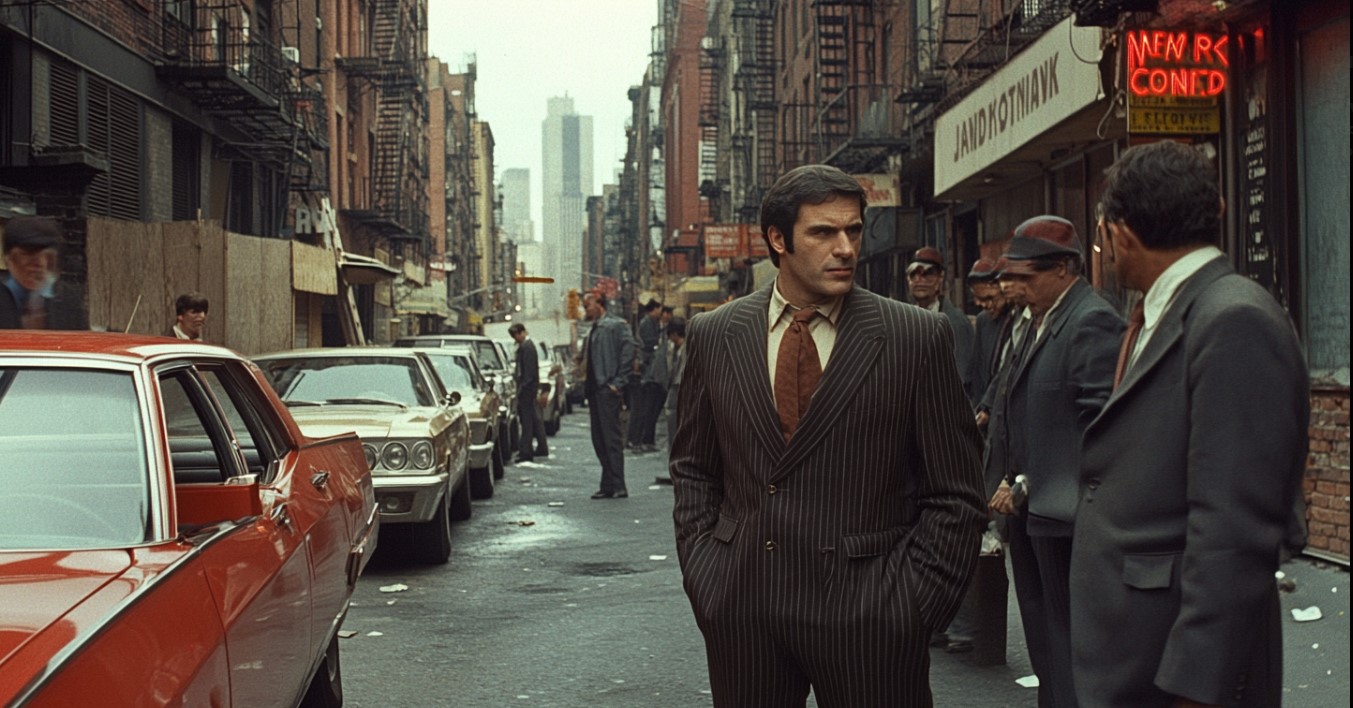
Hell’s Kitchen was a neighborhood where a man could lose his money at a card table, his business to a loanshark, or his life to a gangster. But during the Westies’ reign, there was another way to get robbed. You could lose your job. You could lose your union card.
Or you could discover that the job you thought belonged to you had already been promised to somebody else.
The Westies understood something that is sometimes overlooked when their history is reduced to murders, dismemberment and the notorious “Houdini” disappearances: violence was a tool for making money, not the business itself.
Their criminal enterprise centered on loansharking, narcotics, labor-union extortion and control of the West Side piers. The federal courts later described the Westies as an organized-crime enterprise that extorted jobs and payments from several labor unions and controlled criminal activity on the waterfront.
Hell’s Kitchen wasn’t merely territory. It was a paycheck. And Jimmy Coonan wanted his cut.
| Jimmy Coonan vs. the Five Families: The Irish Gangser Who Refused to Kneel |
The Business Behind the Bullets
By the 1970s, Hell’s Kitchen was changing. The old waterfront economy was weakening, neighborhoods were being redeveloped and enormous sums of money were moving through construction, transportation and entertainment. Every new project created another opportunity for somebody to take a percentage.
The Westies wanted those percentages. Their methods were not particularly complicated.
Control the union. Control the jobs. Control who gets hired. Control who gets paid. Then collect.
The federal government’s case against the Westies eventually established that the organization exercised control over criminal activities on the West Side piers and extorted jobs and payments from labor unions.
That is the important part of the story. The Westies did not need to own a construction company to profit from construction. They needed influence over the people who controlled the workers.
| The Westies “Houdini” Murders: How Hell’s Kitchen Made Bodies Disappear |
The Union Card Was Worth Money
A union card could mean access to employment. For a working man in New York, that could mean everything. The Westies discovered that a union membership could also become a criminal commodity.
The most striking example involved Local 817 of the International Brotherhood of Teamsters, known as the Theatrical Teamsters. Its members worked in the entertainment industry, including transporting movie and television production equipment around New York City. The union’s office had been located at Ninth Avenue and Forty-Second Street, directly in the Hell’s Kitchen area, before moving to Long Island.
The Westies wanted members. And they wanted jobs.
Federal court records later described how the gang extorted union memberships and employment opportunities from Local 817 during the 1980s. When the union president told Coonan and James McElroy that the membership rolls were full, the response was a threat: kill one member a week until enough positions became available.
That was not a negotiation. It was a shakedown wearing a union card.
The same court record describes Westies members assaulting union officials who failed to deliver promised membership cards. The message was brutally straightforward. The union controlled the jobs. The Westies wanted control of the union.
| Ruby Stein: The Millionaire Who Made the Mistake of Crossing Jimmy Coonan |
No-Show Jobs and the Price of Doing Nothing
Labor racketeering becomes particularly profitable when a criminal organization can influence employment without actually having to perform the work. That is where the infamous no-show job enters the picture.
A no-show job was exactly what it sounded like: a person received wages or benefits for a position he did not genuinely perform. In organized-crime schemes, such positions could function as payments, favors or conduits for influence.
The value wasn’t in the work. The value was in the position.
For gangsters, a no-show job could be a reward for loyalty or a way to funnel money to associates. For corrupt officials or union insiders, it could become another currency in a system built around favors.
And for the Westies, control over employment meant another opportunity to demonstrate who really ran Hell’s Kitchen.
The federal record concerning Coonan’s organization provides unusually strong evidence of this broader labor strategy, including the rapid placement of Westies member Kevin Kelly into Local 817. The court noted that Coonan arranged Kelly’s acceptance in 1978 through a process that ordinarily took ten to fifteen years.
A union card could take years to obtain. Coonan apparently knew how to shorten the line.
| The Loyalty Test: How Mickey Featherstone Destroyed the Westies |
The Waterfront Was the Real Prize
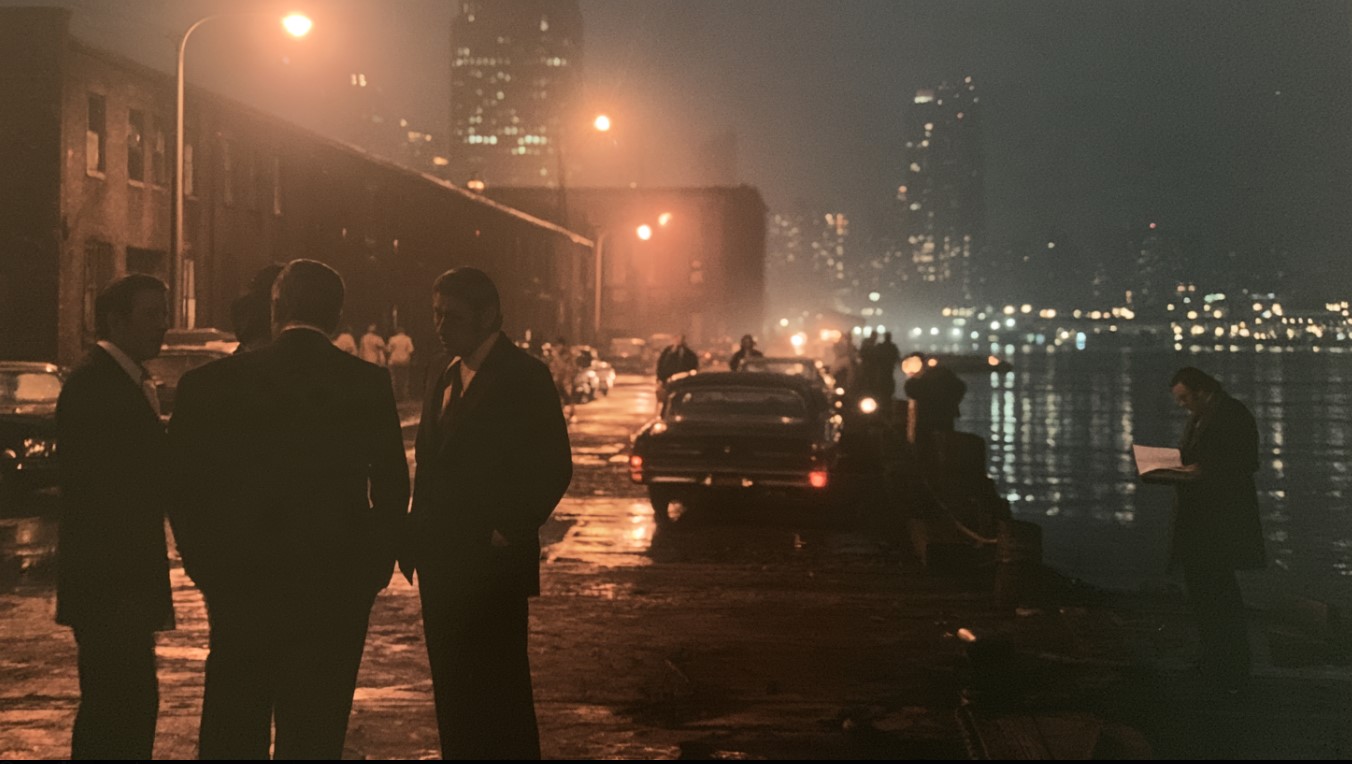
If union memberships were valuable, the piers were better. The West Side waterfront connected Hell’s Kitchen to a much larger commercial system involving longshoremen, cargo, transportation and unions.
Control the waterfront and you gained access to an endless stream of economic activity.
The federal appellate record states that the Westies controlled criminal activities on New York’s West Side piers. It also identifies Vincent Leone, an officer of International Longshoremen’s Association Local 1909 and an associate of the Gambino family, as a figure assigned to help oversee criminal activity on the piers.
That arrangement tells us something important about the Westies. They were no longer operating as an isolated neighborhood gang. Their business had become intertwined with the larger Mafia infrastructure. The Westies brought local muscle. The Gambinos brought connections.
And the waterfront brought money.
The Gambino Connection
The alliance with the Gambino crime family gave the Westies access to a much larger criminal network.
According to the Second Circuit, the Gambinos agreed to finance the Westies’ loansharking operation and permitted the Westies to use the Gambino name and reputation in connection with their illicit businesses. In return, the Westies paid the Gambino family ten percent of proceeds from various illegal activities.
That arrangement mattered enormously. Coonan didn’t suddenly become an Italian Mafia boss. He remained the leader of an Irish-American gang.
But the Westies now operated beneath the shadow of one of New York’s most powerful organized-crime families. That shadow could make a threat considerably more convincing. It could also make a union official reconsider his answer.
The Javits Center and the Construction Boom
Then came construction. The Jacob K. Javits Convention Center would eventually rise on Manhattan’s West Side, opening in 1986. But the economic significance of the development began well before the building welcomed its first convention.
Large construction projects meant contracts. Contracts meant workers. Workers meant unions. And unions could mean enormous amounts of money.
The Westies were already positioned in the neighborhood. Their Gambino connections placed them within a larger organized-crime network. Their reputation for violence gave them another form of leverage.
The construction economy therefore represented something bigger than another racket. It was an opportunity to turn geography into revenue.
The closer the West Side moved toward redevelopment, the more valuable control over its labor infrastructure became. The cranes were going up. So were the stakes.
When the Union Became a Mob Paycheck
Labor racketeering works because legitimate economic systems can be converted into criminal revenue streams. A worker pays dues. A contractor needs workers. A union controls access. A gangster controls the union. Suddenly the criminal organization can collect money at several points in the chain.
The Westies did not have to invent the construction contract. They only needed to get close enough to influence who received it. They did not have to build the building. They needed to profit from the people building it.
That is why the Westies’ labor operations deserve as much attention as their murders. The murders created fear. The labor rackets created income. And income was what kept the organization alive.
When the System Turned Against the Westies
There was, however, a problem with controlling too many people. Everybody remembers. A union official remembers the threat. A worker remembers who suddenly received a job. A contractor remembers who demanded money. A gangster remembers who got paid. And eventually somebody talks.
The federal prosecution of the Westies demonstrated how investigators could reconstruct an organization whose power depended on secrecy. The government’s case included racketeering charges and evidence concerning labor extortion, the piers, loansharking, narcotics and violence.
The very businesses that made the Westies rich also produced witnesses and records.
The money left trails. The jobs left names. The unions had membership rolls. The piers had workers. And the Westies had enemies.
The Price of Controlling Hell’s Kitchen
Jimmy Coonan’s Westies understood the oldest rule of organized crime:
Money follows control.
Control the neighborhood and you control the businesses. Control the businesses and you control the workers. Control the workers and you can reach the unions. Control the unions and suddenly a gangster can make money without ever opening a cash register. That was the genius of the Westies’ labor strategy—and also its weakness.
Violence could frighten a man into silence. But an entire criminal economy was harder to hide.
The Westies became involved in loansharking, narcotics, gambling, union extortion and waterfront rackets. Their alliance with the Gambino family expanded their reach. Federal prosecutors ultimately demonstrated that the organization functioned as an ongoing criminal enterprise rather than simply a collection of violent neighborhood criminals.
The 2025 Second Circuit decision concerning Coonan’s later attempt to obtain a sentence reduction still describes the Westies as an Irish-American gang active in Hell’s Kitchen from the mid-1960s through the mid-1980s, profiting from loansharking, extortion, gambling, counterfeiting and narcotics while using violence to protect its power.
The old neighborhood was changing. The waterfront was changing. The unions were changing.
And eventually the Westies were finished. But for years, Hell’s Kitchen had operated under a different economic reality.
A man didn’t necessarily have to be a gangster to pay the mob. Sometimes he only needed a job. Sometimes he only needed a union card. Sometimes he only needed to work on the waterfront. And that was the Westies’ real achievement.
They transformed neighborhood muscle into an economic machine. The bodies made headlines.
The money paid the bills.
References:
United States v. Coonan, 938 F.2d 1553 (2d Cir. 1991). United States Court of Appeals for the Second Circuit.
United States v. Coonan, 839 F.2d 886 (2d Cir. 1988). United States Court of Appeals for the Second Circuit.
United States v. Coonan, 750 F. Supp. 652 (S.D.N.Y. 1990). United States District Court for the Southern District of New York.
United States v. Coonan, No. 24-2119, United States Court of Appeals for the Second Circuit, July 9, 2025.
English, T. J. The Westies: Inside New York’s Irish Mob. New York: G. P. Putnam’s Sons, 1990.
Quirk, Rory. “The Guts Gore of an Irish Gang.” The Washington Post, March 29, 1990.