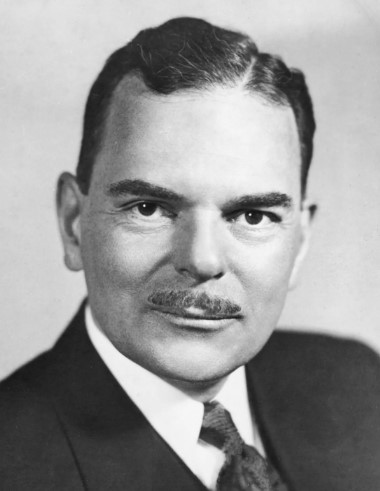
Thomas E. Dewey vs. the Mafia: The Prosecutor Who Wouldn’t Give Up
Before the Mafia learned to fear federal prosecutors, there was a young New York lawyer who walked into the city’s underworld with subpoenas, indictments and an unnerving determination to keep coming.
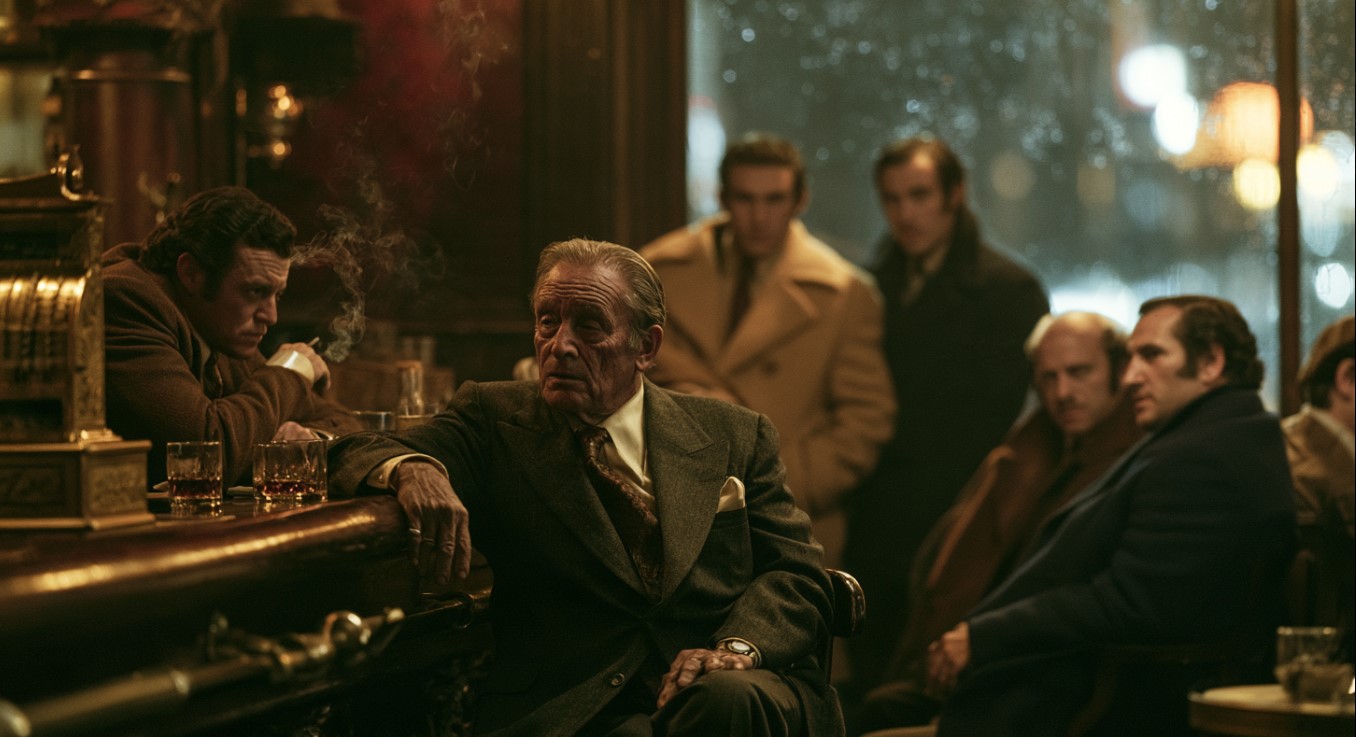
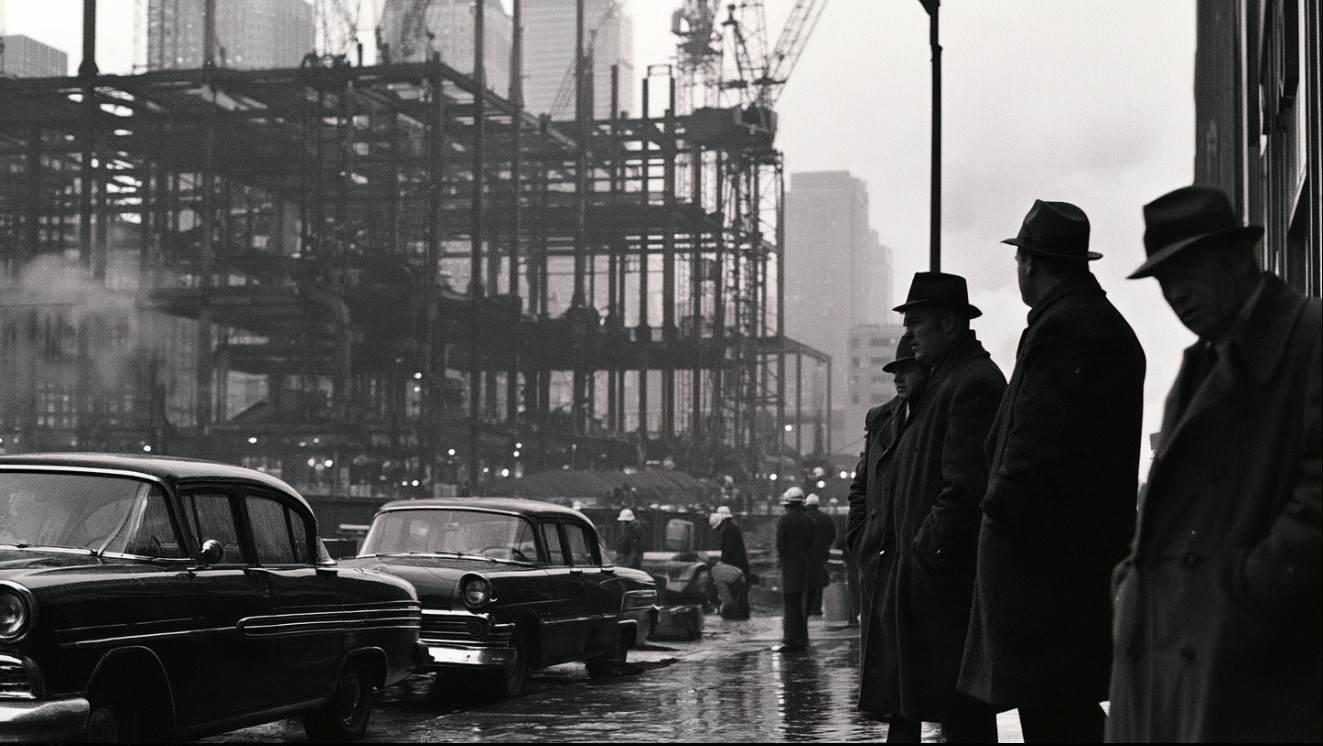
New York in the 1930s was a city of two governments. There was the one people could see. City Hall. Police headquarters. Courthouses. Election districts. Political clubs. Men in suits who stood behind podiums and promised to keep the streets safe.
Then there was the other government.
It operated behind restaurant doors, in back rooms, union offices, gambling houses and smoky clubs. Its currency was cash. Its enforcement mechanism was violence. Its politicians were protected, its witnesses were frightened and its soldiers understood that silence was often the difference between waking up the next morning and being carried there.
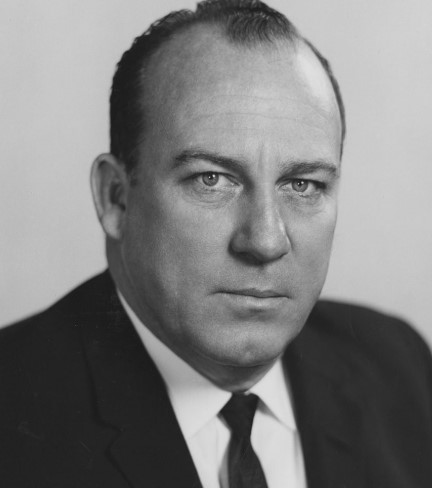
Then Thomas E. Dewey arrived. He did not come carrying a machine gun. He did not have a gang behind him. He had something far more troublesome to men who had spent years buying protection and intimidating witnesses. He had the law.
And Dewey intended to use it.
The Boy Scout
When Governor Herbert H. Lehman appointed Thomas E. Dewey special prosecutor to investigate organized crime in New York County in 1935, the reaction from the underworld was reportedly dismissive. Dewey was young, ambitious and comparatively inexperienced in the world he was entering. Some racketeers regarded him as a temporary nuisance who would eventually discover that New York’s underworld was too deeply entrenched to be uprooted by a prosecutor.
They underestimated him.
Lehman authorized Dewey to assemble a staff of twenty. Among the lawyers he recruited was Stanley Howells Fuld, who became one of Dewey’s most important legal strategists. Charles Breitel also joined the operation, beginning a long association with Dewey that would eventually carry him onto New York’s highest court.
Dewey’s office was not interested merely in arresting street criminals. It wanted the men behind them. That presented a serious legal problem. Organized crime was structured specifically to insulate its leaders. A boss could order a crime without being present when it happened. A lieutenant could pass the instructions to a soldier. The soldier could commit the crime. And when investigators arrived, everyone suddenly developed a remarkable case of amnesia.
Dewey wanted to break that chain.
Changing the Rules
The young prosecutor quickly recognized that traditional criminal procedure could work in favor of organized crime. New York law made it difficult to bring the various acts of a criminal organization together in a single prosecution. Dewey argued that the law had created what he called a procedural “strait-jacket,” because an organization could commit numerous crimes while prosecutors were forced to treat many of those offenses separately.
Dewey wanted the courtroom to see the organization. Not just the gunman. Not just the bookmaker. Not just the corrupt politician. The organization.
Working with Fuld and others, Dewey’s office helped develop legislation permitting multicount indictments that made it easier to prosecute racketeers together with the men who carried out their orders. The legislation became law in 1936 and helped prosecutors reach higher-ranking organized-crime figures. The significance was enormous.
Dewey was not simply chasing individual criminals around Manhattan. He was trying to change the legal machinery so that the people who designed the criminal enterprise could be placed in the same courtroom as the people who executed its orders.
And according to former Judge George Medalie, there was one particular target in Dewey’s sights when those legal changes were being developed.
Lucky Luciano.
The Target Was Lucky
Charles “Lucky” Luciano was not some neighborhood gangster trying to make a few dollars from an illegal card game. He represented something much larger.
By the middle of the 1930s, Luciano had become one of the most powerful figures in the American underworld. His organization was connected to gambling, prostitution, labor racketeering and other criminal enterprises. The Mafia had learned that enormous profits could be made without putting the boss on the street corner.
Dewey intended to bring that hidden structure into court. The prosecution that followed became one of the most famous organized-crime cases in American history. And one of the most important figures in that effort was not a gangster or a detective.
She was a prosecutor named Eunice Hunton Carter.
Carter was the only African American and the only woman on Dewey’s ten-member staff. Her work in the Women’s Court helped prosecutors connect individual prostitution cases to the larger operation surrounding Luciano. The Historical Society of the New York Courts credits Carter as instrumental in the successful prosecution and notes that she became known as the “Lady Racketbuster.” The case demonstrated something Dewey understood instinctively.
The Mafia could hide its bosses. It was much harder to hide the money, the women, the payments, the threats and the people who carried the orders.
Luciano Falls
In 1936, Luciano was convicted and sentenced to 30 to 50 years in prison for operating a prostitution ring. The FBI describes the conviction as the point at which Luciano’s extraordinary rise came to an abrupt halt. For the underworld, the message was unmistakable. A man who had seemed almost untouchable was now behind bars.
But Dewey was not finished.
That was the part his enemies apparently failed to understand. Putting Luciano away would have been enough for many prosecutors. It was a spectacular victory, the kind that could make a career. Dewey treated it as evidence that the strategy worked.
So he kept going.
Dutch Schultz Makes a Fatal Mistake
Arthur “Dutch” Schultz was one of the most dangerous gangsters in New York. He had built a fortune through bootlegging, gambling and the Harlem policy racket. He had survived rival gangsters, federal tax investigations and courtroom battles. In 1935, he was already a national criminal celebrity. That notoriety would become part of his problem.
Dewey was pursuing Schultz’s organization and the political protection surrounding it. Schultz, meanwhile, was beginning to understand that the prosecutor was not going away. According to the FBI, Schultz eventually attempted to have Dewey killed.
The Mafia Commission refused to approve the murder. Dewey was too public a figure, and killing a prosecutor of his stature would bring enormous law-enforcement pressure down on the underworld.
There is something almost cinematic about the calculation. The mob could kill people. But killing Dewey would be different.
Dewey was not merely one man. He represented the government. He represented the courtroom. He represented subpoenas, indictments, police investigations and the newspapers waiting outside the courthouse.
Killing him would not erase the law. It would only make the law angry.
The Night Schultz Went Down
On October 23, 1935, Dutch Schultz and several associates were sitting inside the Palace Chop House in Newark. Then the guns came out.
Schultz was shot along with four associates. He lingered through the night and died the following day. The FBI notes that investigators initially viewed the killing as part of an underworld conflict, but later historical research established that Schultz had tried to arrange Dewey’s assassination and that the Mafia Commission had rejected the idea.
Schultz’s death removed one of Dewey’s most dangerous enemies. But it did not remove the problem Dewey was investigating.
The rackets remained. The politicians remained. The money remained. And Dewey remained.
The Political Fixer
This was where Dewey’s campaign became more dangerous. Taking down a gangster was one thing. Taking down the people who allowed gangsters to operate was something else.
One of Dewey’s major targets became James J. Hines, a powerful Tammany Hall district leader accused of providing political protection to the Schultz policy racket. The case reached into the machinery of New York politics itself.
Witnesses described money moving through the political system. George Weinberg, an operations manager for the Schultz lottery racket, testified that Schultz had ordered money to be used to influence political campaigns. Weinberg testified that he paid thousands of dollars connected with the campaign of William C. Dodge, who had been Manhattan’s district attorney before Dewey.
Another witness, J. Richard “Dixie” Davis, testified that he had paid Hines approximately $40,000 as the gang’s political fixer.
The significance went beyond one politician. Dewey was attacking the relationship between organized crime and political protection.
The gangster needed the politician. The politician needed the gangster’s money and influence. The racket needed the protection of government. Break one link and the others began to shake.
The Mob Starts Looking Over Its Shoulder
Dewey’s investigation expanded beyond Luciano and Schultz. His prosecutors pursued racketeering operations involving labor, restaurants and other industries. His office collected information from witnesses who were willing—or persuaded—to talk. Some witnesses were placed under police protection. Others were incarcerated. Still others knew exactly what could happen if they said too much.
An FBI document from the period concerning Louis “Lepke” Buchalter describes Dewey’s investigators obtaining information from witnesses about murders and racketeering operations. One witness was being held under police protection while another refused to cooperate.
Buchalter was particularly important.
Known as Lepke, he was one of the most feared figures in organized crime and later became closely associated with Murder, Inc. Dewey’s investigators were trying to reach the structure surrounding him rather than simply arresting another soldier.
The strategy was becoming clear. Follow the money. Follow the witnesses. Follow the political connections. Follow the orders. Then bring the whole thing into court.
Dewey Becomes District Attorney
In 1937, Dewey was elected District Attorney of New York County. The title changed. The mission did not.
The young special prosecutor who had entered the racket investigation two years earlier now had an elected office, a larger institutional base and a growing reputation as one of the country’s most aggressive prosecutors.
The Historical Society of the New York Courts describes Dewey as the prototype of the “crusading District Attorney and gang-buster.” His staff became a remarkable collection of young lawyers who would go on to occupy important positions in New York law and government.
Stanley Fuld became chief of Dewey’s Indictment Bureau. Charles Breitel continued working with him. Others joined what became informally known as “Dewey’s Dozen.”
Dewey had accomplished something more important than winning a single case. He had built a prosecutorial machine. And unlike the machines of Tammany Hall, this one operated on indictments.
The Law Was the Weapon
There is a temptation when looking back at the Mafia wars of the 1930s to focus on guns. There were plenty of them. But Dewey’s greatest weapon was something far less dramatic.
A subpoena could force a witness to appear. An indictment could force a defendant into court. A conviction could put a gangster behind bars for decades.
And a new law could close the loopholes that had protected the men at the top. That was Dewey’s answer to organized crime. He did not need to outgun the Mafia. He needed to outlast it.
That distinction mattered because the underworld was accustomed to intimidation. A witness could disappear. A detective could be bought. A politician could be influenced. A prosecutor could be threatened.
But a determined prosecutor with the machinery of government behind him presented a different problem. You could frighten a man. It was considerably harder to frighten an institution.
| Five Families: Blood, Power, and the Empire Beneath New York |
The Prosecutor Who Kept Coming
Dewey’s campaign did not destroy organized crime. The Mafia survived Luciano’s conviction. It survived Schultz’s death. It survived the prosecutions of political figures and racketeers. It adapted, reorganized and moved into new territory. But something had changed.
The underworld had discovered that its traditional defenses were no longer reliable. Political connections could be exposed. Money could be traced. Witnesses could be protected. Racketeering could be presented as an organized enterprise rather than a collection of unrelated crimes. And the prosecutor could keep coming.
That may have been the most frightening part. Not the courtroom. Not the headlines. Not even the possibility of prison. It was persistence.
The gangster could survive one indictment. He could survive one witness. He could survive one failed prosecution.
But what happened when the prosecutor returned with another case? And another? And another?
The Final Word
Thomas E. Dewey became famous because he put Lucky Luciano behind bars. But Luciano was only the beginning.
Dewey went after the political machinery surrounding organized crime. He pursued the racketeers who operated behind legitimate businesses. He developed new legal tools designed to reach the men who gave orders rather than merely the men who carried them out. He assembled a team of prosecutors whose careers would extend far beyond the original racket investigation.
And somewhere along the way, the men in the back rooms learned an uncomfortable truth.
Dewey could be threatened. He could be attacked politically. He could be targeted personally. But he was not going away.
The Mafia had its rules, its soldiers, its money and its guns. Dewey had something else. He had the law.
And he knew how to use it.
References:
Federal Bureau of Investigation. “La Cosa Nostra.” FBI History, Federal Bureau of Investigation.
Federal Bureau of Investigation. “Brick from the Palace Chop House.” FBI History, Federal Bureau of Investigation.
Federal Bureau of Investigation. Louis “Lepke” Buchalter FBI Files. FBI Vault.
Historical Society of the New York Courts. “Eunice Hunton Carter.” Making Legal History Matter.
Historical Society of the New York Courts. “Stanley Howells Fuld.” Making Legal History Matter.
Historical Society of the New York Courts. “Charles David Breitel.” Making Legal History Matter.
New York State Unified Court System. People v. Mero, 2024 NY Slip Op 06385.
Library of Congress. “Schultz Policy Racket Gang Cheats Employees — James J. Hines, Tammany Leader, Again Hears Damaging Testimony.” Chronicling America, August 18, 1938.
Library of Congress. “Was Told to Spend All Money He Could to Promote Campaign of William C. Dodge.” Chronicling America, August 24, 1938.