The Chicago Pipeline: How the Outfit Quietly Took Over Vegas
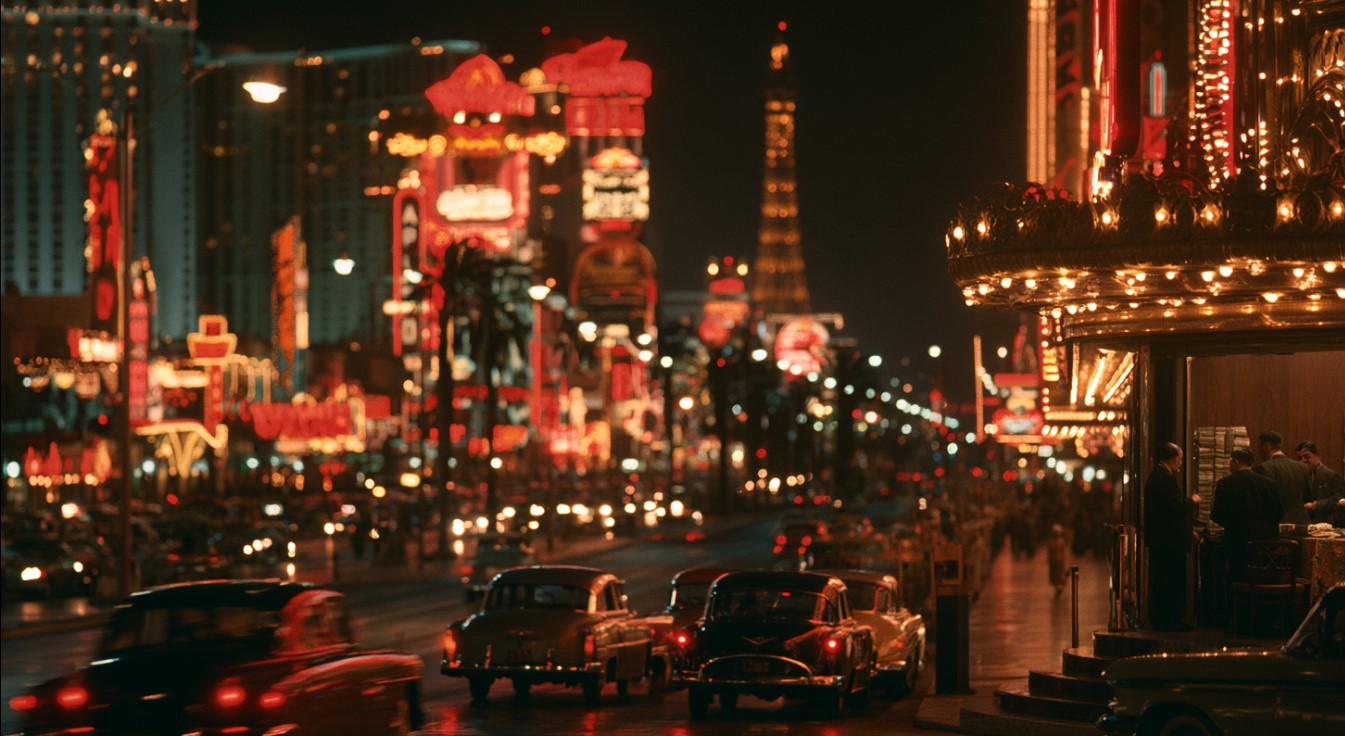
Las Vegas tells a polished story about itself. Neon, glamour, reinvention. A place where fortunes rise and fall under chandeliers and desert stars. The mythology leans heavily on New York names—on men like Bugsy Siegel and Meyer Lansky—as if the Strip was carved out by East Coast ambition alone.
It wasn’t.
The truth runs colder, straighter, and far less theatrical. Because while New York built the stage, Chicago owned the back room.
| Sin City’s Bloody Accountant: The Dark Rise and Brutal Fall of Gus Greenbaum |
The Outfit Doesn’t Rush
The Chicago Outfit didn’t need headlines. It didn’t need monuments or visionary martyrs. It had something better: patience. Where others chased opportunity, Chicago studied it, mapped it, and waited until the timing favored control.
By the early 1950s, Las Vegas had already proven itself viable. The casinos were operational. The tourist flow was steady. The concept of desert gambling had moved from experiment to industry.
That’s when Chicago leaned in. Not with fanfare. With money.
The Men Behind the Pipeline
At the center of the Outfit’s expansion stood Tony Accardo, a man who understood power in its most durable form—quiet, insulated, and removed from unnecessary risk. Accardo didn’t need to be seen in Las Vegas to control what happened there. He preferred distance. Distance kept him safe.
And distance made everything deniable.
Working beneath and around him was Sam Giancana, more visible, more volatile, but equally ambitious. Giancana saw Vegas not just as a revenue stream but as a proving ground—a place where influence could be converted into cash with remarkable efficiency.
Together, they represented two sides of the same strategy. Accardo built the system. Giancana fed it.
| Operation Strawman. The Mob’s Paper Empire crumbles in Las Vegas |
Money Travels Better Than Men
Chicago didn’t send armies west. It sent capital.
The pipeline began in the Midwest—cash generated from gambling rackets, unions, loan-sharking operations, and political connections. That money needed a destination, a place where it could be invested, circulated, and ultimately returned in a cleaner form. Las Vegas was ideal.
Casinos required constant liquidity. Construction projects demanded financing. Expansion was relentless. Chicago money flowed in through loans, hidden partnerships, and corporate fronts. Ownership rarely appeared direct, but control didn’t require a signature.
It required leverage. And Chicago had plenty of it.
The Teamsters Connection
If Las Vegas was the machine, the financing came from somewhere deeper—an institution that blurred the line between labor and organized crime. The International Brotherhood of Teamsters.
By the 1950s, the Teamsters’ pension fund had become a powerful financial tool, capable of issuing massive loans for development projects. Under the influence of figures like Jimmy Hoffa, the fund extended credit to Las Vegas casinos at a scale traditional banks often wouldn’t.
The loans came with expectations. Chicago helped ensure those expectations were met.
Money from the pension fund flowed into casinos like the Stardust, the Desert Inn, and others that defined the expanding Strip. On paper, these were legitimate investments—job creation, economic growth, retirement security for union members. In practice, they were something more complicated.
They were conduits.
The Skim Evolves
By the time Chicago entrenched itself in Las Vegas, the skim was already a known mechanism. Cash entered the casino, and a portion quietly disappeared before official accounting. What Chicago did was refine the process. Standardize it. Industrialize it.
Counting rooms became more disciplined. Percentages were agreed upon, enforced, and monitored. Couriers transported cash out of Nevada to distribution points in the Midwest. The operation resembled a corporate structure—roles defined, processes optimized, risks managed.
This wasn’t chaos. It was logistics.
Millions of dollars moved through the pipeline annually, bypassing taxes and oversight. The casinos still reported profits, still paid the state, still maintained their public image.
But the real money flowed elsewhere. Back to Chicago.
Ownership Without Exposure
The genius of the Outfit’s strategy wasn’t just in moving money—it was in avoiding attention while doing it. Chicago bosses rarely appeared as official owners. Instead, they relied on a network of front men, silent partners, and intermediaries. Names on paper meant little. Influence was exercised through loans, debt, and the implicit understanding of who held power.
A casino operator might believe he was in charge. Until he wasn’t.
Decisions about management, expansion, and profit distribution often traced back to Chicago interests, even if the connection was never publicly acknowledged. The Strip sparkled for tourists, but its direction was guided from hundreds of miles away.
Invisible hands, steady and deliberate.
Violence, Used Sparingly
Chicago’s approach to Las Vegas differed from the more volatile eras of organized crime. Violence remained a tool, but it was used selectively. Excess drew attention, and attention threatened the entire system. Still, enforcement existed.
When disputes arose—over skim percentages, loan repayments, or control—messages were delivered. Sometimes those messages were financial. Sometimes they were not. The reputation of the Outfit ensured that most conflicts resolved quickly, without spectacle.
Fear didn’t need to be constant. It just needed to be credible.
| Sam Giancana, Phyllis McGuire, and the Cost of Craving the Spotlight |
The Federal Gaze Tightens
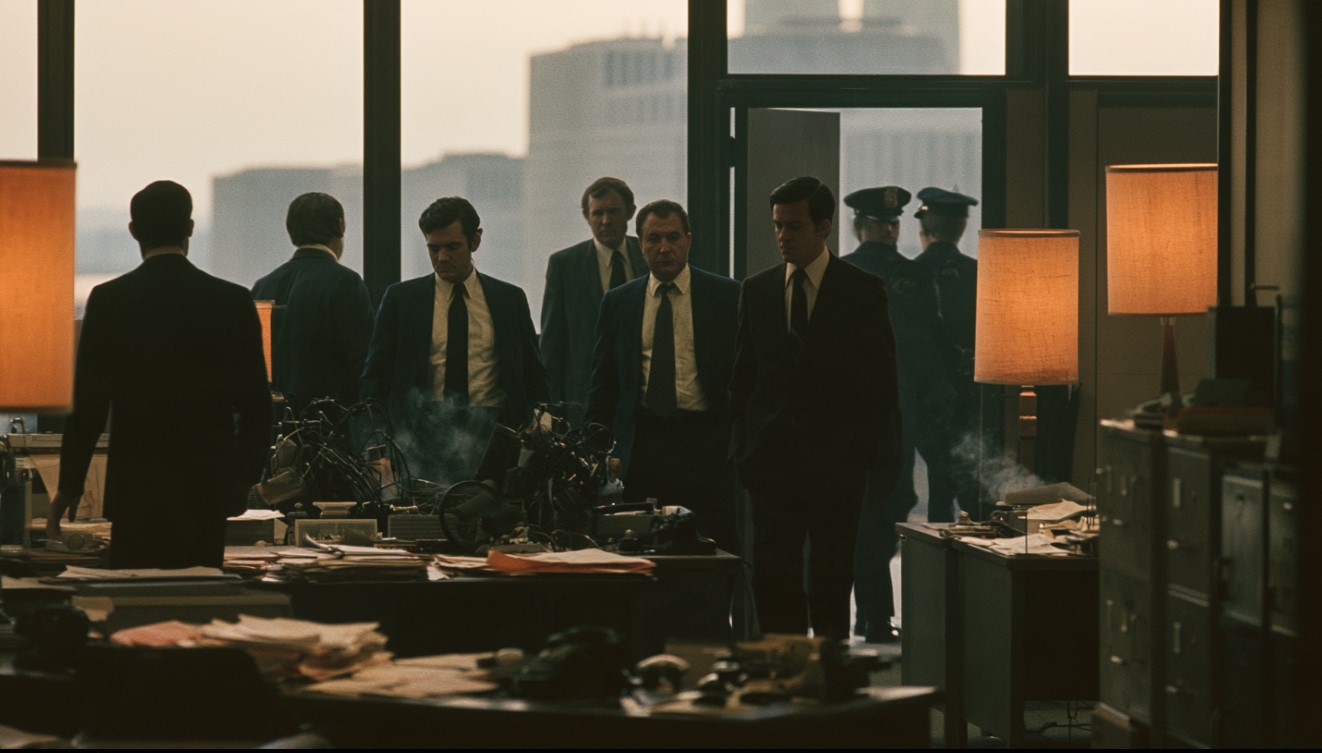
By the late 1950s and into the 1960s, federal authorities began to take a closer look at organized crime’s reach. Senate investigations, including the Kefauver and McClellan hearings, pulled back portions of the curtain, exposing connections between unions, casinos, and syndicates. Names surfaced.
Patterns emerged.
Las Vegas, once considered too remote to matter, became central to the narrative of organized crime in America. The idea that casinos could serve as both entertainment venues and financial laundries gained traction in the public consciousness. Chicago’s pipeline, once nearly invisible, started to flicker into view.
Adaptation and Survival
The Outfit didn’t collapse under scrutiny. It adapted. Ownership structures became more complex. Layers of insulation increased. Legitimate investors were brought in to dilute suspicion. Corporate entities replaced informal arrangements. The same control mechanisms remained, but they were buried deeper.
Las Vegas itself began to change. By the late 1960s, the seeds of corporate ownership were being planted, setting the stage for a transition away from overt mob influence. But that transition didn’t erase what came before.
It built on it.
The infrastructure, the model, the understanding of how casinos could function as financial engines—that was Chicago’s legacy as much as anyone’s.
The Myth of Ownership
History tends to simplify. It assigns credit to visible figures, to those who can be photographed, quoted, and mythologized. In the story of Las Vegas, that often means New York names, Hollywood connections, and dramatic narratives. Chicago doesn’t fit that mold.
Its influence was quieter, less cinematic, and far more pervasive. The Outfit didn’t need to “own” Las Vegas in the traditional sense. It didn’t need its bosses living in penthouses or hosting celebrity-filled galas. It needed the numbers to flow.
And they did.
The Strip Answers to Chicago
At its peak, the Chicago pipeline turned Las Vegas into an extension of the Midwest’s criminal economy. Money moved west, was processed through casinos, and returned east in a cleaner form. The cycle repeated, year after year, generating profits that funded further expansion.
The Strip became a mirror. Not of glamour, but of control.
Behind every flashing sign was a balance sheet. Behind every balance sheet was a system. And behind that system, more often than not, was Chicago.
A Quiet Conquest
There was no war for Las Vegas. No dramatic takeover. No single moment where control visibly shifted. That’s what makes the story unsettling. The Outfit didn’t conquer the city. It absorbed it.
Piece by piece, deal by deal, loan by loan, until the question of ownership became almost irrelevant. What mattered was influence, and influence was firmly in Chicago’s hands.
The tourists never noticed. They weren’t meant to.
The Legacy in the Sand
Today, Las Vegas presents itself as a corporate playground—publicly traded companies, regulated operations, transparency where secrecy once ruled. The mob era is treated as history, a colorful chapter in the city’s evolution. But systems leave traces.
The financial models, the understanding of cash flow, the very idea that a casino can function as both entertainment and financial instrument—that didn’t originate in boardrooms. It was refined in back rooms, counting rooms, and quiet conversations that never made it into official records.
Chicago’s fingerprints remain. Not obvious. Not acknowledged. But still there, beneath the surface, where the real stories tend to live.
References:
Binder, John J. The Chicago Outfit. Arcadia Publishing, 2003.
Roemer Jr., William F. The Enforcer: Spilotro—The Chicago Mob’s Man Over Las Vegas. Ivy Books, 1994.
Russo, Gus. Supermob: How Sidney Korshak and His Criminal Associates Became America’s Hidden Power Brokers. Bloomsbury, 2006.
United States Senate. Organized Crime and Illicit Traffic in Narcotics (Kefauver Committee Hearings), 1950–1951.
United States Senate. Improper Activities in the Labor or Management Field (McClellan Committee Hearings), 1957–1960.
Block, Alan A., and Chambliss, William J. Organizing Crime. Elsevier, 1981.