Carlo Gambino: The Silent Emperor of the American Mafia
Carlo Gambino understood something many gangsters never learned:
The less the public knows about you, the more dangerous you probably are.
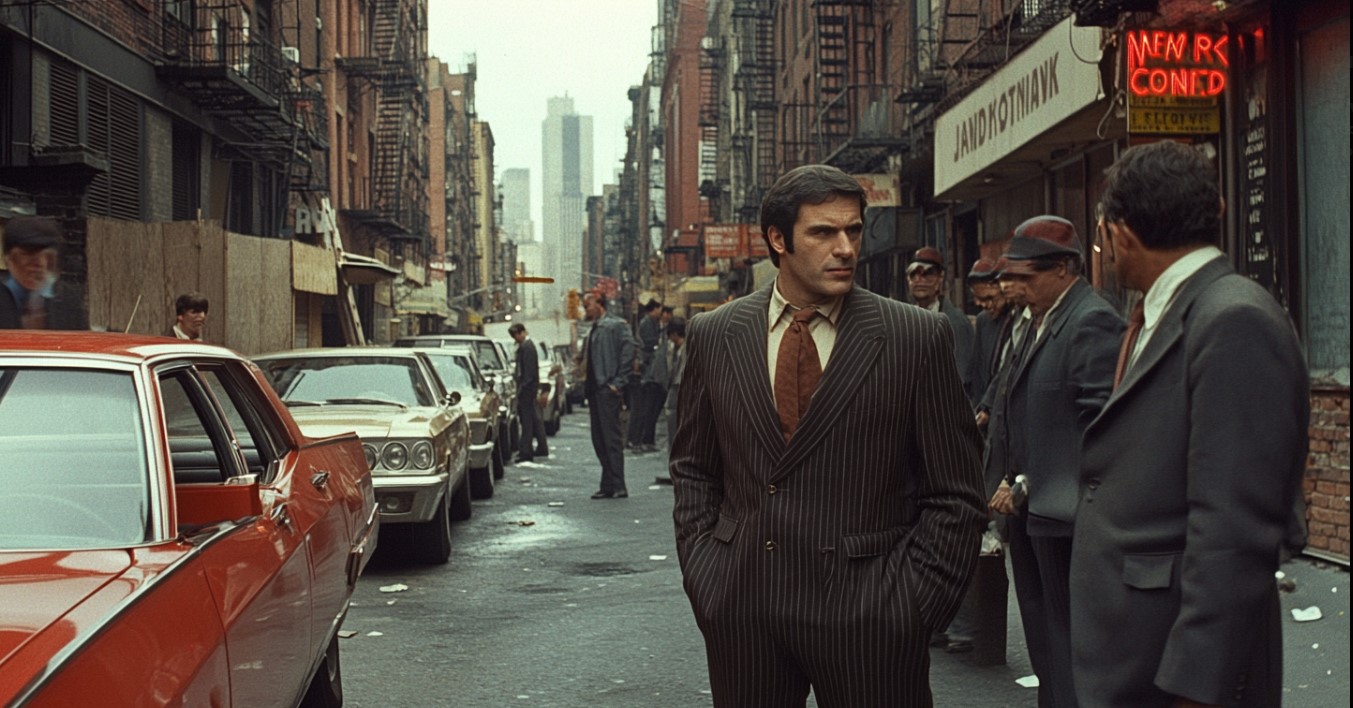
He avoided flashy suits. He rarely raised his voice. He did not chase celebrity interviews, public rallies, or tabloid headlines. While gangsters like Al Capone became cultural spectacles and men like John Gotti later turned organized crime into televised theater, Gambino operated almost invisibly.
Quietly.
Patiently.
Ruthlessly.
For more than two decades, Carlo Gambino became one of the most powerful Mafia bosses in America without ever attracting the level of public attention that consumed many of his contemporaries. Politicians feared him. Gangsters respected him. Federal agents obsessed over him. Yet ordinary Americans often recognized his name less than louder criminals whose actual influence was far smaller.
That anonymity was not weakness. It was strategy.
Gambino understood power as architecture rather than performance. He built influence through alliances, discipline, financial control, and calculated violence hidden beneath layers of silence.
The man rarely shouted because he rarely needed to.
From Sicily to New York
Carlo Gambino was born in Palermo, Sicily, in 1902 into a family already connected to Sicilian Mafia traditions. Crime was not some accidental detour in his life. It was inheritance.
Sicily during Gambino’s youth existed inside a brutal landscape of poverty, political corruption, clan loyalties, and organized criminal influence deeply woven into local society. The Mafia there functioned not merely as gangs but as parallel systems of authority where government institutions often appeared weak or compromised.
Gambino absorbed those lessons early.
In 1921, he illegally entered the United States as a stowaway, eventually settling in New York City among expanding Italian immigrant communities where organized crime networks already flourished.
He arrived during a transformational moment. America was entering Prohibition.
Prohibition and the Rise of Modern Organized Crime
The banning of alcohol in 1920 created one of the largest underground economies in American history. Illegal liquor generated fortunes for criminal organizations capable of supplying massive public demand.
Gambino entered the bootlegging world quickly.
He aligned himself with powerful Mafia figures connected to the Sicilian Castellammarese faction during the violent struggles that eventually exploded into the Castellammarese War of the early 1930s. The conflict pitted old-world Mafia bosses against younger reform-minded gangsters such as Charles “Lucky” Luciano.
Luciano’s generation wanted modernization. The old bosses wanted tradition. Gambino survived the conflict carefully. That mattered because many others did not.
As Luciano reorganized organized crime through The Commission after the war, Gambino emerged as part of the new Mafia structure shaping national organized crime for decades to come.
Unlike louder personalities around him, Gambino avoided attracting attention during this rise. He built relationships quietly, accumulated influence gradually, and cultivated an image of disciplined reliability.
The underworld notices men like that.
Under Anastasia’s Shadow
During the 1930s and 1940s, Gambino rose steadily within the Mangano crime family under leaders including Albert Anastasia. Anastasia and Gambino could not have been more different.
Anastasia projected violence openly. He carried a terrifying reputation tied to Murder, Inc., labor racketeering, and brutal enforcement work. Gambino projected calm restraint. He preferred conversation to intimidation and calculation to spectacle.
But Gambino learned from Anastasia carefully. He observed how fear created power. He also observed how excessive violence eventually creates enemies.
When Anastasia seized control of the family after the disappearance of Vincent Mangano, Gambino remained loyal publicly while building his own influence internally.
Then the political winds shifted.
The Barbershop Assassination
By the mid-1950s, many Mafia leaders had grown uneasy with Anastasia’s unpredictability and violence. Powerful figures including Vito Genovese allegedly aligned against him.
Gambino stood positioned perfectly. On October 25, 1957, Anastasia was assassinated inside a Manhattan hotel barbershop in one of the most famous Mafia murders in American history.
Shortly afterward, Carlo Gambino assumed leadership of the family. The transition appeared almost surgical. No public celebration. No dramatic speeches. Just power quietly changing hands.
The organization eventually became known as the Gambino crime family, one of the most powerful Mafia organizations in the United States. And Carlo Gambino became its silent emperor.
The Gambino Empire
Under Gambino’s leadership, the family expanded into an enormous criminal enterprise spanning gambling, loansharking, labor racketeering, extortion, hijacking, construction corruption, waterfront operations, and infiltration of legitimate businesses.
Gambino ruled differently than flamboyant gangsters. He valued discipline. He discouraged unnecessary violence. He avoided publicity obsessively.
Associates understood the rules clearly: make money quietly and avoid attracting federal attention. Gambino believed the Mafia survived best when the public barely noticed it existed.
Ironically, his approach proved extraordinarily effective.
By the 1960s and early 1970s, Gambino wielded immense influence not only within his own family but across national organized crime networks. Politicians, union figures, businessmen, and criminal operators all interacted within systems touched directly or indirectly by Mafia influence.
Yet Gambino himself remained almost ghostlike publicly. No celebrity interviews. No flashy political campaigns. No nightclub theatrics. Just power operating silently beneath the surface.
The Commission and National Influence
Gambino became one of the most respected leaders on The Commission, the governing body overseeing major Mafia families nationwide.
Unlike ambitious bosses who sought domination openly, Gambino preferred strategic balance. He cultivated alliances carefully, mediated disputes, and expanded influence gradually through loyalty and financial leverage rather than public confrontation.
Other gangsters often underestimated him initially because of his quiet demeanor. That mistake rarely lasted long.
Federal investigators considered Gambino extraordinarily intelligent and disciplined. Prosecutors struggled repeatedly to tie him directly to major crimes despite decades of surveillance and suspicion.
He insulated himself masterfully. Orders traveled indirectly. Violence remained compartmentalized. Business structures blended legal and illegal operations seamlessly.
Gambino treated organized crime like long-term corporate management.
Avoiding the Spotlight
Part of Gambino’s success came from understanding the danger of ego. Gangsters who crave fame eventually invite scrutiny. Men like Joe Colombo attracted cameras and controversy. Later figures like Gotti embraced celebrity entirely.
Gambino rejected that instinct completely.
He lived relatively modestly compared to his power. He avoided luxury displays publicly and maintained the appearance of an ordinary older businessman. Neighbors often described him as polite and unremarkable.
That normalcy concealed immense influence. The contrast itself became chilling.
Death and Succession
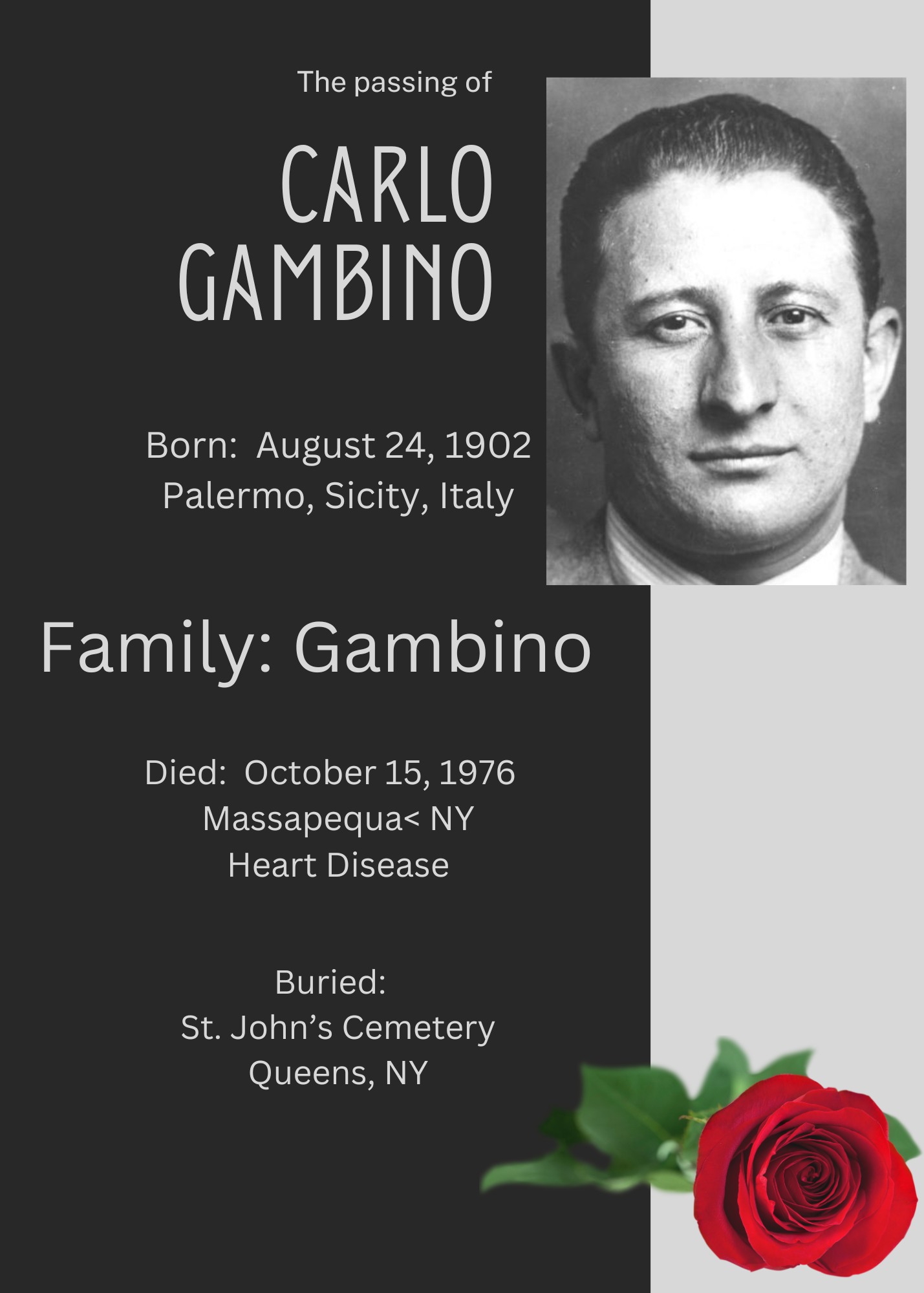
Carlo Gambino died of natural causes in 1976 at age seventy-four. That fact alone distinguished him from many Mafia bosses. He avoided assassination. He avoided prison. He avoided public collapse.
For a man who spent decades atop organized crime, dying quietly in bed represented an extraordinary achievement. But even in death, Gambino shaped the Mafia’s future.
His controversial decision to elevate his cousin and brother-in-law Paul Castellano over more traditional street figures eventually created tensions that exploded violently years later during the rise of John Gotti.
The empire survived. But the silence around it would not.
The Legacy of Carlo Gambino
Carlo Gambino remains one of the most effective organized crime bosses in American history precisely because he understood restraint.
He rarely performed power publicly. He exercised it quietly. Unlike violent legends such as Albert Anastasia or charismatic celebrity gangsters like Al Capone, Gambino built his reputation inside the underworld itself rather than through newspapers.
He represented the Mafia at its most disciplined and corporate: Strategic. Patient. Invisible.
His career revealed that organized crime often thrives not through chaos but through systems hidden inside ordinary institutions—labor unions, construction contracts, shipping industries, gambling operations, and political relationships quietly corrupted over time.
Carlo Gambino understood that silence itself could become a weapon.
And for decades, silence made him one of the most powerful men in the American underworld.
Buried at: Saint John’s Cemetery, Queens, NY