Willie Moretti: When Even the Boss Couldn’t Save You
“Kiss the Ring. Dig Your Grave” series – Article 3
The Mafia has always preached that loyalty is the highest virtue. A man who keeps his mouth shut, follows orders, and stands beside his boss through every crisis is promised respect, protection, and a place at the table. The oath speaks of honor. The bosses speak of family. Every ceremony reinforces the idea that devotion is rewarded.
History tells a different story.
The American Mafia rewarded loyalty only as long as it remained useful. The moment a trusted lieutenant became a liability, decades of faithful service could disappear behind a cloud of cigar smoke in a Commission meeting. Friendship mattered. Respect mattered. But neither outweighed the survival of the organization.
Few stories demonstrate that harsh reality better than that of Willie Moretti.
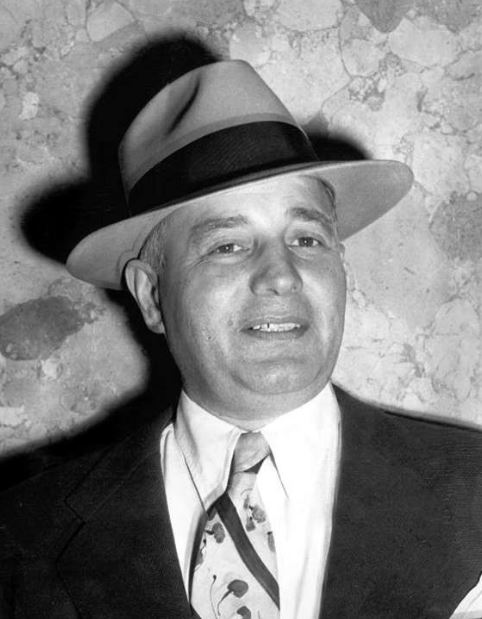
For years, Moretti stood beside Frank Costello as one of his closest friends, strongest political allies, and most influential supporters. Together they helped transform organized crime from neighborhood street gangs into sophisticated criminal enterprises that reached into politics, labor unions, gambling operations, and legitimate businesses. Moretti was more than a soldier. He was one of the men who helped make Frank Costello the “Prime Minister of the Underworld.”
Yet when illness slowly stole Moretti’s mind, even Costello’s friendship could not save him. His loyalty earned him influence. It did not earn him mercy.
The Rise of a Political Gangster
Born Guglielmo Moretti in Bari, Italy, in 1894, Willie Moretti immigrated to the United States as a child and grew up in New Jersey during a period when organized crime was rapidly evolving. Like many ambitious young men of his generation, he entered a world where political corruption, gambling, bootlegging, and labor racketeering offered opportunities unavailable through legitimate work.
Unlike many gangsters who relied almost entirely on intimidation, Moretti possessed something equally valuable. Charm.
He dressed well, spoke comfortably with politicians and businessmen, and cultivated friendships that extended far beyond the traditional criminal underworld. He could move comfortably between smoky back rooms filled with bookmakers and elegant restaurants occupied by judges, businessmen, and elected officials.
Those skills made him indispensable to one man in particular. Frank Costello.
Costello understood that the future of organized crime depended on influence as much as violence. While others settled disputes with guns, Costello preferred conversations, political favors, and carefully negotiated alliances. Moretti became one of his most trusted partners in building that vision.
Together, they formed one of the strongest political alliances in the American Mafia.
| Five Families: Blood, Power, and the Empire Beneath New York |
More Than a Friend
The relationship between Moretti and Costello went beyond business.
They trusted one another in a profession built almost entirely on suspicion.
That trust proved invaluable as Costello climbed toward the top of what eventually became the Genovese crime family. Moretti used his considerable influence in New Jersey and New York to strengthen Costello’s political standing within organized crime. He defended him during internal disputes, supported his leadership, and helped maintain relationships with powerful figures both inside and outside the Mafia.
Every successful boss needs loyal men. Costello had Willie Moretti.
Unlike ambitious captains constantly maneuvering for promotions, Moretti appeared comfortable playing the role of trusted adviser and ally. He wasn’t trying to replace Costello.
He was trying to protect him. For decades, that partnership appeared nearly unbreakable.
| Thomas “Tommy” Bilotti – The Ultimate “Yes” Man |
The Illness No One Could Ignore
Then something changed.
By the late 1940s, friends and associates noticed alarming differences in Moretti’s behavior. Once polished and politically savvy, he began speaking irrationally during public appearances and private meetings. He repeated confidential information, wandered into bizarre conversations, and displayed increasing signs of confusion.
Doctors later attributed his condition to advanced neurosyphilis, a devastating disease capable of causing severe neurological damage, personality changes, paranoia, and cognitive decline.
Today, such symptoms would likely prompt medical intervention and long-term care. In the Mafia of the early 1950s, they inspired fear.
Organized crime survives through secrecy. Every meeting, every payoff, every corrupt politician, every hidden financial arrangement depends upon disciplined silence.
A man losing control of his own mind represented a danger unlike any rival family. No one believed Moretti intended to betray anyone. The fear was that he might do so without realizing it.
A Dangerous Liability
Within La Cosa Nostra, intent often mattered less than risk.
The Commission—the governing body composed of the nation’s most powerful Mafia leaders—viewed security as paramount. An unpredictable member capable of revealing confidential information, even unintentionally, threatened everyone.
Willie Moretti had become unpredictable.
His illness reportedly caused embarrassing public episodes, including inappropriate jokes and rambling comments that suggested he no longer recognized the importance of discretion. Stories circulated throughout organized crime that he had begun discussing matters that should never have left private conversations.
Whether every story was accurate hardly mattered. Perception carried enormous weight.
Once influential bosses concluded that Moretti represented a security risk, his fate became increasingly difficult to avoid. The same man who had spent decades protecting secrets now appeared incapable of keeping them.
| Frank Scalice: Loyalty to the the Executioner |
When Friendship Meets the Commission
Frank Costello’s friendship with Moretti was genuine. Their alliance had survived years of political battles, shifting loyalties, and law enforcement pressure. Costello understood Moretti’s value better than almost anyone alive. But even Costello operated within limits.
Popular culture often portrays Mafia bosses as all-powerful figures capable of deciding life and death on a whim. The reality was considerably more complicated. Powerful bosses still answered to broader political realities inside organized crime. Defying the Commission on matters involving organizational security carried enormous consequences.
If enough influential leaders concluded that Moretti endangered the organization, even Frank Costello’s voice could be overwhelmed.
Sometimes power means choosing between a friend and the institution. Sometimes the institution wins.
The Last Meeting
On October 4, 1951, Willie Moretti attended a gathering at Joe’s Elbow Room restaurant in Cliffside Park, New Jersey. The meeting appeared routine. Instead, it became his execution.
Gunmen opened fire, killing Moretti inside the restaurant while stunned patrons watched events unfold in disbelief.
Officially, another Mafia mystery had entered the history books. Unofficially, few experienced observers doubted what had happened. The Commission had removed a man it believed could no longer protect its secrets. Not because he had become disloyal.
Because illness had made loyalty insufficient.
Loyalty Has Limits
Willie Moretti never launched a rebellion against Frank Costello.
He never sought to seize power. He never became a government witness. He never robbed the organization.
His greatest crime was becoming vulnerable. That vulnerability transformed years of faithful service into an unacceptable risk.
The tragedy lies not merely in Moretti’s death but in what it revealed about organized crime’s priorities. Every oath speaks of brotherhood. Every ceremony celebrates honor. Yet when survival collides with sentiment, sentiment almost always loses.
Friendship became secondary. History became irrelevant. Even decades of loyalty could not outweigh fear.
The Myth of Protection
Many gangsters believed that earning the personal affection of a powerful boss created an invisible shield. Willie Moretti proved otherwise.
Frank Costello was among the most influential crime bosses in America. His political connections reached into city halls, police departments, labor unions, and legitimate business circles. He possessed wealth, influence, and enormous respect within organized crime.
What he could not do was stop time. He could not cure Moretti’s illness. He could not erase growing fears inside the Commission.
Most importantly, he could not guarantee that friendship would outweigh organizational survival. The Mafia often demanded absolute loyalty from its members.
It rarely returned the favor.
The Noir Lesson
The underworld has always celebrated the image of two lifelong friends standing shoulder to shoulder against every enemy. It makes for memorable films and compelling novels. Reality was colder.
In organized crime, friendships exist only until they conflict with business.
Willie Moretti spent decades helping Frank Costello build influence that stretched from the streets of New York to the corridors of political power. He defended him when rivals challenged him. He strengthened his position when alliances shifted. He became the kind of trusted ally every boss claims to value.
When illness slowly transformed him into a potential liability, none of that history mattered.
There was no retirement for faithful service. No reward for decades of silence. No exception made because of old friendships.
Only a restaurant, a meeting, and gunfire. Willie Moretti didn’t die because he betrayed Frank Costello. He died because the organization believed his failing mind might someday betray everyone else. In the Mafia, loyalty could earn you a seat beside the boss.
It could never guarantee that the boss would be able to keep you there.
References:
Capeci, Jerry. The Complete Idiot’s Guide to the Mafia. Indianapolis: Alpha Books, 2002.
Critchley, David. The Origin of Organized Crime in America: The New York City Mafia, 1891–1931. New York: Routledge, 2009.
Messick, Hank. Lansky. New York: G. P. Putnam’s Sons, 1971.
Raab, Selwyn. Five Families: The Rise, Decline, and Resurgence of America’s Most Powerful Mafia Empires. New York: Thomas Dunne Books/St. Martin’s Press, 2005.
United States Senate. Organized Crime in Interstate Commerce: Hearings Before the Special Committee to Investigate Organized Crime in Interstate Commerce (Kefauver Committee). Washington, DC: U.S. Government Printing Office, 1950–1951.
Federal Bureau of Investigation. La Cosa Nostra: An Introduction. Washington, DC: Federal Bureau of Investigation. https://www.fbi.gov/history/famous-cases/la-cosa-nostra
Newark Evening News. “Willie Moretti Slain in Bergen County Restaurant.” October 5, 1951.
New York Times. “Willie Moretti, New Jersey Racketeer, Shot to Death.” October 5, 1951.