Anthony “Fat Tony” Salerno: The Last Old-School Boss of East Harlem
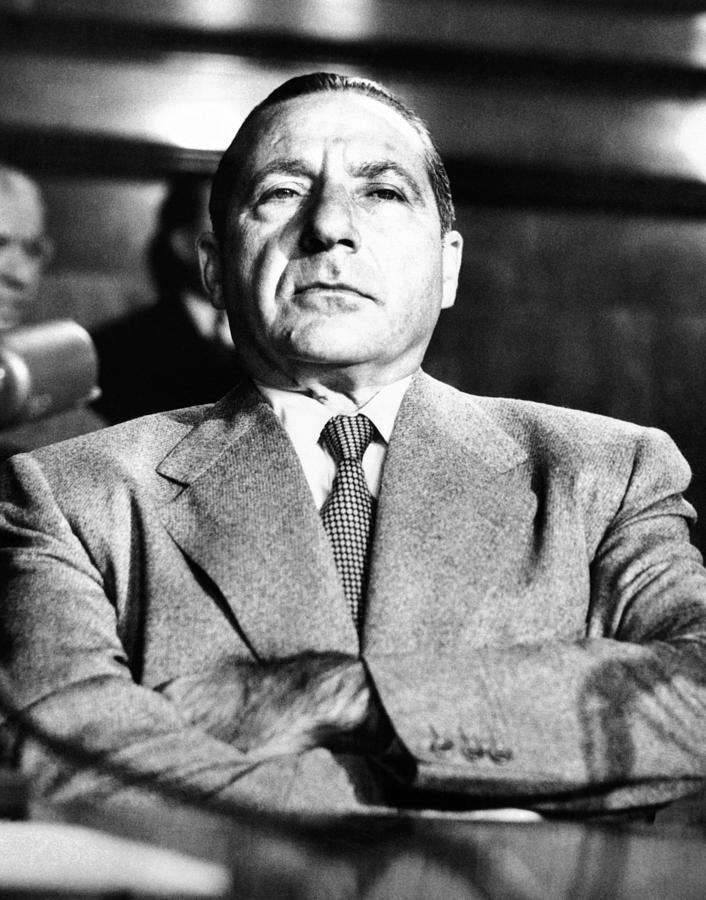
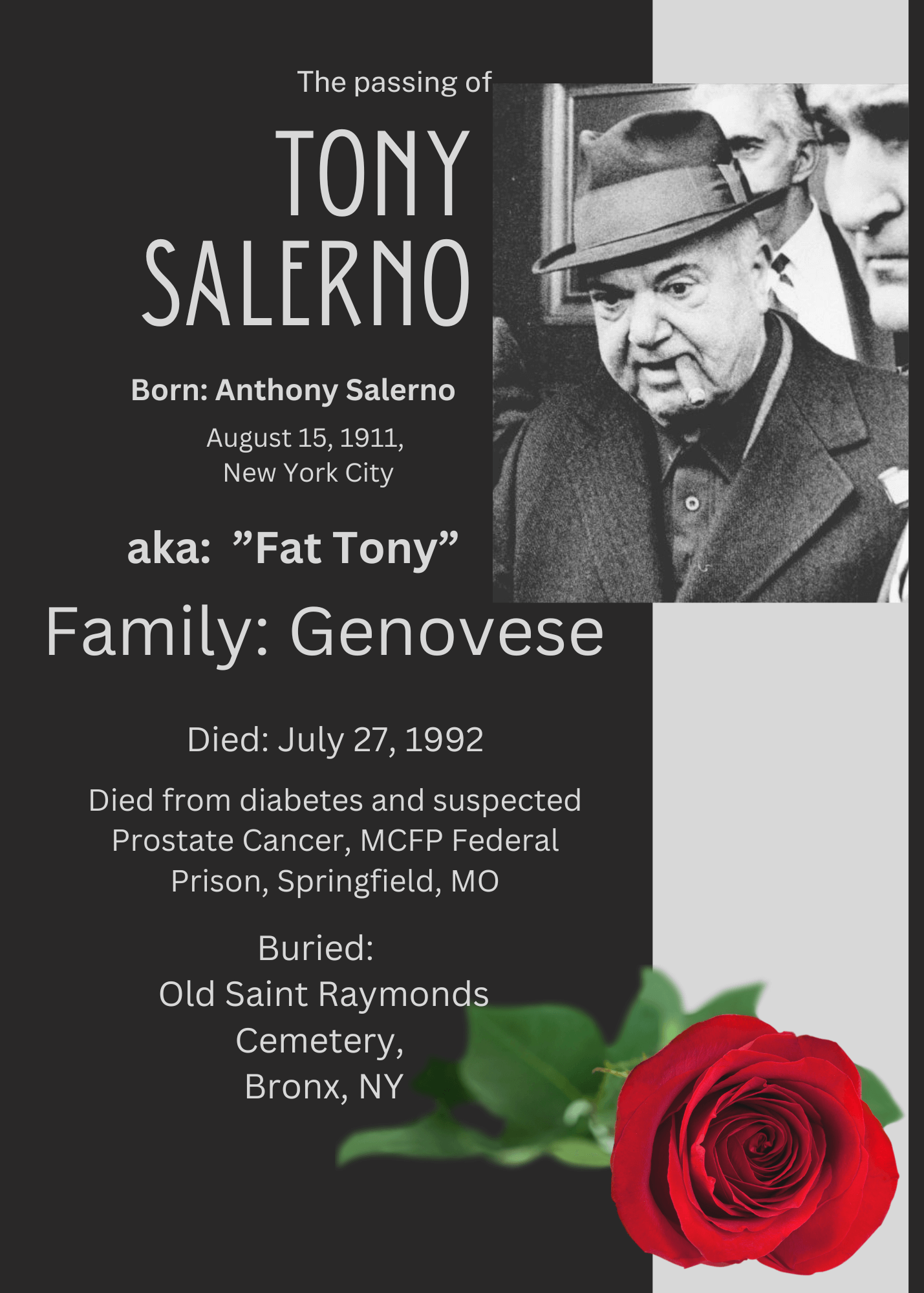
Anthony “Fat Tony” Salerno looked more like a neighborhood shopkeeper than one of the most powerful gangsters in America.
He smiled easily, spoke softly, and spent much of his time sitting outside social clubs in East Harlem, greeting friends and familiar faces. To many people in the neighborhood, he appeared to be an aging businessman who enjoyed the company of old friends and the rhythms of a changing city.
That image was carefully cultivated.
Behind the warm smile and grandfatherly appearance stood a man who occupied the highest levels of organized crime during one of the Mafia’s most turbulent eras. For decades, Salerno navigated a world of racketeering, labor corruption, gambling operations, and shifting alliances among New York’s Five Families. He became one of the most recognizable figures in organized crime, not because he sought attention, but because he represented the fading generation of old-school mob bosses who believed power was best exercised quietly.
By the time federal prosecutors finally brought him down, Salerno had spent decades building a reputation for patience, discipline, and loyalty. His story is not one of reckless ambition or dramatic gang wars. It is the story of a man who survived by understanding that influence often mattered more than violence.
Growing Up in East Harlem
Anthony Salerno was born in New York City in 1911 and grew up in East Harlem, a neighborhood that would remain central to his identity throughout his life.
During the early twentieth century, East Harlem was a bustling immigrant community where political machines, labor organizations, and organized crime frequently overlapped. The streets provided countless opportunities for young men willing to operate outside the law. Gambling operations flourished, bookmakers worked openly, and criminal organizations exerted influence over businesses and labor unions alike.
Salerno entered that world at an early age.
Unlike some future mobsters who built reputations through violence, he initially found success as a bookmaker. Illegal gambling was one of organized crime’s most profitable enterprises, and Salerno demonstrated a talent for managing operations, cultivating relationships, and generating revenue. Those skills attracted the attention of influential figures within the underworld.
It was an education that would serve him well for the rest of his life.
Climbing the Genovese Ladder
Salerno eventually became associated with the powerful Genovese crime family, an organization that traced its roots to some of the most influential figures in Mafia history, including Lucky Luciano and Vito Genovese.
The Genovese family developed a reputation for secrecy and discipline. Unlike some rival organizations whose leaders attracted media attention, Genovese bosses generally preferred operating behind layers of insulation. Power was exercised quietly, often through trusted intermediaries who shielded leadership from direct exposure.
Salerno thrived within that environment.
He earned respect by generating income, maintaining loyalty, and avoiding unnecessary controversy. Fellow gangsters viewed him as dependable, a quality often valued more highly than charisma. As his influence expanded, he became increasingly involved in gambling operations, loansharking, labor racketeering, and other traditional Mafia enterprises.
The money flowed steadily. So did his reputation.
The Front Boss
By the late 1970s and early 1980s, Salerno occupied a position that appeared to place him at the top of the Genovese family.
Law enforcement agencies believed he was the boss. Newspapers described him as the boss. Federal prosecutors targeted him as the boss. The reality, however, was considerably more complicated.
Investigators later concluded that Salerno may have served as a “front boss” for the family, a visible leader whose presence helped shield the true power structure from law enforcement scrutiny. According to this theory, the real authority remained with the elusive Vincent Gigante, while Salerno functioned as a respected public face for the organization.
Whether Salerno fully embraced that role or simply accepted it as part of Mafia politics remains a matter of debate. What is certain is that he handled it effectively.
For years, he absorbed much of the government’s attention while the Genovese family’s deeper leadership structure remained difficult to penetrate.
Labor Racketeering and Construction Power
One of Salerno’s greatest sources of influence came through labor racketeering and control over portions of New York’s construction industry.
Organized crime had long recognized that labor unions and major construction projects offered enormous opportunities for profit. Through intimidation, bid-rigging, extortion, and control of union activity, criminal organizations could exert influence over projects worth hundreds of millions of dollars.
Salerno became a significant figure in that system.
Federal investigations later revealed extensive Mafia involvement in New York’s construction industry, including schemes that manipulated contracts and inflated costs. The arrangement enriched numerous organized crime figures while allowing them to profit from legitimate-looking business activity.
The public often imagined gangsters as armed robbers and street criminals.
The reality was far more sophisticated. The largest fortunes were frequently made in boardrooms rather than back alleys.
The Commission Case
The federal government spent years building cases against organized crime leadership, but the most significant blow arrived in the mid-1980s.
The historic Mafia Commission Trial targeted leaders from several of New York’s Five Families, accusing them of participating in a criminal enterprise that controlled labor unions, construction projects, and a variety of illegal rackets. It represented one of the most ambitious organized crime prosecutions in American history.
Salerno stood among the defendants.
Prosecutors presented extensive evidence demonstrating how Mafia leaders coordinated activities through the Commission, the governing body established to resolve disputes and oversee major decisions among crime families. The case was devastating.
After years of operating behind layers of secrecy and insulation, some of organized crime’s most powerful figures suddenly found themselves facing overwhelming evidence in federal court.
Salerno was convicted and sentenced to a lengthy prison term. For the aging mob boss, freedom was effectively over.
Prison and Decline
Unlike some gangsters who sought reduced sentences through cooperation, Salerno remained loyal to the traditional Mafia code of silence.
He spent the remainder of his life in federal custody as his health gradually deteriorated. The criminal world he had helped shape was changing rapidly. Informants were becoming more common. Federal investigations were growing more effective. Traditional Mafia structures faced challenges unlike anything previous generations had encountered.
Salerno watched much of that transformation from prison. The old rules that had governed organized crime for decades were beginning to erode.
Yet he never publicly abandoned them.
The Legacy of Fat Tony
Anthony Salerno died in federal custody in 1992 at the age of eighty.
His death marked the passing of one of the last prominent Mafia leaders whose career stretched from the old neighborhood rackets of the early twentieth century to the massive federal prosecutions that transformed organized crime enforcement in America.
Unlike flamboyant figures such as John Gotti, Salerno rarely courted publicity. He preferred discretion to spectacle and stability to drama. Those qualities allowed him to survive for decades in an environment where many ambitious gangsters met violent ends.
His career reflected the evolution of organized crime itself. He began as a bookmaker operating in neighborhood gambling circles and eventually became a central figure in enterprises that reached into labor unions, construction projects, and some of the largest economic sectors in New York City.
That progression reveals an important truth about organized crime. The most powerful gangsters were often not the men pulling triggers.
They were the men controlling systems.
The Last King of East Harlem
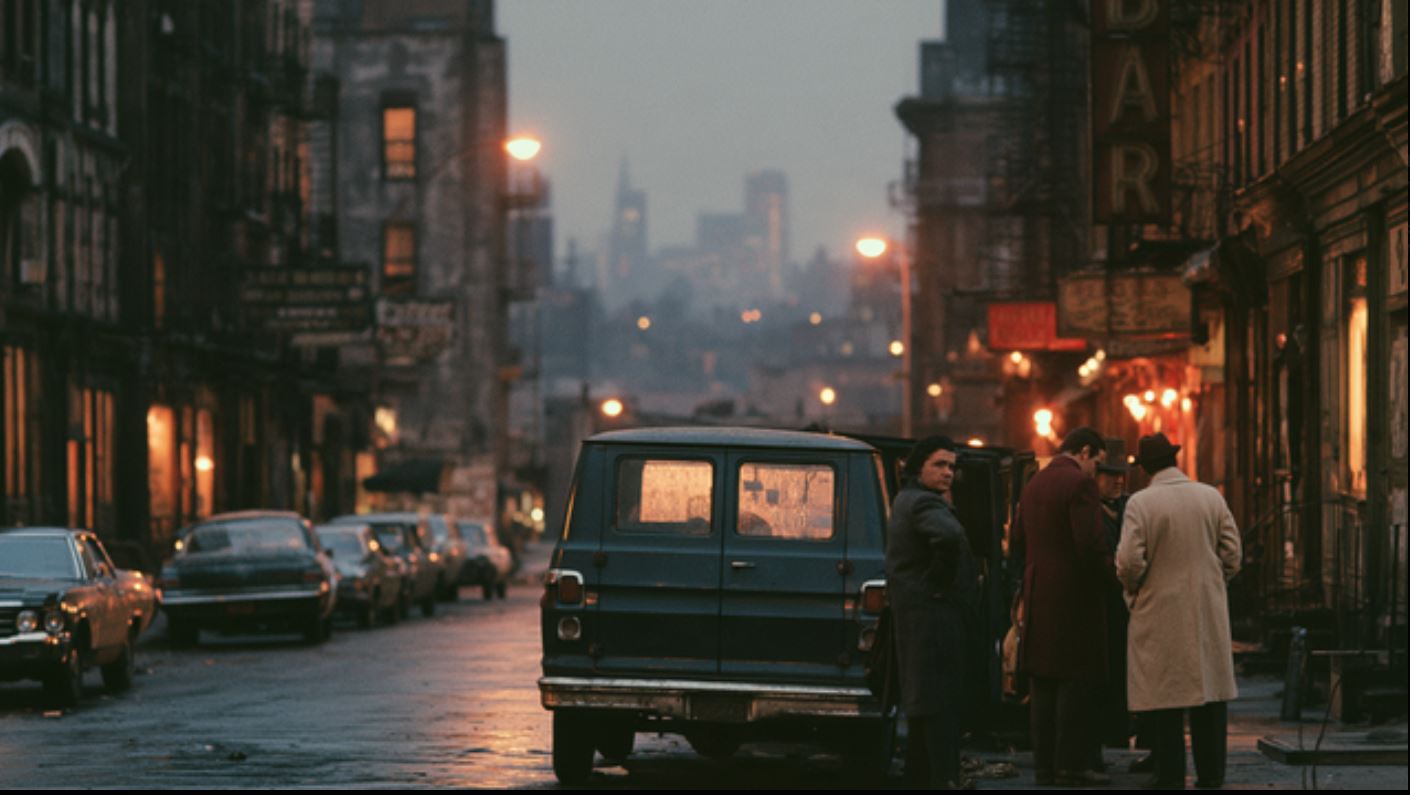
In noir terms, Anthony “Fat Tony” Salerno was the aging king sitting outside a social club on a busy East Harlem street, watching the neighborhood change around him while maintaining the illusion that he was merely another local businessman. People shook his hand, exchanged greetings, and passed by without fully understanding the extent of his influence.
Behind the smile was a survivor. Behind the survivor was a strategist.
And behind the strategist stood decades of criminal power built not through spectacle but through patience, relationships, and control.
When the federal government finally closed the book on Anthony Salerno, it wasn’t simply ending the career of a mob boss. It was closing a chapter on an older style of organized crime, one where power moved quietly through neighborhoods, union halls, and back-room conversations long before it ever appeared in a courtroom.