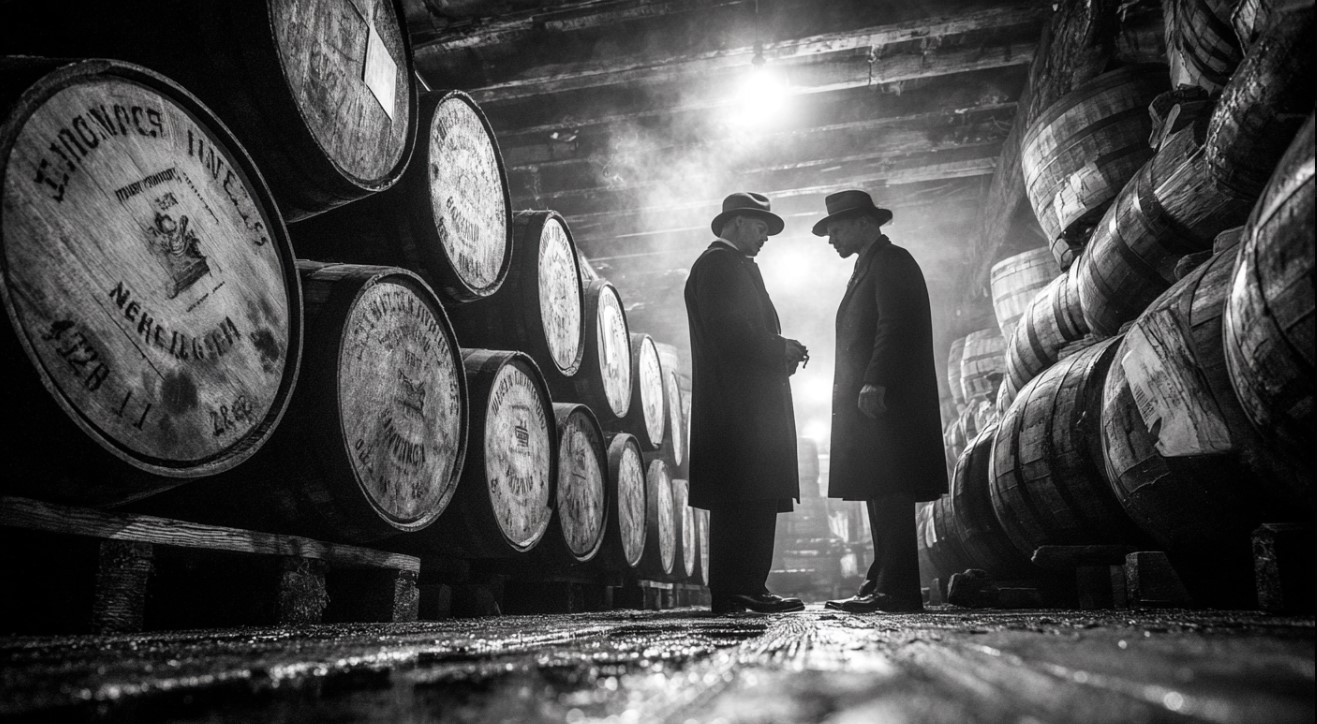
In Prohibition, liquor was literally money. A barrel of Canadian whisky could be sold multiple times over its smuggling route. Speakeasy operators often bought in advance, trading cash, favors, and protection in equal measure. The right barrel meant both profit and survival; the wrong one could mean police attention—or worse.
A cocktail made with bootleg bourbon wasn’t just a drink—it was a statement of supply chain security. Every pour testified that the bar had connections that competitors envied and law enforcement grudgingly respected.