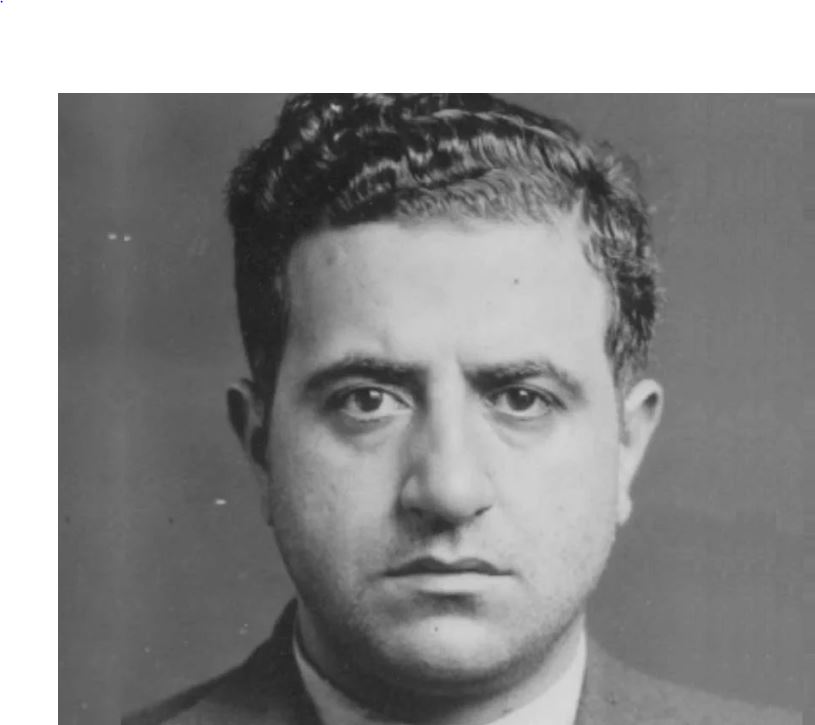
In the smoky backrooms of Prohibition America, where money moved in whispers and death came loud, few men burned brighter—or more recklessly—than Jack “Legs” Diamond. He wasn’t the smartest gangster of his time. He wasn’t the most powerful. But he might have been the most doomed.
Diamond didn’t just live in excess—he embodied it. Liquor, women, spotlight, danger. While other mobsters built empires quietly, he strutted through the underworld like it was a stage, glass in hand, daring fate to catch up. For a while, it didn’t.
But the thing about men like Diamond is this: they don’t slow down. They crash.
A Dancer in a Killer’s World
Born in Philadelphia in 1897 and raised in the hard streets of Brooklyn, Diamond came up during a time when crime was becoming corporate. The rise of organized syndicates under figures like Charles “Lucky” Luciano and Arnold Rothstein was reshaping the underworld into something efficient, disciplined, and cold.
Diamond didn’t fit that mold.
Nicknamed “Legs” for his supposed dancing skills—or more likely his ability to run when things went bad—he moved through the Prohibition era with a gambler’s instinct and a performer’s ego. He aligned himself loosely with powerful figures but never fully submitted to the structure. That independence made him dangerous. It also made him vulnerable.
Where Luciano built systems, Diamond chased moments.
Prohibition: A River of Whiskey and Blood
The passage of the Prohibition in the United States turned criminals into kings. Illegal liquor flowed through cities like New York and Albany, creating fortunes overnight. Diamond saw opportunity—not just in the business, but in the lifestyle that came with it.
He became a major bootlegger, moving whiskey through New York’s arteries and up into the political corruption of upstate New York. Albany, in particular, became one of his playgrounds—a city where politicians and gangsters drank from the same glass.
Diamond didn’t just sell alcohol. He consumed it. Publicly. Constantly.
Speakeasies weren’t just business venues for him; they were extensions of his identity. He reveled in attention, drank heavily, and cultivated a reputation as a charming but unpredictable presence. In a world where discretion was survival, Diamond chose visibility.
That choice would follow him like a shadow.
The Cost of Excess
Unlike the calculating restraint of men like Frank Costello, Diamond operated on impulse. He drank hard, partied harder, and spoke too freely. Associates found him entertaining—but also exhausting. Rivals saw weakness.
There’s a pattern that emerges in the lives of gangsters who leaned too heavily into indulgence: they became liabilities.
Diamond’s drinking wasn’t just social—it blurred the lines between caution and carelessness. He showed up in places he shouldn’t have been. He trusted people he shouldn’t have trusted. He pushed boundaries with law enforcement and rival gangs alike.
In the Mafia’s evolving code, this kind of behavior wasn’t just frowned upon—it was dangerous to everyone involved.
Bullets That Couldn’t Kill Him
What made Diamond a legend wasn’t just how he lived. It was how often he survived.
He became known as the “Clay Pigeon of the Underworld” because people kept shooting at him—and he kept living. Assassination attempts stacked up like unpaid bar tabs.
- In 1930, he was shot multiple times in a Manhattan hotel room and survived.
- Later that year, gunmen ambushed him again. He walked away.
- In another incident, he was riddled with bullets and still managed to recover.
Each survival only inflated his myth. Newspapers ate it up. The public turned him into a kind of outlaw celebrity—a gangster who couldn’t be killed.
But survival has a way of breeding overconfidence.
And overconfidence, in Diamond’s world, was fatal.
Albany: Where the Music Stopped
By 1931, Diamond had worn out his welcome in too many places. His operations in Albany had drawn attention—not just from law enforcement, but from political power brokers who preferred their criminals quiet and controllable.
Diamond was neither.
He had been acquitted in multiple trials, slipping through the legal system with the same uncanny luck that had saved him from bullets. But behind the scenes, patience was running thin. His drinking, his noise, his unpredictability—it all added up.
In December 1931, Diamond checked into a boarding house in Albany. It wasn’t a fortress. It wasn’t even particularly secure. That alone tells you something about how he viewed the danger around him.
In the early hours of December 18, gunmen entered his room.
This time, there was no miracle.
He was shot repeatedly in the head, execution-style. When police arrived, Diamond was slumped in a chair, lifeless at last. The man who had danced through gunfire couldn’t outrun the final bullet.
Who Pulled the Trigger?
Like many mob killings of the era, Diamond’s murder was never definitively solved. But theories abound.
Some point to rival gangsters tired of his antics. Others suggest political figures in Albany who saw him as a liability that needed to be removed. There are even whispers of connections to larger syndicate decisions—an informal agreement that Diamond had become too reckless to keep around.
What’s clear is this:
He wasn’t killed for one thing. He was killed for everything.
His drinking. His visibility. His refusal to play by the emerging rules of organized crime. In a world that was becoming more structured and disciplined, Diamond remained chaotic.
Chaos doesn’t last long in organized systems.
The Myth vs. The Man
In death, Diamond became something larger than he ever was in life. The press romanticized him. Stories exaggerated his charm, his luck, his defiance. He was painted as a rogue, a rebel, a man who lived by his own code.
But the reality is less flattering—and more interesting.
Diamond wasn’t a mastermind. He wasn’t building a lasting empire. He was a man caught between two eras: the wild, unstructured violence of early Prohibition and the calculated, corporate criminality that followed.
Men like Luciano adapted. Men like Diamond didn’t.
And alcohol—so central to his rise—played a quiet but undeniable role in his fall. It amplified his worst instincts, dulled his caution, and made him exactly the kind of man the new Mafia couldn’t afford to tolerate.
A Cautionary Tale in a Glass
There’s a bitter irony at the heart of Jack Diamond’s story. He made his fortune off a nation’s thirst, yet that same culture of excess helped undo him.
The Mafia learned from men like Diamond. By the 1940s and 1950s, the most successful bosses emphasized discipline, control, and—at least publicly—moderation. They understood something Diamond never quite grasped:
Power isn’t just about taking risks. It’s about knowing when to stop.
Diamond never stopped.
He drank, he talked, he pushed, he survived—until he didn’t.
Last Call
Jack “Legs” Diamond didn’t die quietly, and he didn’t live carefully. He moved through Prohibition America like a man convinced he was untouchable, fueled by whiskey and momentum. For a time, he was right.
But the underworld has a way of correcting illusions.
In the end, Diamond wasn’t brought down by a single enemy or a single mistake. He was undone by a pattern—a life lived too loudly in a world that increasingly demanded silence.
The music faded. The glass emptied.
And the man who wouldn’t stay dead finally did.
References
- English, T. J. Paddy Whacked: The Untold Story of the Irish American Gangster. HarperCollins, 2005.
- Sifakis, Carl. The Mafia Encyclopedia. Da Capo Press, 2005.
- Critchley, David. The Origin of Organized Crime in America: The New York City Mafia, 1891–1931. Routledge, 2009.
- United States Bureau of Investigation (later FBI). Early organized crime reports and Prohibition-era case files, 1920s–1930s.
- New York Times Archives. Coverage of Jack Diamond trials and murder, 1930–1931.
- Albany Times Union Archives. Contemporary reporting on Diamond’s activities and assassination.