Article 1 in the series: “The Loyalty Test: How Governors Learned to Fall in Line”
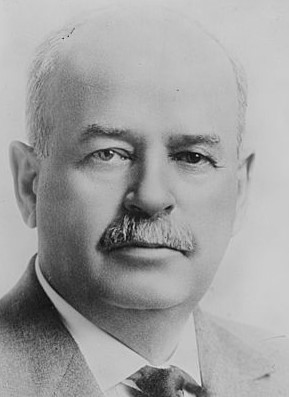
The first thing you notice about Len Small is that he looks like a man who would never get his hands dirty. Round face. Neatly kept. The kind of politician who’d rather shake hands than throw punches, who’d rather sign papers than break noses. In the photographs, he always seems comfortable—too comfortable for a man who came to power while Chicago was turning into an open-air slaughterhouse.
In the early 1920s, Illinois didn’t just have a crime problem. It had a crime economy. Prohibition had taken a dry law and poured gasoline on it. Beer was illegal, thirst was not, and Chicago became the busiest bar in America—if you knew the right doors to knock on and the right palms to grease. The city belonged to men with guns and accountants, and by the time Len Small took the oath of office in 1921, one of those men was already rising fast: Al Capone.
Small’s administration didn’t invent corruption. It inherited it, fed it, and made it comfortable.
Before he ever sat in the governor’s chair, Len Small had already met the inside of a courtroom. As Illinois state treasurer, he’d been indicted for embezzlement—more than $600,000 missing, a fortune in the 1910s. The trial was a circus with a strange ending: the jury acquitted him, but not before it emerged that several jurors had received “loans” from banks connected to Small’s political allies. The money vanished. The case evaporated. The lesson stuck. In Illinois politics, gravity was optional.
By the time Small ran for governor, he wasn’t running as a reformed man. He was running as a survivor.
Chicago in 1921 was already humming with illegal breweries, hijacked trucks, and speakeasies tucked behind butcher shops and tailor stores. The Volstead Act had turned vice into infrastructure. You needed protection to sell liquor, and protection meant politics—city hall, the courts, the police, and, if you were ambitious, the statehouse.
Small’s office didn’t have to give orders. It just had to stop asking questions.
The real power of a governor isn’t in speeches. It’s in appointments, commutations, and pardons—the quiet levers that decide who stays in a cell and who walks back into the night. Small pulled those levers often, and he pulled them in ways that made prosecutors grind their teeth and wardens stare at their shoes.
Convicted criminals walked out early. Sentences shrank. Files went missing. Explanations were thin and polite. Officially, it was mercy. In practice, it was oxygen.
While the beer wars turned Chicago’s streets into a ledger of bodies—North Side versus South Side, Irish versus Italian, old crews versus new—the state government stayed remarkably serene. The city’s gangsters were killing each other with military efficiency, but the political machinery above them kept moving like nothing was wrong. Licenses were issued. Judges were appointed. Wardens got their instructions. The governor smiled for the cameras.
Al Capone didn’t need a written agreement. Men like Capone never did. What they needed was predictability. They needed to know that when one of their own got pinched, there was a chance—just a chance—that the door would open again sooner than it should. They needed to know that pressure, applied in the right places, could soften hard edges.
Len Small’s Illinois was a place where hard edges had a habit of turning soft.
The press noticed. Reformers noticed. Federal agents definitely noticed. But state politics in the 1920s was a closed room filled with cigar smoke and mutual favors. Accusations slid off like rain on oilcloth. When critics pointed to the governor’s generosity with clemency, the administration talked about fairness. When they pointed to Chicago’s open secret—that the Outfit was running half the city—the answer was always the same: law enforcement was a local matter.
That was the trick. Chicago burned, and Springfield shrugged.
It’s tempting to imagine corruption as a single dirty handshake in a back room. The truth is uglier and more boring. It’s a system of habits. A way of doing business. A thousand small decisions that all tilt in the same direction. Len Small didn’t need to meet Capone. He didn’t need to take a phone call from Torrio or sit at a table with ward bosses. He just had to create an environment where the right outcomes kept happening.
And they did.
When Small’s own legal history came up—and it always did—supporters waved it away as old business, settled business. But in the shadows, it worked like a credential. He was a man who’d been indicted, tried, and walked. He understood how fragile justice could be when it was leaned on from enough angles.
Chicago’s police department, already riddled with graft, took its cues from above. Raids were selective. Some breweries got smashed. Others never saw a badge. Speakeasies with the right connections stayed open. Trucks with the right markings kept rolling. The war between gangs raged, but the business of booze never slowed.
And through it all, Springfield kept its hands clean by keeping them still.
Small’s defenders would later argue that he was no different from any other machine politician of the era. That Prohibition was unworkable. That corruption was baked in. All of that is true. But it misses the point. The question isn’t whether Len Small created the underworld. The question is whether he gave it room to breathe.
The record says he did.
Clemency after clemency chipped away at the idea that sentences meant what they said. Political allies with shady friends found doors opening instead of closing. The message traveled faster than any speech: if you were useful, if you were connected, if you knew who to see, the state could be persuaded to forget.
That kind of forgetfulness is priceless to men who make their living breaking the law.
By the mid-1920s, Capone’s organization was no longer just a gang. It was a corporation with gunmen. Breweries, distribution networks, payoffs, lawyers, accountants—the whole ugly machine. It thrived in a city where local government was compromised and state government was distant. Len Small didn’t build that machine. But he didn’t jam it either.
In noir stories, there’s always a moment when the camera pulls back and you see how high the rot goes. In Illinois, that moment came slowly and without a clean ending. Small left office in 1925. The beer wars kept going. Capone kept rising. The bodies kept stacking. The system stayed the system.
History is sometimes kind to men like Len Small because they didn’t pull the trigger themselves. They just made sure the room was quiet when the shots were fired.
The real legacy of his administration isn’t a single scandal or a single pardon. It’s the atmosphere. The sense that the statehouse was not a wall against the underworld, but a curtain—drawn just enough to keep polite society from seeing what was happening behind it.
In the end, that’s how organized crime likes it. Not with declarations. Not with public alliances. But with silence. With patience. With officials who understand that looking the other way can be the most powerful gesture of all.
Chicago in the 1920s became a legend of blood and bootleg whiskey. Al Capone became a headline, then a myth. Len Small became a footnote to some and a symbol to others: proof that sometimes the most important man in a criminal city isn’t the one holding the gun.
It’s the one holding the pen.
References & Sources
- Pietrusza, David. The Roaring Twenties: A History of the United States, 1919–1929. Carroll & Graf, 1998.
- Sifakis, Carl. The Mafia Encyclopedia. Facts on File, 2005.
- Linder, Douglas O. “The Trial of Len Small.” University of Missouri-Kansas City School of Law (Famous Trials Project).
- Illinois State Archives. “Len Small, Governor of Illinois (1921–1925).”
- Kobler, John. Capone: The Life and World of Al Capone. Da Capo Press, 2003.
- Nash, Jay Robert. Darkest Hours: A Narrative Encyclopedia of Worldwide Disasters. Thomas Y. Crowell, 1977 (sections on Prohibition-era corruption).
- U.S. Senate, Special Committee to Investigate Organized Crime in Interstate Commerce (Kefauver Committee) hearings, 1950–1951 (background on political protection systems).
- Asbury, Herbert. The Gangs of Chicago. Alfred A. Knopf, 1940.