In the neon-glow haze of 1950s and 60s Las Vegas, a different kind of game was being played behind the glittering facades of casinos and the endless clatter of slot machines. On the surface, Vegas was a fantasyland where fortunes were made and lost, where showgirls shimmered under spotlights, and where tourists drowned their inhibitions in cocktails and craps tables. But behind the velvet ropes, in the smoky backrooms, sat men with names that were never etched into company charters or listed in licensing documents. Men who wore silk suits and carried brass knuckles. The true owners of Las Vegas weren’t businessmen in boardrooms — they were mobsters in the shadows.
The Rise of a Mirage
After World War II, Las Vegas became the ultimate boomtown. Legalized gambling in Nevada, cheap land, and a Wild West regulatory atmosphere made it fertile ground for organized crime. The city became a beacon to America’s most powerful crime syndicates — the Chicago Outfit, the New York Genovese family, the Cleveland mob, the Kansas City mob, and others. But they weren’t looking to gamble. They were looking to own the house.
The Mafia didn’t sign deeds or attend shareholder meetings. They moved silently, slipping behind legitimate fronts and puppet executives. Their names — like Meyer Lansky, Frank “Lefty” Rosenthal, Tony Spilotro, Bugsy Siegel, Moe Dalitz, and Sam Giancana — were whispered in casino lounges and FBI offices alike. These men were ghosts in the paperwork but gods on the casino floor.
Bugsy Siegel and the Flamingo Gamble
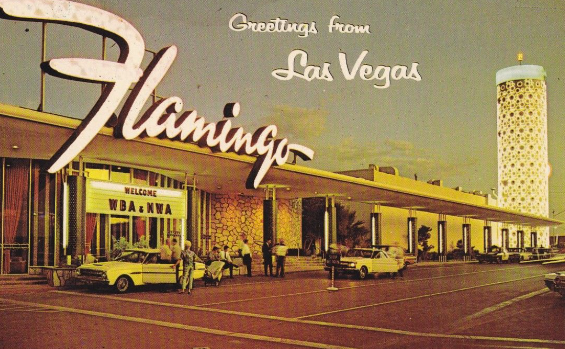
One of the earliest and most infamous mob ventures in Vegas was the Flamingo Hotel, bankrolled by Benjamin “Bugsy” Siegel, a flashy, volatile figure associated with the Luciano crime family. Opened in 1946, the Flamingo was envisioned as a luxury oasis in the desert. Siegel poured millions into it — much of it Mafia money — and quickly ran over budget. When profits didn’t materialize fast enough and rumors of skimming circulated, Siegel was shot dead in his girlfriend’s Beverly Hills home in 1947. Officially, Siegel wasn’t listed as the owner of the Flamingo. But anyone with eyes and ears knew who really ran the joint.
After Siegel’s execution, the Flamingo quickly became profitable — and firmly under the control of the mob. This brutal example set the tone for the decades that followed: the Mafia would build Vegas, profit from Vegas, and if necessary, kill for Vegas.
Atomic Cocktails and Mob Cash: The Strange Marriage of Nuclear Tourism and Organized Crime
The Skim: Vegas’ Real Jackpot
The secret sauce of the mob’s casino empire was “the skim.” It was simple and brilliant: casinos reported only part of their earnings, taking millions off the top before the IRS or state gaming authorities ever saw a penny. The skim cash — counted in untraceable bundles — was ferried out of town by couriers and divided up among the mob families who secretly owned the casinos.
One of the most notorious examples of this scheme was the Stardust Casino, which was run by Frank “Lefty” Rosenthal on behalf of the Chicago Outfit. Rosenthal, a gambling mastermind with a razor-sharp brain and a flair for arrogance, never held a gaming license. Instead, he was named “entertainment director” while he effectively controlled all operations. Meanwhile, his partner, Anthony “Tony the Ant” Spilotro, handled enforcement — violently. Skimmed money from the Stardust, Fremont, Hacienda, and Marina casinos was delivered regularly to mob bosses back in Chicago, Kansas City, and Cleveland.
The FBI eventually caught on, launching an investigation known as “Operation Strawman.” It exposed how midwestern crime families had placed front men — so-called “strawmen” — as legal owners and executives, while mobsters pulled the strings. Casinos were technically owned by corporations with clean paper trails, but the profits told a different story.
The Front Men and Fake Faces
To mask their involvement, mobsters installed respectable businessmen as their proxies — often bribing, threatening, or recruiting insiders to act as the public face. This was essential because Nevada’s gaming commission required casino owners and executives to pass rigorous background checks. Mob figures had too many red flags to qualify, so they stayed invisible, using tools like offshore accounts, fake partnerships, and corporate shells to blur the trail.
Moe Dalitz, a Cleveland mobster turned Vegas kingpin, was a master of this game. He helped build the Desert Inn and the Stardust, using legitimate-seeming entities to launder mob money into brick-and-mortar casinos. Dalitz even cultivated political allies, donated to civic causes, and appeared as a pillar of the community. Behind the façade, though, he remained deeply tied to underworld operations.
The Desert Laundromat: How Mob Money Became Legit in Las Vegas
Political Protection and Law Enforcement Blindness
How did this vast criminal enterprise survive for so long? Simple: corruption and fear. Nevada politicians were often complicit, either turning a blind eye or directly profiting from the mob’s success. Local law enforcement, underfunded and often intimidated, rarely intervened. And even when the FBI took notice, the mob’s layers of deniability and tight-lipped discipline made convictions nearly impossible.
Not until the 1970s and 80s did federal pressure and sweeping RICO indictments begin to crack the foundation. Undercover agents, wiretaps, and casino audits slowly exposed the depth of organized crime’s grip on the Strip. By the late 1980s, many mob-connected casinos had been sold off or shut down, replaced by corporate giants like Mirage Resorts and Caesars Entertainment. The old Vegas — the mob’s Vegas — was fading into legend.
The Legacy Beneath the Lights
Today’s Las Vegas is a sanitized, family-friendly theme park compared to its outlaw roots. But the foundations of the modern Strip were laid by men with blood on their hands and millions in their pockets. The mob didn’t just build casinos — they built Las Vegas. Their names may never appear in the history books or ownership records, but their fingerprints are everywhere: in the city’s layout, its legends, its lore.
For all its glamor and glitz, Las Vegas was once a city run not by corporations or gaming boards, but by criminals who knew how to turn vice into gold. They didn’t just bet on Vegas — they owned the table, rigged the dice, and made the rules. And for a few dark, glorious decades, they won.
Operation Strawman. The Mob’s Paper Empire crumbles in Las Vegas
References:
- The Money and the Power: The Making of Las Vegas and Its Hold on America by Sally Denton and Roger Morris
- Casino: Love and Honor in Las Vegas by Nicholas Pileggi
- Open City: True Story of the KC Crime Family’s Infiltration of Las Vegas by J. Michael Niotta
- FBI Vault: Las Vegas – https://vault.fbi.gov/Las%20Vegas%20Field%20Office
- Nevada Gaming Control Board Archives – https://gaming.nv.gov/
- PBS Documentary Las Vegas: An Unconventional History
- Smithsonian Magazine, “How the Mob Created Las Vegas,” April 2011
- The Mob Museum (Las Vegas, NV) – https://themobmuseum.org/