In the underworld mythology of 20th-century New York, few figures radiate the same anarchic charge as the Gallo brothers—Joey, Larry, and Albert (“Kid Blast”). They weren’t simply mobsters. They were insurgents. Agents of chaos. Three Brooklyn street soldiers who refused to kneel before the Mafia’s sacred traditions, choosing instead to carve out their own violent legend in the gutters of Red Hook, South Brooklyn, and eventually across New York’s criminal map.
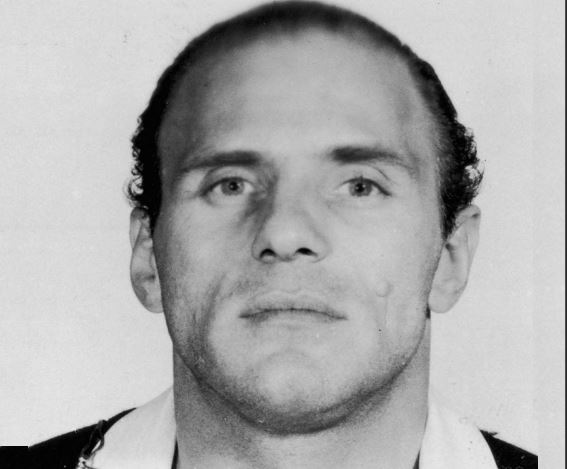
But at the center of that legend—smirking, cigarette dangling, blue eyes dancing with mischief and menace—was Crazy Joey Gallo, the man who managed to be both a gangster and a dark folk hero. The brothers were infamous; Joey was unforgettable.
A Childhood Cut from Concrete and Razor Wire
The Gallo brothers were born into poverty on President Street, a place where violence didn’t just happen—it hovered. Their father, Albert Gallo Sr., was a bootlegger and numbers man. By the time the boys were teenagers, they ran errands for bookmakers, hijacked trucks for pocket change, and graduated to armed robbery with the same inevitability that other kids took after-school jobs.
Joey, the middle brother, proved different early. Teachers described him as polite, almost elegant. But beneath that cool surface simmered something volatile. He was diagnosed with schizophrenia at a young age—though in Joey’s world, madness wasn’t an illness; it was a weapon.
By the late 1940s, the brothers were already earning a reputation as young psychopaths with ambition.
The Birth of the Gallo Crew: A Gang Within the Mafia
In the 1950s, the Gallos attached themselves to the Profaci crime family, but the brothers never behaved like typical soldiers. They mocked the hierarchy, defied orders, and operated like an independent militia. Their crew was small but terrifying—hard-eyed young men who idolized Joey’s unhinged charisma.
Joey took the role of chief strategist, Larry acted as the steady lieutenant with a more traditional mobster’s temperament, and Kid Blast—quiet, intense, unpredictable—served as the enforcer who rarely missed.
The Gallo gang specialized in extortions, hijackings, contract hits, and bombings, always pushing the limits of acceptable mob behavior.
But what made them dangerous wasn’t the crimes. It was the defiance.
Joey Gallo’s Aspirations
Joey wanted autonomy. A family of his own. He saw himself not as a cog in New York’s criminal machine but as a king.
And in 1961, he made his move.
The Profaci War: The Night the Mafia’s Rules Shattered
The Gallo-Profaci War began when the brothers staged one of the most brazen rebellions in Mafia history. Furious over what they saw as Joe Profaci’s greed, the Gallos kidnapped several top Profaci captains, including underboss Joseph Magliocco and consigliere Frank Profaci.
It was unheard of. Soldiers didn’t kidnap their bosses. They accepted the food chain, even when it tasted like poison.
But the Gallo brothers weren’t soldiers—they were insurgents.
Negotiations followed, tension skyrocketed, and the streets of Brooklyn pulsed with murder attempts. Joey Gallo had successfully declared war on his own crime family, shattering decades-old rules of obedience.
The conflict dragged on. Blood pooled in alleyways. Bombs rattled tenement windows. Attempts were made on Larry’s life, on Joey’s, on every member of the crew. The Gallos refused to fold.
But the war ended not with surrender, but with Joey’s arrest. In 1962, he was sentenced to seven-to-fourteen years for extortion and attempted murder—charges he wore like medals.
Prison: Joey Gallo, the Intellectual Criminal
If Joey was dangerous before prison, he was mythic after.
While locked away, he reinvented himself. He read Sartre, Camus, and Hemingway. He hosted political discussions with Black Muslim inmates. He practiced art and sharpened his philosophy of rebellion. When the Gallo legend traveled through the cell blocks, Joey wasn’t seen as a mobster—he was a revolutionary.
His charisma reached violent extremes. Rumors whispered that Joey orchestrated racial warfare inside the prison walls. Whether true or not, Joey Gallo emerged with a reputation bigger than any street corner.
When he walked out of Auburn Correctional Facility in 1971, he was no longer a footnote in Mob history. He was a fully formed urban myth.
The Colombo War and the Rise of Joey Gallo
While Joey rotted in prison, the Profaci family transformed into the Colombo family, but nothing else changed. The grudges remained fresh as blood.
By the time Joey returned, the streets were shifting. The Colombo family was fractured, aging, and distracted. Opportunity knocked like a gun barrel on a steel door.
Joey answered.
The Murder of Joe Colombo
On June 28, 1971, at the Unity Rally in Columbus Circle, Joe Colombo was shot in the head by a lone gunman who was immediately killed by Colombo’s bodyguards. Rumors spiraled instantly: Joey Gallo had orchestrated the hit.
The FBI investigated. The Mafia whispered. Joey smirked.
He denied everything, but he didn’t hide his satisfaction.
Publicly, Joey reinvented himself as a nightclub philosopher, charming the New York glitterati. Celebrities invited him to dinners. Journalists loved him. He fed them cryptic lines about violence and fate.
But beneath the nightclub lights, he was also quietly rebuilding his criminal empire.
And the Colombos wanted him dead.
The Death of Crazy Joey: A Final Act of Violence
It happened fast.
April 7, 1972. Umberto’s Clam House. Little Italy.
Joey was celebrating his 43rd birthday with his wife, stepdaughter, and friends. It was early morning—wine glasses half-empty, cigarettes burning down, laughter echoing across the cramped room.
Then the door swung open.
Three gunmen stepped inside.
The room exploded with gunfire—shotgun blasts, .38 revolvers, bullets splintering walls and shattering dishes. Joey stumbled into the street, blood pouring across the cobblestones, fighting for life to his last breath. He collapsed on the sidewalk outside Mulberry Street, dying in the cold dawn air.
His assassins were Colombo loyalists—men who wanted the war ended once and for all.
But Joey won in his own twisted way. His death immortalized him. He became a character in songs, novels, films. A symbol of rebellion, even self-destruction. A gangster who refused to kneel.
Larry and Kid Blast: The Survivors
After Joey’s murder, Larry stepped into the leadership role with a quieter, more disciplined approach. He made peace arrangements, survived another Colombo war, and pursued a low-key criminal career that lacked Joey’s theatricality but kept him alive.
Kid Blast, meanwhile, retained the same eerie intensity but learned the value of invisibility. He drifted into the background, surviving the turbulence and fading into the underworld’s shadows.
The Gallo brothers had begun together in chaos, but their endings couldn’t have been more different. One became a martyr of rebellion; the others became survivors of it.
Legacy: The Mad Prince of President Street
Joey Gallo remains one of the most compelling characters in Mob history not because he was the most powerful, but because he was the most unpredictable. He was a poet of violence—a man who treated the Mafia like a stage and the streets like a script he intended to rewrite.
The Gallo brothers as a unit were dangerous.
But Joey Gallo was unforgettable.
A gangster.
A madman.
A rebel.
A myth.
The last great outlaw of the old Brooklyn underworld.
References
- Anastasia, George. Blood and Honor: Inside the Scarfo Mob. Bantam, 1991.
- Blumenthal, Ralph. The Last Days of the Sicilians. Times Books, 1988.
- Breslin, Jimmy. The Gang That Couldn’t Shoot Straight. Viking Press, 1969.
- Capeci, Jerry. Mafia Encyclopedia. HarperCollins, 2002.
- Capeci, Jerry & Gene Mustain. Murder Machine. Onyx, 1992.
- Critchley, David. The Origin of Organized Crime in America. Routledge, 2009.
- Gage, Nicholas. Mafia, U.S.A. Dell, 1972.
- Maas, Peter. The Valachi Papers. Putnam, 1968.
- Raab, Selwyn. Five Families: The Rise, Decline, and Resurgence of America’s Most Powerful Mafia Empires. Thomas Dunne Books, 2005.
- Talese, Gay. Honor Thy Father. World Publishing, 1971.
- U.S. Senate Committee on Government Operations. Organized Crime and Illicit Traffic Hearings, 1963–1971.