Part 1 of the “White Coats of the Underworld: How Doctors Quietly Served the Mafia” series
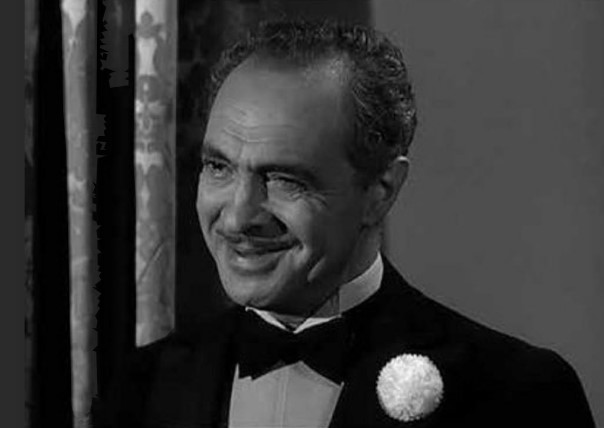
Dr. Joseph “Joe” Cefalu and the Medical Shield of the Chicago Outfit
Chicago has always understood the value of time. Time to run. Time to hide. Time to forget. The Chicago Outfit learned early that murder was fast, but justice was slow—and if you could slow it just a little more, you could outrun it entirely.
That’s where Dr. Joseph “Joe” Cefalu lived. Not in the alleys or the counting rooms, but in the pause between accusation and consequence. He wasn’t a gangster. He didn’t need to be. He was something more useful: a physician whose medical opinions carried enough weight to stop the machinery of the courts cold.
No headlines ever called him the Outfit’s doctor. That kind of title would have been sloppy. Instead, his name drifted through law-enforcement files and Senate testimony like smoke—never solid enough to grab, but impossible to ignore.
The Cleanest Cover in a Dirty City
By the mid-20th century, the Chicago Outfit had matured into an enterprise that valued discretion over spectacle. The gang wars of the Prohibition era were over. Violence still existed, but it was meant to be invisible. The real work was done quietly—through lawyers, accountants, politicians, and when necessary, doctors.
Cefalu practiced medicine during a time when physicians were rarely questioned. A doctor’s word wasn’t just respected; it was treated as fact. Judges deferred. Prosecutors hesitated. Jurors believed.
If a man couldn’t testify because his heart was weak, that was the end of the discussion.
And so, again and again, Outfit associates scheduled to appear before grand juries or in criminal court suddenly became unwell. Not theatrically sick. Respectably sick. The kind of illness that sounded responsible rather than suspicious.
High blood pressure. Cardiac irregularities. Nervous exhaustion. Conditions that left no fingerprints.
Illness as Strategy
The genius of medical delay was its subtlety. A missing witness raised alarms. A hospitalized one raised sympathy.
Cefalu’s alleged role—never proven, never fully denied—was to provide what the Outfit needed most: time. Time for witnesses to disappear. Time for memories to soften. Time for prosecutors to lose leverage. Time for juries to forget names and faces.
These weren’t crude fabrications. They were medical judgments pushed to their most cautious extreme. Stress could kill a man with heart trouble. Courtrooms were stressful. The conclusion wrote itself.
By the time a defendant recovered, the moment had passed. Justice thrives on momentum. The Outfit specialized in killing it.
When Washington Came Calling
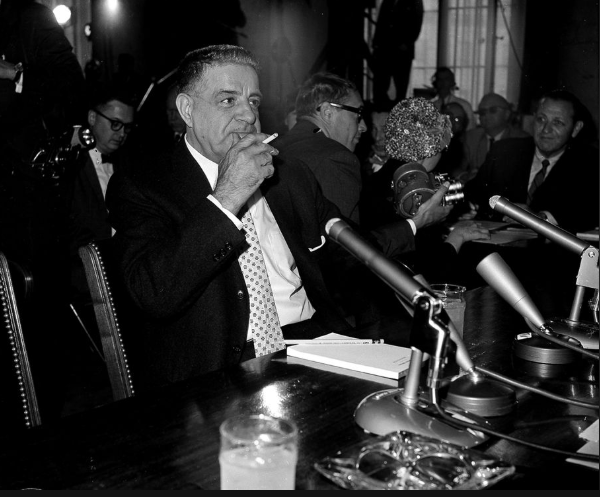
The danger peaked in the early 1950s, when Senator Estes Kefauver’s hearings dragged organized crime into the national spotlight. Chicago mob figures were subpoenaed, named, photographed, and exposed. For the Outfit, this wasn’t just bad publicity—it was existential threat.
And suddenly, the waiting rooms filled.
Law-enforcement agents quietly noted the pattern: known mobsters developing serious medical conditions just as subpoenas were served. The same doctors’ names recurring in paperwork. The same cautious language appearing again and again.
Cefalu’s name surfaced in internal reports and whispered complaints. Never in indictments. Never in open court. The hearings shined a light on the Outfit—but the light never quite reached the men who kept it running smoothly.
The Gray Zone of Medicine
What protected Cefalu—and others like him—was medicine itself. The law demands certainty. Medicine operates in probabilities.
Two doctors can disagree honestly. One can err on the side of caution and still remain professionally defensible. That space between certainty and caution was where organized crime found shelter.
To prosecute a doctor for aiding the Mafia, the government had to prove intent. Not suspicion. Not pattern. Intent. And intent is nearly impossible to diagnose.
Cefalu didn’t sign affidavits declaring men innocent. He didn’t testify in their defense. He issued medical opinions. That was enough.
Hospitals as Safe Havens
Hospitals offered more than beds and medication. They offered control.
Inside a hospital, access was limited. Conversations could be monitored. Visitors could be screened. Law enforcement had to tread carefully. A man in a hospital gown didn’t look dangerous. He looked human.
The Outfit understood image. A defendant on oxygen was harder to hate than one in handcuffs.
Cefalu’s work—if the suspicions were correct—helped transform criminals into patients. That shift mattered. It softened judges. It complicated prosecutions. It blurred lines.
And blurring lines was the Outfit’s greatest skill.
Why No One Ever Fell
Cefalu lived in the safest position of all: adjacent to crime, but not inside it. He didn’t order hits. He didn’t launder money. He didn’t attend meetings. His alleged service was passive, professional, and defensible.
If questioned, he could say what every doctor says: I did what I thought was best for my patient.
There were no taped conversations. No envelopes caught on camera. No witnesses willing to swear he knowingly obstructed justice. Just patterns, timing, and coincidence piled too neatly to ignore—but too loosely to prove.
The Outfit preferred it that way.
The Cost of Delay
The real damage wasn’t dramatic. There were no chalk outlines tied to Cefalu’s name. No headlines. No trials.
The damage lived in the cases that quietly collapsed. In prosecutions postponed until witnesses moved away or died. In juries that never heard testimony because it came too late.
Justice didn’t fail loudly. It expired slowly.
That kind of death never makes the papers.
The White Coat’s Legacy
Dr. Joseph “Joe” Cefalu remains a shadow—never charged, never cleared, never fully explained. That may be the most telling detail of all.
The Chicago Outfit survived not just through fear, but through professionalism. Through people who knew how to bend systems without breaking them. Who understood that silence could be purchased without violence.
Cefalu’s story, incomplete and unresolved, is a reminder that organized crime wasn’t sustained by brutality alone. It was sustained by respectability. By paperwork. By men whose hands stayed clean while the city rotted.
In Chicago, the most effective weapon was never the gun.
It was the doctor’s note.
REFERENCES & FURTHER READING
Sifakis, Carl. The Mafia Encyclopedia. Facts on File.
Binder, John J. The Chicago Outfit. Arcadia Publishing.
Reppetto, Thomas A. American Mafia: A History of Its Rise to Power. Henry Holt.
Critchley, David. The Origin of Organized Crime in America. Routledge.
U.S. Senate Special Committee to Investigate Organized Crime in Interstate Commerce (Kefauver Committee), Final Reports, 1951–1952.
Federal Bureau of Investigation, Chicago Organized Crime files (FOIA-released summaries).
Chicago Tribune archives, organized crime court coverage, 1940s–1960s.
Time Magazine, Kefauver Hearings coverage.
Life Magazine, mid-century Chicago crime reporting.
All Five Articles in the “WHITE COATS OF THE UNDERWORLD” Series
1. The Doctor Who Bought Time: Dr. Joseph “Joe” Cefalu and the Medical Shield of the Chicago Outfit
2. The Trauma Doctors of New York
3. Dr. Leonard Schecter — Treating Wounded Gangsters Off the Books (New York)
4. Prison Doctors & “Medical Transfers” for Mafia Inmates
5. Dr. Paul Castellano (No relation) – Providing Alibi-Friendly Medical Records