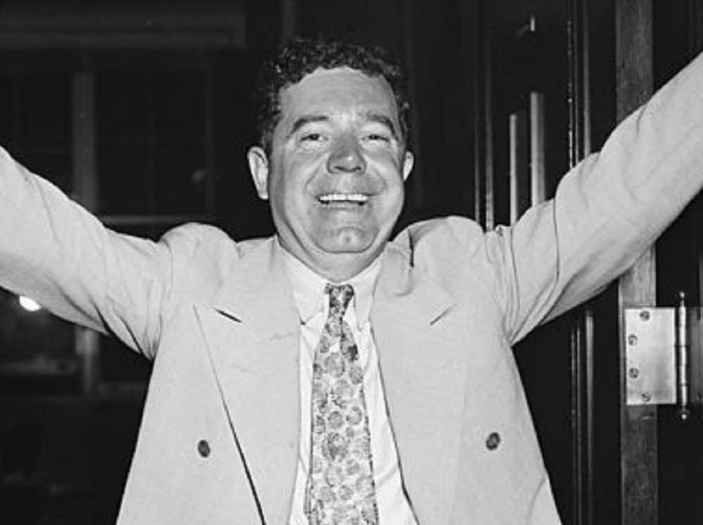
Louisiana didn’t just elect a governor in 1928—it crowned a king.
They called him the Kingfish, a swaggering populist with a preacher’s cadence and a gambler’s instincts. To the forgotten people of Louisiana, Huey Long was more than a politician—he was a reckoning. He promised roads where there were none, schools where there had been neglect, and justice where there had only been exploitation. And for a time, he delivered with ruthless efficiency.
But power in America’s underbelly is never clean. It doesn’t rise without residue. It doesn’t expand without attracting men who live in the margins—men who understand that influence, once concentrated, becomes something you can monetize.
Huey Long built an empire of promises.
Others built an empire inside it.
The Making of the Kingfish
Long’s rise was volcanic. He didn’t climb the ladder—he kicked it over and built his own. Campaigning against oil giants and entrenched elites, he cast himself as a warrior for the poor, a man willing to burn the system down to rebuild it in their image.
And Louisiana followed.
As governor, and later as U.S. senator, Long transformed the state with a speed that bordered on authoritarian. Highways stretched across rural parishes. Schools multiplied. Hospitals rose. He centralized textbook distribution, slashed utility rates, and imposed taxes on corporations that had long operated unchecked.
But reform came with a cost.
Every gain tightened his grip. Every victory reinforced a system where loyalty to Huey Long mattered more than loyalty to law. He didn’t just change Louisiana—he absorbed it.
Power, Patronage, and Pressure
Long’s machine was relentless.
State employees were expected to kick back portions of their salaries. Political allies were rewarded with contracts and protection. Enemies found themselves audited, discredited, or politically suffocated. The legislature became an instrument. The courts, an obstacle to be managed.
This wasn’t just governance—it was control.
And control, once perfected, becomes attractive to those who operate outside the law.
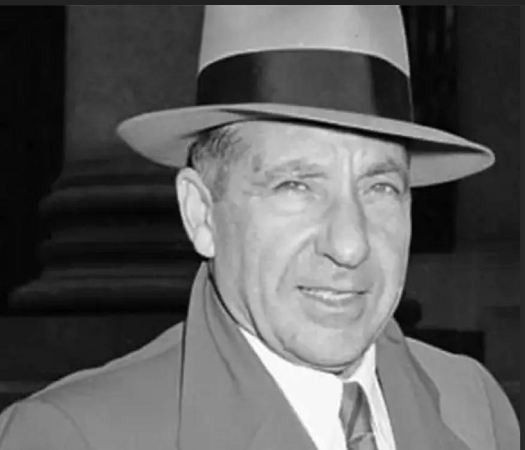
In cities like New York, men like Charles “Lucky” Luciano were restructuring organized crime into something modern—efficient, corporate, and deeply intertwined with legitimate business. Among them stood Frank Costello, a man less interested in violence than in systems—gambling systems, political systems, systems that turned vice into steady, predictable income.
When those systems were threatened, Costello adapted.
And Louisiana, under Huey Long, offered an opportunity.
When New York Closed, New Orleans Opened
In the mid-1930s, New York City began tightening the noose on gambling. Reformers and law enforcement cracked down on slot machines, culminating in a highly publicized purge led by Mayor Fiorello La Guardia. Machines were seized, smashed, dumped into rivers—a symbolic cleansing of vice from the city’s streets.
But vice doesn’t disappear.
It relocates.
And in the humid corridors of Louisiana politics, there was space to breathe.
Under Huey Long’s regime, enforcement of gambling laws operated in a gray zone—flexible, selective, negotiable. It was within this environment that Frank Costello, already known as the “Prime Minister of the Underworld,” found fertile ground. His slot machine operations, squeezed out of New York, began to migrate south, filtering into New Orleans and surrounding areas where oversight could be managed and profits could flow.
This wasn’t a formal alliance, not in any documented, prosecutable sense. It was something more familiar to both politicians and mobsters: an understanding.
Machines appeared in bars, clubs, and backroom establishments. Money flowed upward through quiet channels. Local operators, political intermediaries, and underworld figures all took their cut. And at the top of the pyramid sat a state government that, at minimum, allowed it to happen—and at maximum, benefited from the ecosystem it created.
Long didn’t need to meet Costello in a smoke-filled room.
He just needed to run a state where Costello could operate.
The Architecture of Tolerance
Louisiana, particularly New Orleans, had long been a city where vice wasn’t eradicated—it was managed. Gambling, bootlegging, prostitution—they existed in cycles of crackdowns and accommodations. What Huey Long’s system did was bring a new level of predictability to that chaos.
Predictability is everything in organized crime.
It means you know when to pay, who to pay, and how much risk you’re carrying. Under Long, that predictability increased. Enforcement became less about morality and more about alignment. If you were inside the circle—or useful to it—you operated with confidence.
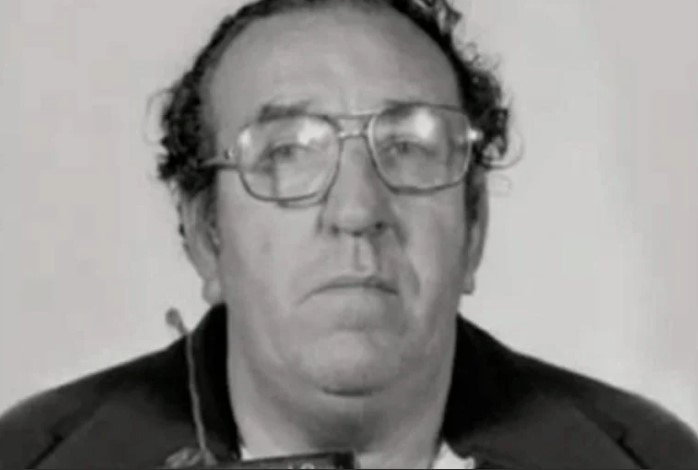
Figures who would later define the New Orleans underworld, like Carlos Marcello, emerged from this environment—one where politics and organized crime didn’t just coexist, but moved in parallel, occasionally intersecting in ways that were mutually beneficial.
Long may not have invented the system.
But he refined it.
The Transformation
As his power expanded, so did his persona.
Huey Long became louder, sharper, more theatrical. His speeches turned cutting, laced with insults and declarations that blurred the line between populist rhetoric and personal mythology. He wasn’t just leading the people anymore—he was embodying their will, or at least claiming to.
Opposition became betrayal.
Criticism became conspiracy.
He built a state police force loyal to him, fortified his political machine, and tightened his grip on every lever of influence. What began as a crusade against corruption began to resemble something else entirely—a centralized authority where one man dictated the terms of reality.
The Kingfish didn’t just want power.
He expected it.
Fear in the Halls
By 1935, Huey Long was no longer just a Louisiana figure—he was a national threat. His “Share Our Wealth” program gained traction across the country, promising to redistribute income and cap fortunes. To some, he was a necessary disruptor. To others, he was a demagogue with presidential ambitions and no respect for limits.
He also knew he was a target.
Enemies surrounded him—political rivals, business interests, ideological opponents. Whether all of them were real threats didn’t matter. Long believed they were. And belief, in a man like him, was enough to reshape behavior.
He surrounded himself with armed bodyguards. The Louisiana State Capitol became a fortress of marble and tension. Every hallway carried the possibility of confrontation.
Every shadow held a question.
The Shot That Echoed
On September 8, 1935, in that fortress of power, the story reached its breaking point.
Huey Long encountered Carl Weiss, a soft-spoken doctor tied by family to one of Long’s political enemies. What followed lasted seconds but fractured history.
The official account says Weiss pulled a gun and shot Long at close range.
Then came the response.
Long’s bodyguards opened fire with overwhelming force, unleashing a barrage so excessive it bordered on frenzy. Weiss was killed instantly, his body torn apart by bullets—too many bullets, some would later argue, for a man who may not have fired a shot at all.
Because almost immediately, doubts surfaced.
What if Weiss never pulled the trigger? What if the fatal bullet came from Long’s own protection detail, fired in panic, in confusion, in the kind of chaos that erupts when men are trained to kill first and question later?
It’s a theory that lingers in the margins of history.
And it refuses to go away.
A King Falls
Huey Long didn’t die on the spot. The wound lingered, infection setting in, the body failing in slow, inevitable stages. Two days later, on September 10, 1935, the Kingfish was gone.
Louisiana reacted like it had lost royalty.
Crowds gathered. Mourning spread. For many, he had been their voice, their defender, the only man who seemed willing to fight for them in a system rigged against their survival.
But power leaves scars.
And beneath the grief was something quieter, harder to articulate—a release from the tension of living under a man who demanded everything and tolerated nothing.
The Empire He Left Behind
Huey Long’s legacy is as tangled as the networks that thrived beneath his rule.
He was a reformer who became an autocrat, a champion of the poor who built a machine that demanded loyalty above all else. He reshaped Louisiana in ways that still echo, but he also created an environment where influence could be bought, where enforcement could be negotiated, and where men like Frank Costello could relocate their empires when the heat rose elsewhere.
When Fiorello La Guardia smashed slot machines in New York, it wasn’t the end of anything.
It was a transfer of power.
And in Louisiana, under Huey Long, that power found a home.
In the end, the Kingfish wasn’t just undone by a bullet. He was undone by the very world he helped perfect—a world of blurred lines, quiet deals, and violence waiting just beneath the surface.
An empire of promises.
An empire of fear.
And like all such empires, it didn’t fall cleanly.
It collapsed in echoes.
References
- Hair, William Ivy. The Kingfish and His Realm: The Life and Times of Huey P. Long. Louisiana State University Press, 1991.
- Williams, T. Harry. Huey Long. Alfred A. Knopf, 1969.
- Brinkley, Alan. Voices of Protest: Huey Long, Father Coughlin, and the Great Depression. Vintage Books, 1983.
- Kurtz, Michael L. Crime of the Century: The Assassination of Huey Long. Louisiana State University Press, 1989.
- Jeansonne, Glen. Messiah of the Masses: Huey P. Long and the Great Depression. University Press of Mississippi, 1993.
- Snyder, Robert E. “Huey Long and the Louisiana Political Machine.” Journal of Southern History, vol. 47, no. 2, 1981, pp. 201–226.
- Federal Writers’ Project. Louisiana: A Guide to the State. Hastings House, 1941.
- New York Times Archives. “La Guardia Orders Destruction of Slot Machines,” 1934–1935 coverage.
- U.S. Senate Historical Office. “Huey P. Long: A Featured Biography.”