Article 5 of “The Big Lies of the Mafia: Stories They Wanted You to Believe” series
There’s a version of the story that makes people comfortable.
In that version, the violence stays contained. Gangsters kill gangsters. Debts are settled between men who understand the rules. It’s a closed circuit—dangerous, yes, but self-contained, like a storm that never quite reaches the shore. Ordinary people might hear about it, might read the headlines, but they aren’t part of it. Not really.
It’s a convenient belief.
It allows distance. It lets the public treat organized crime as spectacle instead of threat, something to watch rather than something to fear.
But the truth doesn’t respect boundaries.
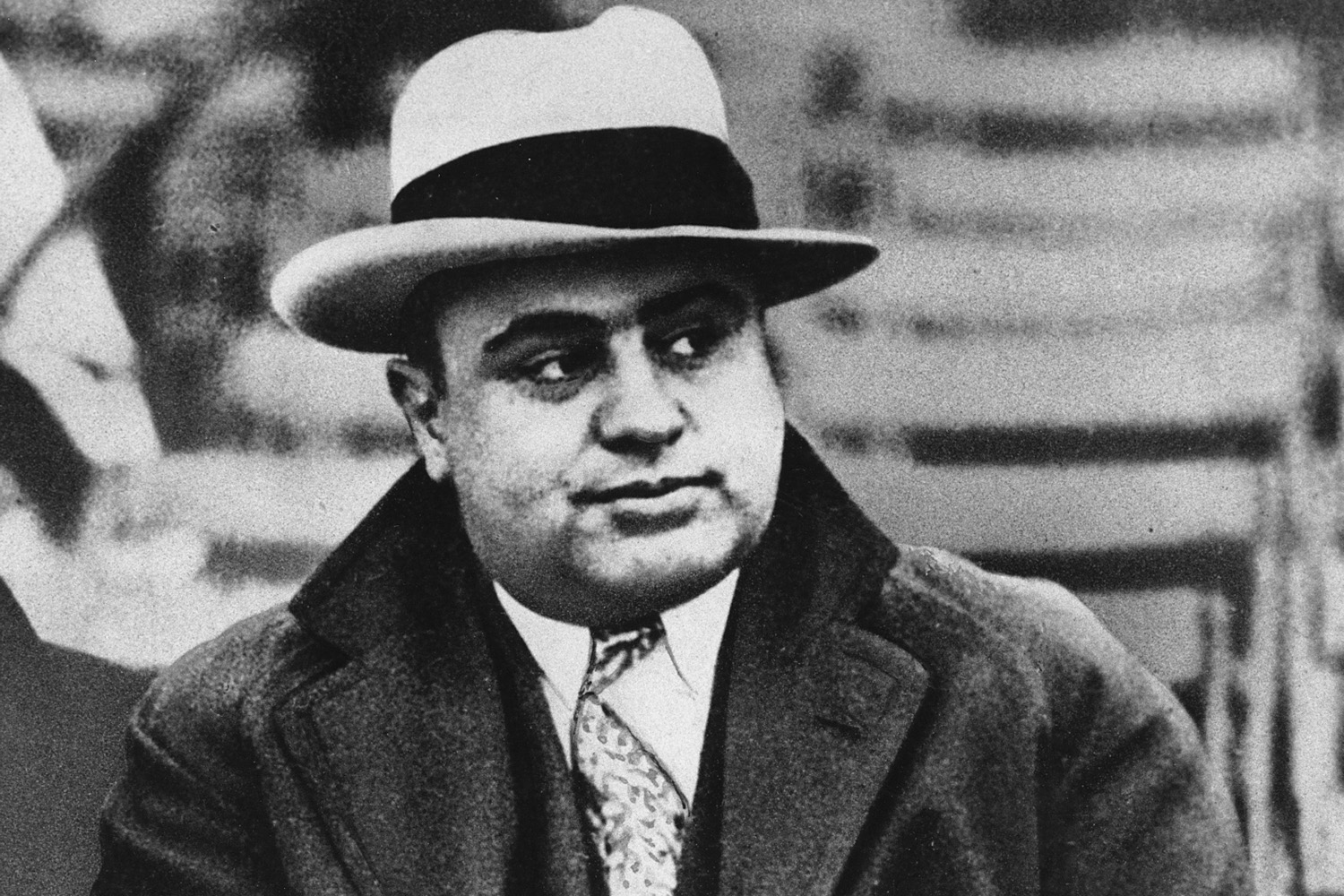
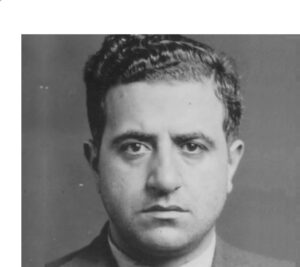
And neither did men like Albert Anastasia.
The Illusion of Precision
The myth depends on a simple idea: that mob violence is precise. Targeted. Surgical. A bullet meant for one man finds that man, and the damage ends there. No spillover. No accidents. No unintended consequences.
It’s a clean narrative, almost professional in its logic.
But violence—real violence—is rarely clean.
Even in organizations that pride themselves on control, the act itself is chaotic. Guns jam. Targets move. Situations change in seconds. And the people carrying out these orders are not surgeons—they are men operating under pressure, often in public spaces, often with incomplete information.
The result isn’t precision.
It’s probability.
And probability has a way of catching the wrong people.
Anastasia’s World
To understand how fragile the myth is, you have to look at the world Anastasia helped shape.
Known as the “Lord High Executioner,” Albert Anastasia wasn’t just a participant in organized crime—he was one of its most efficient instruments of violence. Through Murder, Inc., he oversaw a system designed to carry out killings across the country, enforcing decisions made in rooms far removed from the actual bloodshed.
On paper, it was structured. Orders came down, targets were identified, and hits were executed with a level of coordination that suggested control.
But paper doesn’t bleed.
Reality does.
And in reality, even the most carefully planned operations could—and did—go wrong.
When Targets Blur
Mistaken identity is not a cinematic invention.
In the real world, it happens because people look alike, because information is imperfect, because the man you’re supposed to find isn’t standing still under a spotlight waiting to be recognized. He’s moving through a crowd, sitting in a car, walking into a building where dozens of others pass through every hour.
And sometimes, the wrong person fits the description just well enough.
There are cases—less famous, less discussed—where individuals with no connection to organized crime found themselves in the wrong place at the wrong time, mistaken for someone else or simply caught in the line of fire. Their stories rarely make it into the mythology, because they disrupt the narrative of control.
They expose the randomness underneath.
Public Violence, Private Consequences
One of the most persistent illusions is that mob violence happened out of sight, tucked away in alleys and back rooms where the damage could be contained. But history tells a different story—one where shootings took place in restaurants, on sidewalks, in front of witnesses who had no stake in the conflict but were forced to live with its aftermath.
Bullets don’t stop at intention.
They pass through glass. They ricochet off metal. They travel until something—or someone—stops them. And in crowded urban environments, that “someone” isn’t always the intended target.
The idea of a “clean hit” collapses quickly when you consider the environments in which these acts occurred. Cities are not controlled spaces. They are unpredictable, filled with variables no plan can fully account for.
And yet, the violence kept happening in those spaces anyway.
Fear as Collateral
Even when civilians weren’t physically harmed, they were never untouched.
Fear has a way of spreading beyond the immediate event, seeping into neighborhoods, shaping behavior, altering the way people move through their own lives. A shooting in broad daylight doesn’t just affect the victim—it affects everyone who saw it, everyone who heard about it, everyone who suddenly understands that the line between observer and participant is thinner than they thought.
Shop owners close earlier.
Parents keep their children closer.
Witnesses decide, quietly and quickly, that they didn’t see anything at all.
This is collateral damage that doesn’t show up in statistics.
But it’s real.
The Myth of Rules
Part of what sustains the “mob only hurt its own” narrative is the belief that there were rules—codes that governed behavior, limits that even criminals wouldn’t cross. No women. No children. No unnecessary attention.
And to some extent, those rules existed.
But rules are only as strong as the people enforcing them, and in a world driven by power, profit, and survival, they were often bent, ignored, or abandoned entirely when they became inconvenient.
A hit that needed to happen would happen, regardless of where the target was or who might be nearby. The calculation wasn’t about morality—it was about outcome. If the objective was achieved, the method was justified.
The rules weren’t safeguards.
They were suggestions.
When Violence Becomes Spectacle
The public assassinations—the ones that made headlines—did more than eliminate targets. They sent messages. They demonstrated reach. They reinforced the idea that no place was entirely safe, that consequences could arrive anywhere, at any time.
In that sense, the visibility of the violence was part of its function.
But visibility comes with unpredictability.
A gun fired in a crowded space doesn’t just communicate power—it introduces risk, not just for the intended victim, but for everyone in proximity. And while the message might be deliberate, the fallout rarely is.
People remember the target.
They forget the others who were there.
The System Didn’t Care Who Paid the Price
At its core, organized crime is transactional.
Decisions are made based on cost and benefit, on risk and reward. And when violence is part of that equation, the potential for collateral damage is simply another variable to be considered, not necessarily avoided.
If a hit carried a certain level of public risk, that risk was weighed against the importance of the objective. Sometimes it was deemed acceptable. Sometimes it wasn’t.
But the calculation was never about protecting civilians.
It was about achieving results.
And when those results came at a cost beyond the intended target, that cost was rarely acknowledged, let alone addressed.
The Lie That Softens the Reality
“The mob only hurt its own” is more than just a misconception—it’s a way of softening the truth, of making something inherently chaotic and dangerous feel contained and manageable.
It allows people to believe that as long as they stayed outside that world, they were safe. That the violence had boundaries. That there was a line that wouldn’t be crossed.
But history doesn’t support that comfort.
The line existed, but it was thin, and it shifted constantly. People crossed it without realizing it, simply by being in the wrong place at the wrong time, by living their lives in cities where organized crime operated with a level of freedom that made containment impossible.
Final Pour
In the end, the story of Albert Anastasia and the world he helped shape isn’t one of controlled violence or honorable codes.
It’s a story of unpredictability disguised as precision, of systems that claimed order while producing chaos, of a narrative that reassured the public even as reality contradicted it at every turn.
The mob didn’t just hurt its own.
It hurt anyone who happened to be nearby when the illusion of control broke down—which, in a world built on violence, was only a matter of time.
The myth survives because it’s easier to believe.
But the truth is harder, and it lingers in the spaces where the bullets didn’t care who they were meant for.
Give me references for the final article ” The Mob only hurt its own”
Here are credible, citable references you can include at the end of your article “The Mob Only Hurt Its Own — The Civilian Casualty Myth.” I’ve also added brief context so you can see how each supports your argument.
References
- Selwyn Raab, Five Families: The Rise, Decline, and Resurgence of America’s Most Powerful Mafia Empires. New York: St. Martin’s Press, 2005.
→ One of the most authoritative modern histories of the American Mafia; documents violence, internal wars, and public consequences. - Burton B. Turkus & Sid Feder, Murder, Inc.: The Story of “The Syndicate”. Da Capo Press.
→ Foundational account of Murder, Inc., including its role as a national enforcement arm responsible for numerous killings. - Jay Robert Nash, World Encyclopedia of Organized Crime. Da Capo Press.
→ Broad reference work detailing mob murders, including cases involving unintended victims. - R. Barri Flowers, Murders in the United States: Crimes, Killers and Victims of the Twentieth Century. McFarland.
→ Covers organized crime killings and their wider societal impact, including innocent victims.