Article 3 of “The Big Lies of the Mafia: Stories They Wanted You to Believe” series
They always dress it up nicely.
In the movies, silence is noble. A man takes an oath, places loyalty above all else, and carries secrets like a badge of honor. He doesn’t talk. He doesn’t betray. He stands firm, even when the world collapses around him. That silence becomes a kind of poetry—grim, romantic, almost admirable.
They call it Omertà.
But that version was written for an audience.
The real thing was written in fear.
The Myth of the Code
Omertà is often described as an ancient Sicilian tradition, a cultural inheritance rooted in distrust of authority and a belief in self-reliance. In its most romantic form, it’s framed as a moral stance—a refusal to cooperate with corrupt governments, a commitment to loyalty above all else. In the mythology of organized crime, it becomes something even grander: a sacred bond, the glue that holds “family” together.
But mythology has a way of sanding down the rough edges, of turning coercion into choice.
In practice, omertà was never about honor in the way it was sold. It wasn’t a code freely chosen by equals. It was a system imposed from the top down, enforced not by mutual respect, but by the certainty of consequences. The bosses didn’t rely on loyalty alone—they relied on the understanding that silence was the only acceptable option, and that breaking it came with a cost few could afford.
This wasn’t a code.
It was a cage.
Silence as Survival
Inside the world of organized crime, silence wasn’t philosophical. It was practical.
You didn’t talk because talking got people hurt. Not in some abstract, distant way, but directly, immediately, and often permanently. The consequences of breaking omertà weren’t hidden—they were demonstrated, sometimes brutally, as a warning to anyone else considering the same mistake.
Men disappeared.
Businesses burned.
Families were left to deal with the aftermath.
And everyone else learned the lesson without needing it explained.
This is the part the films rarely linger on—the quiet calculations happening behind every decision to stay silent. It wasn’t about pride. It wasn’t about dignity. It was about weighing the value of truth against the certainty of retaliation, and understanding that, more often than not, truth wasn’t worth the price.
Who the Code Really Protected
The mythology suggests that omertà protected the family—that it created a shield against outside interference, a bond that ensured mutual survival. But in reality, the protection it offered was uneven, distributed along a hierarchy that favored those at the top.
Bosses benefited most.
They issued orders that others carried out, insulated from direct involvement by layers of loyal subordinates who understood the importance of keeping quiet. If something went wrong—if a job attracted attention, if law enforcement started asking questions—it wasn’t the man at the top who faced immediate consequences. It was the soldier, the associate, the one closest to the act itself.
And when those men were arrested, indicted, or pressured to cooperate, omertà became less a bond and more a burden.
They were expected to remain silent, to absorb the full weight of the system without complaint, without deviation, without the expectation of rescue. The code didn’t protect them. It used them.
The Weight of Knowing
One of the less visible aspects of omertà was psychological—the constant awareness that knowledge itself could be dangerous. To know too much was to carry a liability, to hold information that, if spoken, could unravel entire networks of power. But not speaking didn’t make that knowledge disappear. It lingered, shaping behavior, influencing decisions, creating a quiet tension that never fully released.
Imagine living in a world where every conversation is measured, where every word is filtered through the question of whether it could be repeated in a courtroom. Where trust is conditional, and even close relationships are governed by unspoken rules about what can and cannot be acknowledged.
That was the reality behind the code.
It wasn’t just about silence in public. It was about silence everywhere—at home, at work, in the spaces where most people feel safest. Omertà extended beyond criminal activity into daily life, creating an environment where the line between personal and professional disappeared, replaced by a constant awareness of risk.
When Silence Meets the Law
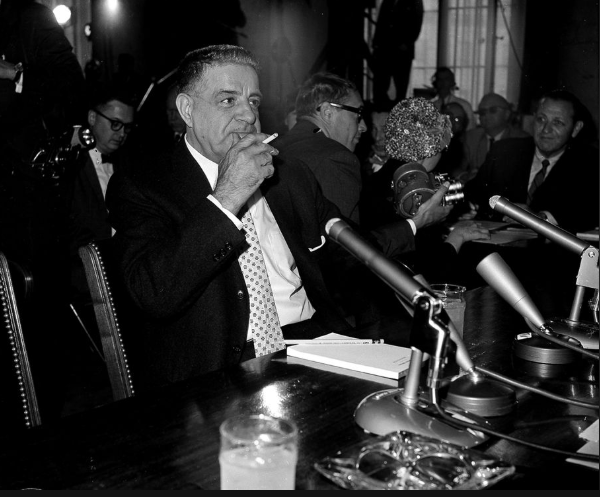
For decades, omertà functioned as one of the most effective defenses against law enforcement. Investigators could build cases, gather evidence, and identify suspects, but without cooperation from inside the organization, their efforts often stalled. Witnesses refused to testify. Defendants declined to speak. The system, designed to rely on testimony and cooperation, struggled against a structure that rejected both.
This dynamic began to shift only when the pressure became too great to sustain.
Legal tools evolved. Surveillance improved. And most importantly, some individuals began to break the code—not out of a sudden rejection of its principles, but because the cost of maintaining it had become unbearable. Figures like Sammy Gravano and others who followed didn’t just provide information; they exposed the mechanics of the system itself, revealing how omertà operated not as a noble tradition, but as an instrument of control.
Their testimony didn’t destroy the code overnight.
But it cracked it.
The Cinematic Lie
Hollywood played its part in preserving the myth.
Films like The Godfather presented omertà as something almost sacred, a reflection of deep cultural values and personal integrity. Characters who adhered to the code were portrayed as disciplined, honorable, and deserving of a certain respect, even as they operated within a world of violence and crime.
It made for compelling storytelling.
But it also blurred the line between fiction and reality, reinforcing the idea that silence was a virtue rather than a necessity imposed by circumstance. Audiences were given a version of omertà that emphasized loyalty and tradition, while downplaying—or ignoring entirely—the coercion and fear that sustained it.
The result was a cultural echo of the original lie, one that extended far beyond the confines of organized crime and into the broader public imagination.
The Cost to Those Outside the Circle
Perhaps the most overlooked victims of omertà were those who weren’t part of the organization at all.
Business owners pressured into paying protection money. Employees who witnessed illegal activity but understood the risks of speaking up. Families caught on the periphery, aware of what was happening but unable to act without putting themselves in danger.
For these individuals, omertà wasn’t a code they had agreed to follow—it was an environment they were forced to navigate. Silence wasn’t a choice rooted in loyalty; it was a survival strategy in a world where the usual avenues of justice felt inaccessible or unsafe.
In this sense, omertà extended its reach far beyond the Mafia itself, shaping communities and influencing behavior in ways that were rarely acknowledged publicly. It created pockets of silence within society, areas where truth existed but could not be spoken.
Breaking the Illusion
When insiders began to cooperate with authorities in greater numbers, the romantic image of omertà started to erode. Courtrooms filled with testimony that contradicted decades of mythology, revealing a system that relied less on honor than on enforcement. The stories that emerged were not of noble sacrifice, but of calculated decisions, internal betrayals, and a constant negotiation between loyalty and self-preservation.
This shift didn’t eliminate the code entirely, but it changed how it was understood.
No longer could omertà be presented as a purely cultural artifact or a moral stance. It had been exposed as something more complex and more troubling—a mechanism that allowed powerful individuals to maintain control while limiting the ability of others to challenge that power.
What Remains
Even now, the idea of omertà retains a certain allure. It persists in popular culture, in conversations about loyalty and betrayal, in the way organized crime is discussed and remembered. The language may change, the context may shift, but the underlying fascination remains.
That fascination is part of what makes the lie so enduring.
It offers a simplified version of a complicated reality, one that is easier to understand and, in some ways, easier to admire. It replaces fear with honor, coercion with choice, and control with loyalty. It transforms a system of silence into a symbol of strength.
But symbols, like myths, are not the same as truth.
Final Pour
Strip away the romance, and omertà looks very different.
It is not a code freely chosen by men bound by mutual respect. It is a structure imposed by those with power, designed to protect that power at all costs. It does not elevate those who follow it; it confines them, limiting their options and shaping their lives in ways that are often invisible from the outside.
The silence it demands is not noble.
It is necessary.
And that necessity tells you everything you need to know.
References
- Omertà – Historical and cultural analyses of the Mafia’s code of silence
- Sammy Gravano – Testimony and accounts from Underboss (1997) by Peter Maas
- Federal Bureau of Investigation – Organized crime reports and analyses of Mafia structure and behavior
- Raab, Selwyn. Five Families: The Rise, Decline, and Resurgence of America’s Most Powerful Mafia Empires (2005)
- Capeci, Jerry. The Complete Idiot’s Guide to the Mafia (2002)
- Dickie, John. Cosa Nostra: A History of the Sicilian Mafia (2004)
- Maas, Peter. Underboss: Sammy the Bull Gravano’s Story of Life in the Mafia (1997)
- The Godfather – Cultural portrayal of Mafia codes and loyalty