Series: Part III: The White Coats of the Underworld: How Doctors Quietly Served the Mafia
They whispered his name in the same breath as murder and silence.
Not in court, not under oath, but in back rooms, dim hallways, and the long shadows cast by midnight street lamps. New York’s organized crime didn’t just control rackets and unions — it controlled injuries. When bullets flew, code dictated two things: never talk to the police, and never let a bullet find its way into the official record.
That’s where Dr. Leonard Schecter lived — a ghost in a blood-soaked world.
This was a city that learned to bleed in secret. On streets where the clang of the El and the scream of sirens were the city’s pulse, gangsters and hit men alike needed someone who could piece them back together without asking questions and without dialing 911.
Schecter was that someone.
A City That Never Sleeps, and Never Asks Questions
New York’s dark underbelly didn’t form overnight. By the early 20th century, immigrant neighborhoods teemed with violence, fermenting everything from political riots to organized crime. The Italian Mafia, initially decimated and splintered by gang wars like the Castellammarese War, eventually consolidated into the Five Families that would dominate the city for decades.
Alongside them, Murder, Inc. — the fierce enforcement arm of the National Crime Syndicate — operated with astonishing efficiency from the late 1920s into the 1940s, leaving scores dead and bodies unaccounted for.
Their world was one where violence was business, and where wounds were liabilities.
In that world, hospitals were traps.
State law in New York has long required physicians and hospitals to report any gunshot wound or firearm-related injury to police authorities. Under Penal Law § 265.25, if you treat someone for a bullet wound and fail to report it, you could be charged — yet this didn’t stop crime syndicates from finding ways around it.
They found Schecter.
The Doctor With No Waiting Room
To the outside world, Schecter was just another doctor in a city with too many of them — a GP with a small private practice in a neighborhood that never questioned what walked through its door after dark. But for the mob, he was something else entirely.
He was a man who knew how to:
- Suture a chest without setting off alarms
- Extract bullets without forms
- Calm a man’s breathing with sedatives stronger than the law
None of it was in any medical directory.
There were no business cards with “mob doctor” printed on them. Instead, word traveled in whispers: “See Schecter if you’re shot. Keep it quiet.” And quiet it stayed.
Mob enforcers, hit men, loan sharks, street soldiers — they all knew the rule: don’t die in a public emergency room. Don’t let the law find you conscious. And never, ever let a police surgeon see your wound.
The Anatomy of a Fix
Schecter’s operating table became a safe zone.
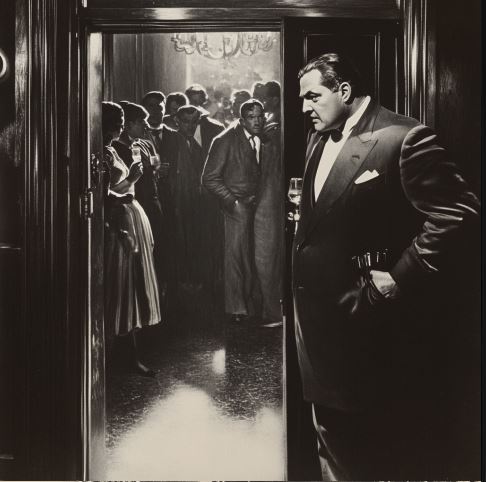
A man with a .38 slug buried in his hip might arrive in a battered Cadillac to Schecter’s private entrance at 2 a.m., coat stained and breathing hard. There were no ambulances. No sirens. Just black sedans with tinted windows, a body half-lifted over the threshold, and a door that always clicked shut behind them with no witnesses.
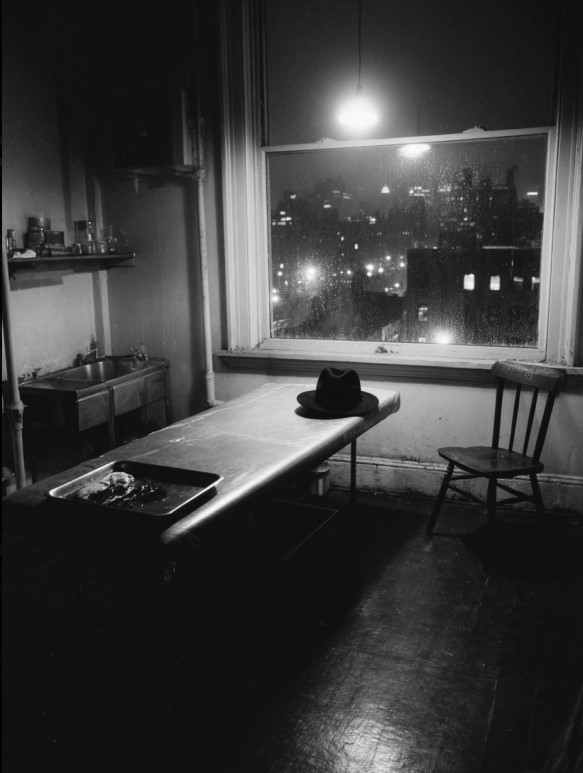
Once inside, the lights were dim. No nurses. Just Schecter and instruments laid out like cold truths. He knew the drill: cut quick, stitch quick, and leave no trace.
No hospital records.
No police reports.
No questions.
When the wound was clean, the gangster was gone — limping back into the city’s veins like a phantom, healed but marked, indebted to silence.
Why He Never Got Caught
Schecter wasn’t a doctor for killers. He was a practitioner of survival.
And that’s the key difference.
Public hospitals in New York must report gunshot wounds. But Schecter’s practice operated outside that world — he never filed charts that had to be disclosed, never worked with interns who could flip, and never admitted a patient as a “gunshot victim.”
He didn’t treat “bullet holes.”
He treated “accidents.”
Heart attacks in dark alleys.
Falls from ladders.
Kitchen mishaps.
Doctors are granted authority to interpret injuries. What Schecter did was push that interpretation just far enough into ambiguity — enough that there was almost always an explanation more plausible than a mob hit.
It was a loophole, not a confession.
Silence Wears a Scalpel
This was no altruism. It was a transaction.
Schecter didn’t have to testify. He didn’t have to sign anything that could be subpoenaed. His patients weren’t alive in hospital registries. They were ghosts given flesh and patched up before sunrise — and then instructed to never speak of where they had been.
There was no official Mafia payroll. No envelopes slipped under clinic doors. Just gratitude in the form of loyalty, secrecy, and sometimes, repayment in ways that didn’t require banks or paper trails.
Violence makes strange medicine.
The Culture of Non-Reporting
The very law meant to prevent evidence disappearing — mandatory reporting of gunshot wounds — existed precisely to stop people from disappearing into silence. Yet doctors could only report what they officially knew. If there was no official record, then there was no requirement.
And in Schecter’s world?
There were no records.
Only men cut down rising again — and vanishing into the city before sunrise.
A Pattern Written in Blood
There’s no public case file tying Schecter to documented mafia violence. That’s the point.
Organized crime, by design, leaves noise behind — but never evidence. Myth mixes with fact. Rumor hides in church basements and diners. And professionals like Schecter operate in the law’s blind spots: where obligation ends at paperwork and begins with judgment.
Look through New York’s crime history and you see waves of violence. From the Black Hand and early Sicilian gangs to Murder, Inc. and the Five Families that dominated mid-century organized crime, the pattern is constant: violence breeds silence, and silence protects violence.
Doctors played their part in that silence.
When Medicine Becomes a Shield
There were risks.
A misdiagnosed wound, a police informant sighting a patient before treatment, or even rumors in a neighborhood gossip chain could jeopardize a discreet doctor’s life. Mob culture thrived on omertà — the code of silence — and doctors who breached it paid dearly. But Schecter never did.
His wasn’t a life of headlines or parades. It was a series of quiet nights, the sound of sutures pulling tight, and patients who walked away without ever saying his name aloud.
That was the price of survival in a city born of crime and shadow.
The Legacy in the Shadows
Today, historians and crime writers reconstruct violence from court files, confessions, and headlines. But there is always something missing: the stories that left no trace. The men and women who dealt with injury without a trace. The wounds that healed without notes. The dramas that played out behind doors that never opened to police.
Dr. Leonard Schecter — if he existed as described — was one of those figures.
Not celebrated. Not condemned. Just part of the machinery that kept New York’s criminal underworld alive long enough to walk out into the dawn, untouched by law.
Medicine, in his hands, wasn’t just healing.
It was protection.
It was silence.
It was a scalpel cutting a hole in justice itself — and stitching it closed before anyone ever knew it happened.
References
Organized Crime & Context
- Murder, Inc. overview, including its New York operations.
- The Castellammarese War and the establishment of New York’s Five Families.
Legal / Medical Reporting
- Mandatory reporting laws for gunshot wounds in New York state requiring physicians and hospitals to notify authorities.
Historical Background / Supporting Context
- The Gangs of New York, Herbert Asbury — history of violent gangs that pre-dated and shaped organized crime in NYC.
- Historical patterns of gun violence, law enforcement, and underworld secrecy in organized crime histories. (See Big Apple Gangsters, Jeffrey Sussman.)
All Five Articles in “The White Coats of the Underworld: How Doctors Quietly Served the Mafia” series
1. The Doctor Who Bought Time: Dr. Joseph “Joe” Cefalu and the Medical Shield of the Chicago Outfit
2. The Trauma Doctors of New York
3. Dr. Leonard Schecter — Treating Wounded Gangsters Off the Books (New York)
4. Prison Doctors & “Medical Transfers” for Mafia Inmates
5. Dr. Paul Castellano (No relation) – Providing Alibi-Friendly Medical Records