The sound of New York in the 1970s wasn’t jazz drifting out of Harlem clubs or taxis honking on Fifth Avenue. It was concrete—wet, heavy, and constant—pouring into the foundations of a city remaking itself in steel and glass. But for every gallon of concrete that hardened under Manhattan’s skyline, there was a man behind it, pulling strings, taking his cut, and making sure nobody crossed the line.
That man was Anthony “Fat Tony” Salerno.
He didn’t need to shout. He didn’t need to brandish a gun. His empire was built on silence, whispers, and the knowledge that his reach was longer than the tallest skyscraper. And his tool of choice was a company—S&A Concrete.
The Don in the Fedora
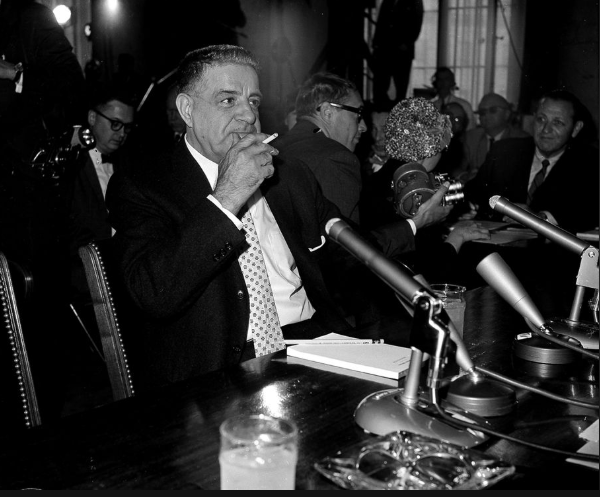
To the casual eye, Salerno was almost harmless. A portly old-timer in a fedora, puffing cigars at the Palma Boys Social Club in East Harlem. A “gentleman gangster.” But the look was a disguise. Behind the smoke, Salerno was the boss of bosses in the Genovese family, the most powerful of New York’s Five Families.
He didn’t just control numbers rackets or loan sharks. He controlled unions. He controlled contracts. He controlled the men who built the very bones of New York City.
Salerno understood one truth: if you control the concrete, you control the city.
S&A Concrete: The Mob’s Trojan Horse
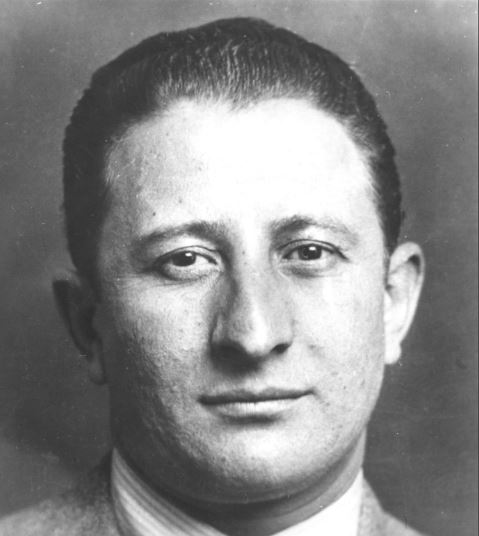
S&A Concrete was founded in the early 1980s, but it wasn’t born out of ordinary business ambition. It was stitched together by Salerno and Paul Castellano, head of the Gambino family, as a front. On paper, it was just another contractor. In reality, it was a funnel for mob money and a weapon for keeping Manhattan in a chokehold.
The arrangement was simple. Developers looking to build towers worth more than $2 million were “encouraged” to use S&A. If they refused, unions suddenly discovered grievances. Cement trucks didn’t show up. Strikes broke out. Construction sites froze until developers came crawling back.
And once S&A got the job, prices ballooned. Kickbacks flowed into mob pockets. Competitors disappeared, some figuratively, some literally.
Every sidewalk, every high-rise, every shining tower that came out of that era had the Mob’s fingerprints set in the concrete before it dried.
Trump Tower and the Club
The “concrete club” was more than S&A. It was a cartel, a closed circle of mob-backed firms that carved up the city like it was their own private fiefdom. Developers who wanted to build had to play by their rules.
One of S&A’s biggest scores was Trump Tower. The young Donald Trump wanted his skyscraper to rise in reinforced concrete rather than steel, and S&A was ready to deliver. For Salerno, it was perfect: a high-profile project, a golden advertisement that no dream in New York was too big for the Mob to touch.
Trump wasn’t alone. Almost every major builder in the city wound up in bed with mob-connected firms, whether they admitted it or not. That was the genius of Salerno’s design. He didn’t need you to like him. He just needed you to need him.
Power Without Blood—Until There Was Blood
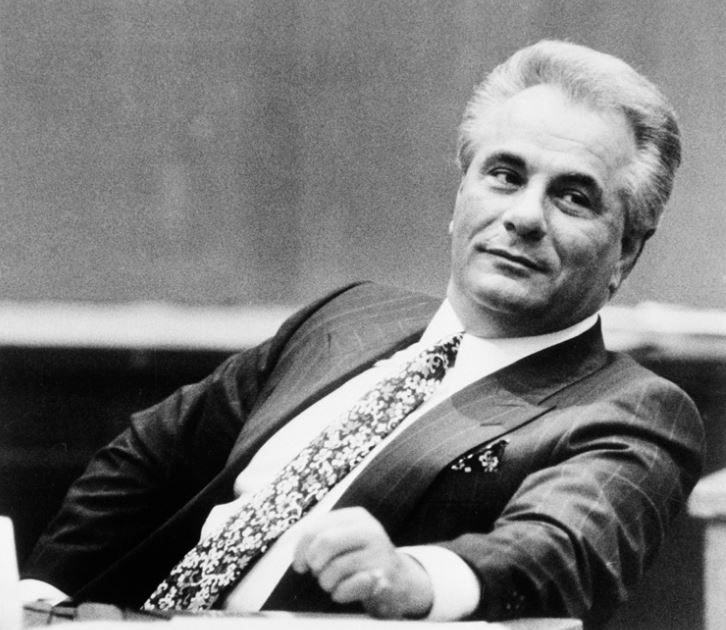
Salerno didn’t swagger like Gotti. He wasn’t flashy. His strength came from subtlety. A phone call. A union boss walking into a developer’s office with a smile that didn’t quite reach his eyes.
But make no mistake—violence was always the undertone. When persuasion didn’t work, people vanished. Dead bodies turned up in cars or at the bottom of rivers. That’s how the club stayed closed. That’s how S&A kept its iron grip on multimillion-dollar contracts.
Salerno was a man who ruled with fear, but not the loud kind. It was the kind that made your stomach knot when his name came up in conversation.
Cracks in the Foundation
By the mid-1980s, the feds had had enough. The FBI wired the social clubs. They listened in on hushed meetings where Salerno and Castellano parceled out contracts like kings dividing up land. They traced the money. They connected the dots.
The result was the Mafia Commission Trial, a courtroom drama that tore the mask off the Five Families. Salerno wasn’t just another mobster in a cigar shop. He was at the top of the pyramid, orchestrating a racket that reached into every corner of Manhattan construction.
When the trial ended, Salerno was sentenced to 100 years in prison. The “gentleman gangster” who had quietly ruled New York’s skyline was caged, and his empire started to crumble.
The Fall of S&A
Without Salerno and Castellano pulling strings, S&A Concrete collapsed. No more guaranteed contracts. No more union intimidation. No more mob tax on every yard poured.
But the towers remained. Trump Tower. Other skyscrapers built during the boom. Each one a silent monument to the years when concrete was currency, and Fat Tony was king.
Salerno died in 1992 in a Missouri prison, far from the streets of East Harlem where his shadow once loomed. He went to his grave with the legacy of a man who turned building materials into power and profit, who proved that sometimes the foundations of a city are laid in blood.
Legacy in Stone
New York City has always been a place of contradictions—glamour above ground, rot beneath. The story of S&A Concrete is the story of both. It’s about ambition twisted by corruption. It’s about towers that scrape the sky while hiding the truth of how they were built.
For decades, every deal, every handshake, every slab of concrete mixed on a job site carried the invisible weight of the Mob. Salerno’s empire is gone now, but its remnants remain in the skyline. Walk past Trump Tower. Look up at the other concrete giants of Midtown. They are still standing, long after the man who made them possible has turned to dust.
The city forgets fast. But the concrete remembers.
References
- Raab, Selwyn. Five Families: The Rise, Decline, and Resurgence of America’s Most Powerful Mafia Empires. St. Martin’s Press, 2005.
- Fried, Joseph P. “Anthony (Fat Tony) Salerno, Head of Crime Family, Dies at 80.” The New York Times, July 28, 1992.
- Barrett, Wayne. Trump: The Deals and the Downfall. HarperCollins, 1992.
- Jacobs, James B., Coleen Friel, and Robert Radick. Gotham Unbound: How New York City Was Liberated from the Grip of Organized Crime. NYU Press, 1999.
- United States v. Anthony Salerno, 868 F.2d 524 (2d Cir. 1989).