Johnny “The Fox” Torrio: The Professor of the Underworld
Johnny Torrio did not look like a gangster. That was part of his genius.
He dressed conservatively, spoke calmly, avoided unnecessary violence, and carried himself more like a businessman than a street criminal. While other gangsters built reputations through public brutality and theatrical intimidation, Torrio preferred structure, negotiation, and profit. He believed organized crime should function like a corporation long before most criminals understood the concept.
In many ways, he invented the modern American mob boss. Without Torrio, there is probably no Al Capone as history remembers him.
Without Torrio, the national criminal syndicates later organized by Charles “Lucky” Luciano may have evolved very differently.
Torrio stood at the crossroads where old neighborhood gangs transformed into organized criminal empires. He taught gangsters to think bigger.
And once men start thinking bigger, cities change.
From Italy to New York’s Streets
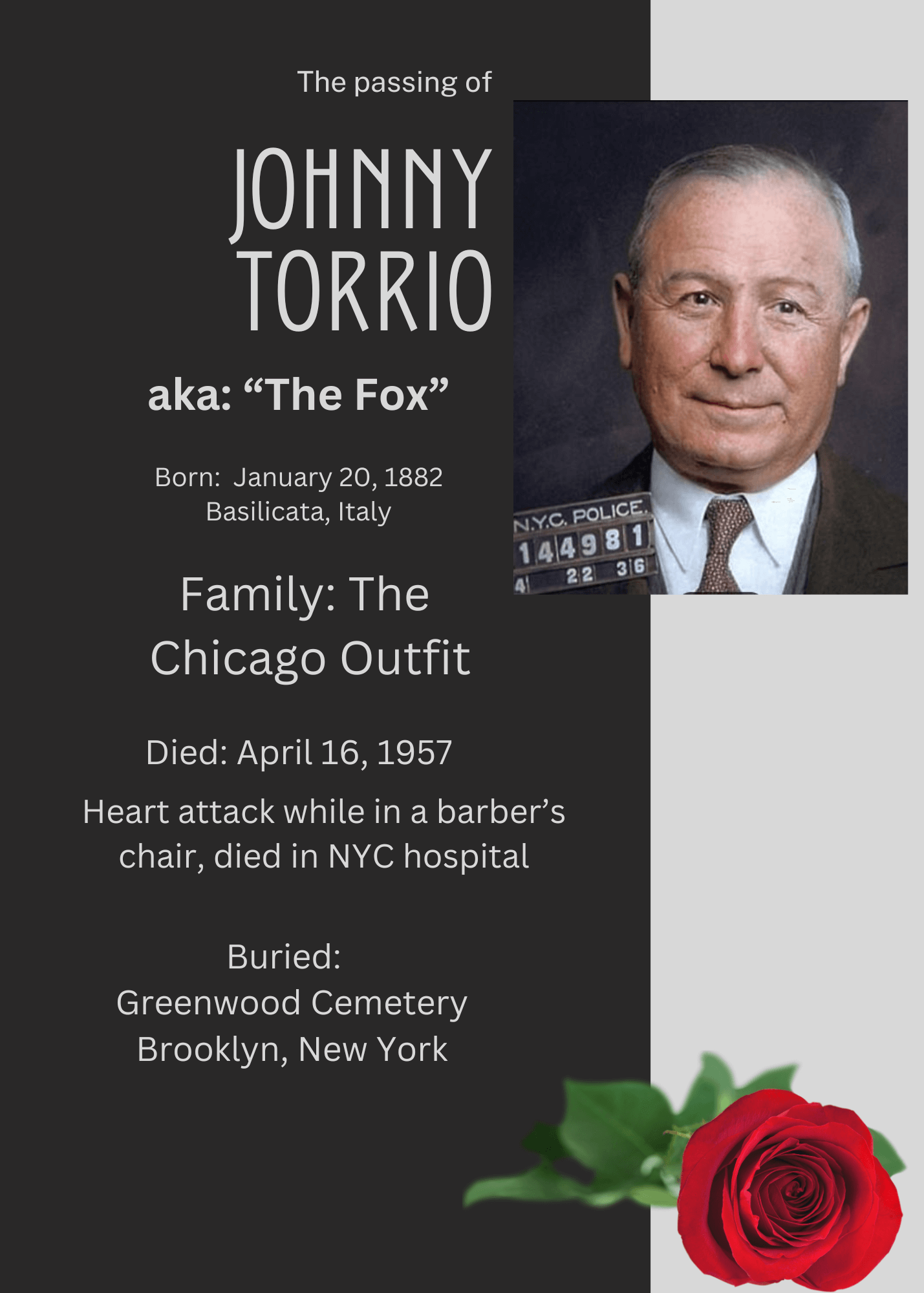
Johnny Torrio was born in southern Italy in 1882 before immigrating to New York City as a child with his widowed mother.
Like many immigrants arriving in lower Manhattan during the late nineteenth century, Torrio grew up surrounded by poverty, overcrowding, political corruption, and street violence. Gangs dominated many immigrant neighborhoods while legitimate economic opportunities remained limited for working-class families.
Torrio entered criminal life young.
But unlike impulsive street toughs driven primarily by ego or violence, Torrio displayed intelligence and restraint early. He became involved in gambling operations, protection rackets, and organized vice while learning an important lesson:
The real money sits above the street. That philosophy guided his entire career.
The Five Points and Early Criminal Education
Torrio reportedly associated with powerful New York gang figures connected to the notorious Five Points underworld, where criminal organizations blended with political machines and immigrant street culture.
The environment shaped him profoundly.
He observed how gangs generated money not merely through robbery or violence but through systems—gambling dens, prostitution, labor influence, extortion, and political protection networks. Violence remained necessary, but Torrio increasingly viewed it as a tool rather than identity.
That distinction separated him from many contemporaries. He preferred control over chaos. Eventually, opportunity pulled him westward.
Chicago: A City Built for Gangsters
In the early twentieth century, Chicago was exploding economically and politically. Industry boomed. Corruption flourished.
Vice districts expanded openly beneath political protection systems. Gambling, prostitution, labor racketeering, and extortion created enormous criminal opportunities for ambitious operators capable of organizing them efficiently.
Torrio moved to Chicago to assist his uncle by marriage, crime boss Big Jim Colosimo.
Colosimo controlled extensive vice operations throughout the city and enjoyed strong political protection. But when Prohibition approached, Torrio recognized an opportunity Colosimo failed to understand fully:
Illegal alcohol would transform organized crime forever.
The Colosimo Problem
Prohibition promised fortunes. Colosimo reportedly resisted entering large-scale bootlegging aggressively, fearing increased violence and law enforcement pressure. Torrio disagreed completely.
The future belonged to whoever controlled liquor. In 1920, Colosimo was murdered.
The killing remains officially unsolved, though historians and law enforcement long suspected Torrio orchestrated the assassination to remove resistance against expanding bootlegging operations.
Whether directly responsible or not, Torrio emerged afterward as Chicago’s dominant organized crime leader. And he immediately modernized the empire.
Building the Outfit
Torrio transformed Chicago organized crime into something more sophisticated than a street gang.
He expanded bootlegging networks massively while integrating gambling, prostitution, labor racketeering, and political corruption into coordinated operations. He emphasized hierarchy, discipline, financial management, and strategic alliances over random violence.
Criminal historians often describe him as one of the first gangsters to envision organized crime as corporate enterprise. He recruited carefully. And one recruit mattered more than all the others.
Enter Al Capone
Torrio brought young Al Capone from New York to Chicago during the early 1920s.
Capone possessed charisma, ambition, fearlessness, and brutal enforcement instincts. Torrio recognized the potential immediately. Under Torrio’s mentorship, Capone learned how large-scale organized crime actually functioned—politics, money laundering, negotiations, bribery, territorial management, and strategic violence.
Torrio became Capone’s teacher. Capone became Torrio’s weapon.
Together they expanded Chicago’s criminal empire rapidly during Prohibition, generating enormous profits through liquor smuggling and vice operations. But success always attracts rivals.
The Beer Wars
Chicago’s underworld erupted into violent competition during the 1920s as gangs battled for control of bootlegging territory.
Irish, Italian, and mixed-ethnic criminal organizations fought constantly through assassinations, bombings, hijackings, and street ambushes. Torrio attempted repeatedly to reduce open warfare through negotiation and territorial agreements.
He understood something many gangsters ignored: Violence disrupts business. Still, violence came anyway.
In 1925, rival gunmen nearly killed Torrio in a brutal assassination attempt outside his apartment. He survived multiple gunshot wounds but emerged deeply shaken.
The attack changed him permanently.
Retirement — Sort Of
After recovering, Torrio made an extraordinary decision for a gangster of his era: He stepped away.
Rather than continue escalating warfare, Torrio gradually transferred operational control to Capone and semi-retired from direct leadership. The move reflected both intelligence and exhaustion. He understood organized crime’s dangers better than most because he had helped build the system itself.
Many gangsters never leave alive. Torrio nearly did.
Advisor to the National Syndicate
Though less publicly active afterward, Torrio remained influential within organized crime circles nationally.
Historians believe he later advised younger syndicate architects including Luciano during the formation of modern Mafia structures in the 1930s. Torrio’s emphasis on coordination, commissions, and corporate-style criminal management heavily influenced the future of organized crime.
In many ways, Luciano refined ideas Torrio pioneered earlier in Chicago.
The American Mafia became less tribal and more business-oriented partly because Torrio demonstrated the profitability of organized structure over endless street warfare.
Prison and Final Years
Torrio eventually served prison time for tax-related offenses connected to organized crime earnings, though far less dramatically than Capone’s famous federal downfall.
Unlike many gangsters, he survived into old age.
He spent later years living relatively quietly while generations of younger mobsters rose and fell violently around him. By then, the criminal systems he helped design had spread nationally through gambling, labor racketeering, narcotics, casinos, and political corruption.
Torrio watched the empire evolve from a distance. He died in 1957 after suffering a heart attack.
The Legacy of Johnny Torrio
Johnny Torrio may be the most important organized crime figure most people barely recognize.
Because he was not merely a gangster. He was an architect.
He helped transform American organized crime from fragmented street gangs into structured criminal enterprises capable of national coordination and enormous financial sophistication.
Unlike flashy successors such as Al Capone or media celebrities like John Gotti, Torrio preferred efficiency over attention.
He understood power worked best quietly.
In noir terms, Johnny Torrio was the calm man in the tailored suit sitting in the corner office while younger gangsters fired machine guns outside in the rain—already calculating how to turn chaos into empire.