

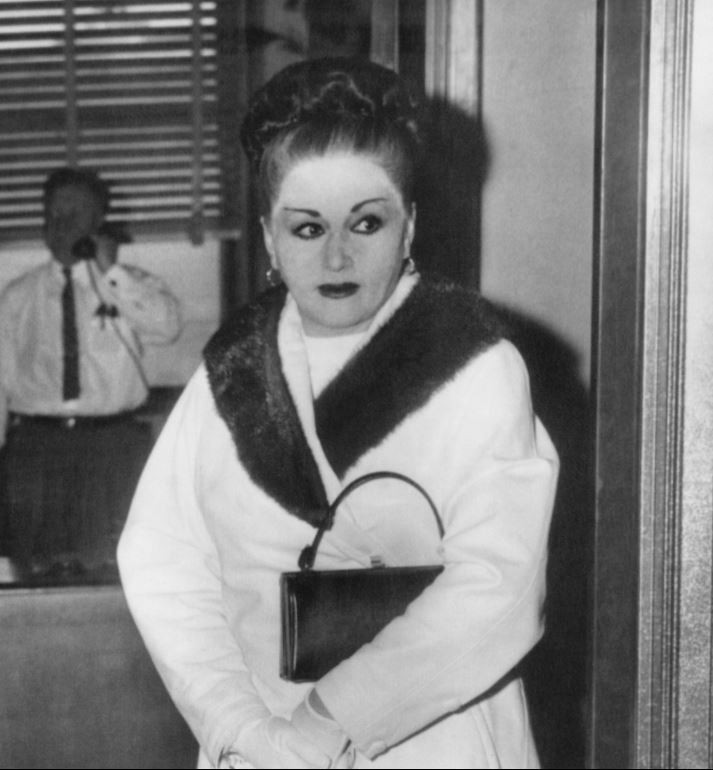
The world of organized crime has long been painted in masculine strokes — men running rackets, ordering hits, enforcing codes of silence. For decades, wives, girlfriends, mistresses were cast as accessories: shadows lingering behind gangster husbands, expected to keep quiet, obey, and trust in the loyalty of the family. But on rare, shocking occasions, some of these women tore off the veil. They turned on their men. They spoke. They testified. They broke the mafia’s most sacred rule: omertà. The betrayal cut deep. And it changed everything.
Here are several of the darkest, most dramatic stories of mafia spouses or girlfriends who turned their backs on their partners — exposing corruption, violence, hypocrisy, and ultimately the fear-based foundations of organized crime. Because betrayal by those closest to a mob boss is more than treachery — it is the beginning of the end.
Anna Genovese — the first wife to publicly testify against a Mafia boss
No story illustrates the shock value of a “mob wife turn coat” like Anna Genovese’s.
In the early 1930s, after the violent murder of her first husband, Anna married Vito Genovese — a rising mobster who would become head of what later became the Genovese crime family. For years she played the part: raising children, running drag‑clubs and gay bars in Manhattan and Greenwich Village — many of which reportedly funneled profits to the mob.
But by 1950, Anna had had enough. She claimed domestic abuse — black eyes, a broken nose, threats — but more than that: she accused Vito of orchestrating a criminal empire of gambling, racketeering, narcotics, and underground clubs.
On March 2, 1953, in a New Jersey court, Anna delivered what was perhaps the most extraordinary blow to the Mafia’s culture of silence: she publicly testified against her husband, demanding separate maintenance and detailing millions in illicit earnings, describing herself as the only one with the keys to the family safe. For context — this kind of public courtroom testimony from a mob wife had never before been seen in the United States.
Though the court later dismissed her claims and Vito counter-sued for desertion, the very act of speaking out shattered the myth of unbreakable loyalty. It exposed the rot beneath the glitz — and showed that fear and violence, not honor, were the glue holding these criminal dynasties together.
Anna walked away — penniless, under threat, living in obscurity — but she walked away free. She died in 1982, after a long, quiet life. Her decision remains a touchstone — proof that even the mob’s golden women could find the courage to betray.
Anna Carrino — the Casalesi boss’s wife who became a pentita
Not all betrayals come from judicial divorces or courtroom dramas — some come from desperation, disillusionment, and love lost.
Anna Carrino spent nearly thirty years married to Francesco Bidognetti, known as “Midnight Fatty,” one of the top bosses of the infamous Casalesi clan in Naples. During those decades, she wasn’t just a bystander: she was his messenger, delivering coded messages, relaying orders, and serving as a vital conduit between imprisoned mafiosi and their network.
But in 2002, everything cracked. She discovered her husband’s affair — a betrayal deep enough to make her question her place in the world she helped build. “Who was I, then? His maid?” she asked, bitterly. Add to the betrayal a power grab within the family, tension around her children, and years of complicity — and the logic of silence lost its hold.
In November 2007, Anna made one of the boldest moves imaginable: she flipped. She became a “pentita” — a state witness against the Casalesi. Dozens of arrests followed. Even by mafia standards, this was catastrophic: one man’s betrayal by his own wife triggered a cascade of crumbling loyalty.
Carrino’s transformation from queen of the underworld to witness under protection was brutal and lonely. She vanished from public life, stripped of identity, living under constant threat. And while some women paid for their betrayal with their lives, Anna Carrino survived — a ghost of the empire she once helped run.
Piera Aiello & Rita Atria — forced bride, mafia widow turned justice fighters
For many involved with the mafia, betrayal doesn’t come from greed or revenge — it can come from grief.
In 1985, Piera Aiello, still a teenager, was coerced into marrying the son of a mafia boss in Sicily. Nine days later, her father-in-law was assassinated. Years later, her husband was gunned down in front of their daughter. Piera saw the killers — and knew she could never stay silent again.
She went to the police. She collaborated. And soon after, her sister-in-law, Rita Atria — only 17 — also began to cooperate. Driven by a desire for justice for her murdered father and brother, Rita provided names, dates, secrets. Her testimony contributed to the arrest of dozens of Mafia members.
But the mafia remembers. After the murder of the judge protecting them, Rita took her own life — a tragic testament to the price paid for breaking silence. Piera survived, lived decades in hiding, under a new name, under constant threat. In 2018 she re-emerged as a politician — the first antimafia witness elected to Parliament in Italy.
Their choice was not born out of greed or fear of arrest — but out of grief, loss, conscience. It stands as one of the rawest forms of betrayal: defying a code of blood to demand justice.
Arlyne Brickman — mob‑girlfriend turned informant in New York
Sometimes the loyalty to crime doesn’t come from love, but from survival — and sometimes survival demands betrayal.
Arlyne Brickman, born in New York’s Lower East Side, was drawn into the world of Italian mobsters as a teenager. She ran drugs, numbers, and loans, entangled in the underbelly of the American Mafia.
But after being beaten and raped — and realizing no mafioso would protect her because she was a woman and Jewish — everything changed. When a loan shark threatened her daughter, Brickman called the FBI. She wore a wire, spied, and over a decade helped convict several members of the Colombo crime family — including a major racket operator.
She refused witness protection, saying “that’s the quickest way to get killed.” Her courage was not for honor — but for herself, her daughter, her survival. Her story shows that betrayal doesn’t have to be heroic to be final — sometimes it’s the only path out.
Why these betrayals matter — and what they exposed
- They broke the myth of untouchable loyalty. For decades, the wives and girlfriends of famous mobsters were assumed silent, complicit, always protected. When they spoke — publicly — the illusion cracked. Anna Genovese’s 1953 testimony didn’t send her husband to jail — but it exposed the underworld’s façade to the world.
- They revealed the brutality beneath the glamour. Domestic abuse, threats, fear, exploitation — for many women, the “privileges” of Mafia life were overshadowed by pain and violence. Betrayal often came from moral or emotional collapse, not altruism.
- They accelerated the collapse of old crime empires. When insiders — particularly women — turned, it often triggered mass defections, arrests, internal purges. The code of silence began to crumble. As one lawyer put it after a mafia‑wife turned informant: “If you’re not able to keep a grip on those who live under your roof, how do you expect to keep control over a clan?”
- They showed that survival sometimes demands courage no one asks for. For many of these women — Brickman, Carrino, Aiello, Rita Atria — the betrayal was not born from greed or morality, but desperation, grief, self‑preservation.
The unseen casualties
Betrayal comes at a cost. Many who spoke out paid with their lives, their families, their identities.
Some were murdered in revenge. For example, the case of Lea Garofalo — abducted, tortured, and killed by her mob husband in 2009 after she tried to cooperate with authorities.
- Others ended up as ghosts: living under new names, in hiding, only able to survive by burying their pasts — like Piera Aiello.
- Some were forgotten entirely — their stories buried behind witness‑protection protocols, court files, or tragic endings.
Their silence may have been broken, but the scars remained. The mafia may lose its grip — but the damage often lasts a lifetime.
Conclusion — The final fracture in the code of silence
Organized crime thrives on loyalty, fear, and silence. For decades, the world saw the wives and girlfriends of mobs as “just wives” — passive, silent, unseen. But when a few women dared to speak, dared to testify, dared to turn away from everything they once stood for — they proved that no empire is unbreakable.
Whether it was the glitter of drag bars in Manhattan, the smoky power corridors of Naples, or the run‑down apartments of Sicily — when the women under the roof spoke, they exposed every lie, every crime, every dark transaction. They tore the masks off the mob.
Their betrayals didn’t redeem them — necessarily. But they did something more powerful: they cracked open the fortress of silence, shattered the illusion of omnipotence, and forced the world to look. In the underworld, sometimes the most dangerous blow doesn’t come from a rival — it comes from the one who knows you best.