Article 2 of “The Big Lies of the Mafia: Stories They Wanted You to Believe” series
There was a time when the very word “Mafia” was whispered, never spoken aloud in polite company. Newspapers tiptoed around it. Politicians denied it existed. Even law enforcement, the people tasked with protecting the public, acted as if organized crime was a ghost, a rumor too fantastic to confront head-on. Yet all the while, in the back rooms of Italian restaurants, social clubs, and shabby offices in the shadows of skyscrapers, a nation-spanning syndicate hummed with the precision of a clockwork machine.
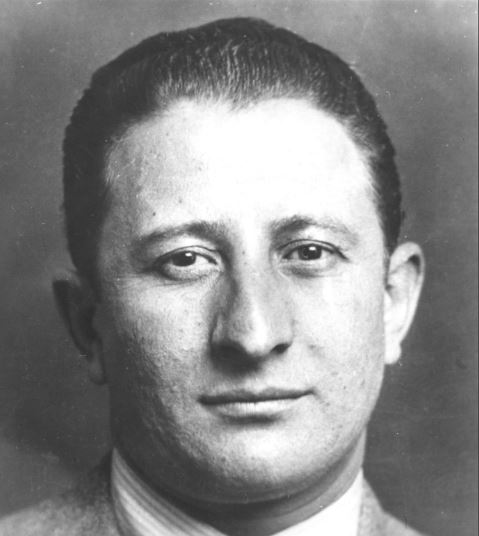
At the center of this theater was Carlo Gambino, the man who, more than any other, understood the power of denial. Publicly, he was a quiet, almost inconspicuous figure, the type who could sit at a lunch counter in Queens and be overlooked. Privately, he ruled one of the most sophisticated criminal empires in American history, orchestrating extortion, racketeering, gambling, and influence-peddling with the subtlety of a chess master.
The lie was simple. Say it enough. Believe it enough. There is no Mafia. There is only independent businessmen. There are only coincidences, unfortunate misunderstandings, rivalries blown out of proportion. This was the foundation upon which organized crime built not only its fortune but its survival.
The Performance of Nonexistence
Gambino’s brilliance was not in violence or theatrics—it was in creating invisibility. He understood that a crime syndicate is strongest when it is most unacknowledged. The myth of absence, the assertion that nothing existed, was far more effective than any hit or bribe.
For decades, law enforcement tried to grasp the syndicate, but the code of denial created a chameleon reality. Investigators could piece together fragments: an extortion in Brooklyn, a gambling operation in Manhattan, a trucking company mysteriously bankrupt in New Jersey. They could identify men with influence, see the pattern of whispers and fear, but they couldn’t connect it into a single, undeniable truth. In public hearings, Gotti’s predecessor, Gambino, would sit quietly, answering questions with such careful neutrality that the word “Mafia” seemed to vanish from the record, evaporating into polite euphemisms.
The result was astonishing. The public accepted the notion that organized crime was a collection of rogue entrepreneurs, not a coordinated network of criminal power. This allowed the syndicate to flourish without ever needing to explain itself. It also gave rise to a dangerous cultural permission: if the Mafia didn’t exist, then neither did its reach, its corruption, its threat.
Invisible Empires in Plain Sight
It is easier to deny something that everyone sees if you dress it in normalcy. The Mafia was never hiding in caves. Its empire moved through legitimate businesses, nightclubs, construction, and trucking. Carlo Gambino understood that the best cover is visibility. People looked at a successful businessman, a polite man in a suit, and assumed legality.
Yet every handshake, every boardroom conversation, every loan approval could be part of a web that extended coast to coast. Loans to politicians, contracts awarded to companies under threat of force, and deals made under the veil of “business as usual” all formed a hidden infrastructure. This infrastructure was national, not local. It was hierarchical, not random. It was methodical, not chaotic. And yet, because everyone agreed to pretend the empire didn’t exist, the wheels continued to turn without interruption.
Law enforcement’s initial inability to define or confront this network wasn’t incompetence—it was the natural consequence of a system operating in denial. Investigators could follow money, interrogate witnesses, and observe violence, but as long as the bosses publicly denied everything, the syndicate remained untouchable.
The Role of Public Perception
The brilliance of the lie was in its simplicity and consistency. Publicly, there was nothing to see. Politicians could claim ignorance. Newspapers could report on crime without naming an overarching organization. The FBI, in its early years, lacked the legal frameworks and societal support to prosecute complex, coordinated criminal operations.
It wasn’t until the late 1960s and 1970s, when insider testimony began to pierce the veil, that the illusion cracked. Informants like Joseph Valachi—the first high-profile defector to testify about La Cosa Nostra—revealed a structure so methodical, so sprawling, that law enforcement could no longer dismiss it as rumor or coincidence. Surveillance, wiretaps, and the expansion of RICO laws provided the tools to finally match perception with reality, but the Mafia’s code of denial had bought decades of invisibility.
During that time, public perception became as crucial as legal authority. The lie allowed mobsters to operate without fear of scrutiny, not because they were undetectable, but because no one fully acknowledged the threat they posed. Denial was protection, and protection was profit.
Carlo Gambino: The Silent Architect
Gambino’s genius lay not in his ability to intimidate or kill, but in his mastery of ambiguity. He rarely gave interviews. He avoided public spectacles. His power was maintained in whispers, in closed doors, in casual conversations that carried heavy implications for those who knew how to listen. He understood the human tendency to accept explanations that are simple, even when they are false. If a court or a journalist cannot prove an organized network, then in the minds of the public, it does not exist.
This illusion extended to interactions with law enforcement. Investigators could suspect, subpoena, and investigate, but without confession, documentation, or a witness willing to challenge the code of silence, they were limited in what they could achieve. Gambino and his peers operated in plain sight because the greatest protection comes from appearing harmless and ordinary. When the very existence of the organization is doubted, its members are insulated from both public outrage and legal consequence.
The Machinery Behind Denial
Denial, however, required careful maintenance. Each mobster knew that exposure meant vulnerability. It wasn’t enough for the bosses to remain quiet; the entire network had to participate. Witnesses were warned, allies were disciplined, and stories were coordinated to avoid contradiction. A single loose comment could unravel years of careful obfuscation.
The system functioned like a clock: every member, every subordinate, had a role in perpetuating the illusion. And it worked. For decades, organized crime could operate as a national enterprise without ever being formally recognized as such. The government’s eventual acknowledgment came not from observing a sudden increase in criminal activity, but from systematically breaking the code of denial through testimony, recordings, and infiltration.
The Fallout of Recognition
Once insiders began talking, the lie collapsed under its own weight. The public could no longer claim ignorance, and the media could no longer frame mob activity as isolated incidents. The syndicate that had operated with such invisibility suddenly became tangible, visible, and prosecutable. Laws changed. RICO enabled prosecutors to target the network itself, rather than individual acts. Surveillance became sophisticated, informed by decades of careful observation.
Yet even as the code of denial was penetrated, the cultural residue remained. For years, people still spoke of mobsters as “small-time criminals” or “lone operators,” clinging to the comforting myth that nothing organized had ever existed. Gambino’s empire had faded, but the story of denial persisted, a cautionary tale about what can thrive when everyone agrees not to see.
The Lie That Made Everything Possible
The “Mafia doesn’t exist” narrative was the original Big Lie. It created the conditions for all other myths, all other illusions about organized crime. It allowed violence to flourish unnoticed, financial empires to expand unchecked, and society to be manipulated without confrontation.
Without this foundational denial, John Gotti’s Teflon mystique would never have had its stage. The hits, the extortion, the murders, the courtrooms, the press—all of it depended on the public and law enforcement agreeing to participate in the lie. Denial didn’t make crime impossible to detect; it made crime easy to normalize, and normalization is the most powerful shield of all.
Gambino understood this. He knew that controlling perception was far more enduring than controlling territory, and far safer than controlling lives through violence alone. The Mafia’s most enduring weapon was not its guns or its threats—it was the world’s willingness to look the other way.
Final Pour
The Mafia’s code of denial is a study in human psychology as much as criminal strategy. It’s a reminder that sometimes, the greatest threats are not those that scream for attention but those that are systematically ignored. It shows how power can be exercised quietly, invisibly, and yet with consequences that ripple across decades.
When you hear the stories of flashy gangsters and dramatic trials, remember that they are merely the visible edges of something far larger. The real machinery operated in the shadows, protected by a lie so widely accepted that it became almost untouchable.
The Mafia didn’t just commit crime. It committed a deception. And for decades, the world looked the other way.
References
- Carlo Gambino – FBI and law enforcement records, Gambino crime family operations
- Joseph Valachi – Testimony before U.S. Senate, 1963
- Federal Bureau of Investigation – Reports on La Cosa Nostra and organized crime in the United States
- Raab, Selwyn. Five Families: The Rise, Decline, and Resurgence of America’s Most Powerful Mafia Empires (2005)
- Capeci, Jerry. The Complete Idiot’s Guide to the Mafia (2002)
- Maas, Peter. The Valachi Papers (1968)
- Jacobs, James B. Mobsters, Unions, and Feds: The Mafia and the American Labor Movement (2006)
- New York Times Archives (1960s–1980s coverage of Mafia hearings and investigations)
All Five articles of “The Big Lies of the Mafia: Stories They Wanted You to Believe” series
1. “John Gotti Was Innocent” — The Teflon Illusion
2. “The Mafia Doesn’t Exist” — The Code of Denial
3. “Omertà Is About Honor” — The Silence That Protected Predators
4. “Al Capone Was Just a Bootlegger” — The Tax Evasion Smokescreen