Power, in the underworld, is supposed to be quiet.
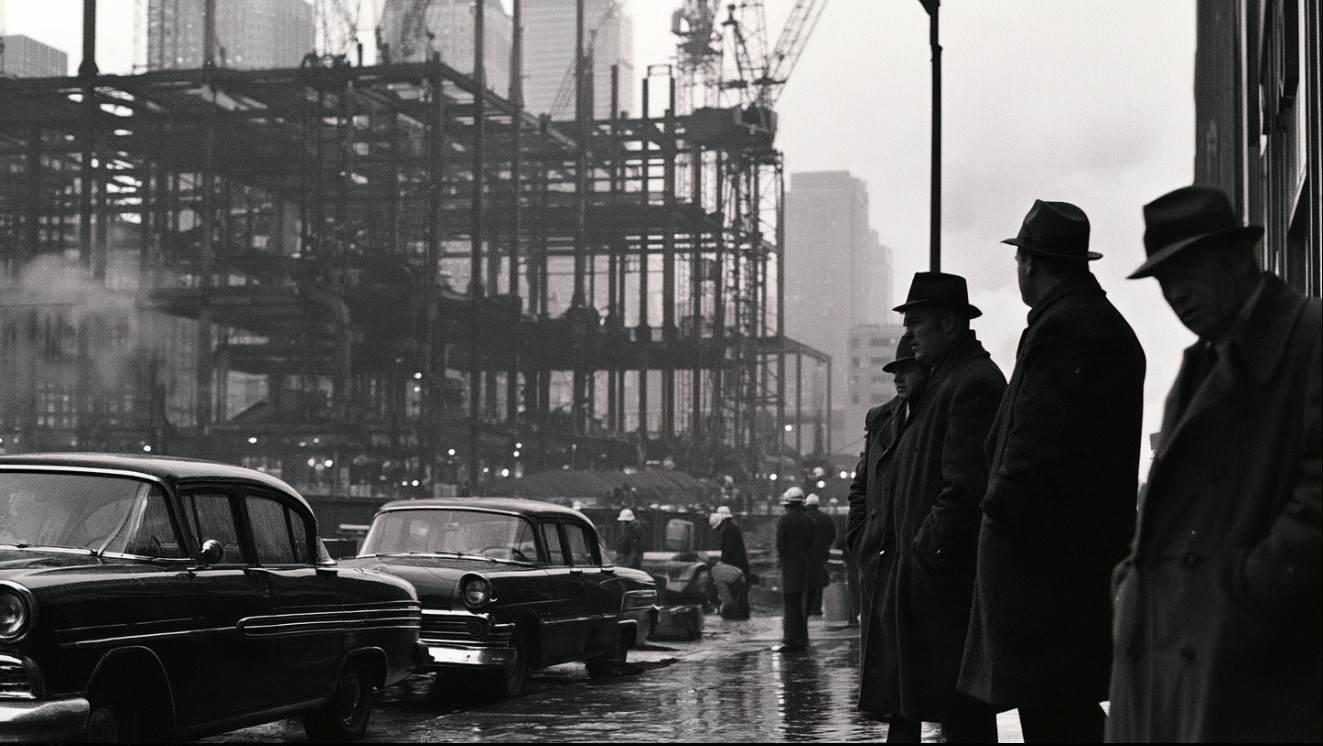
It is supposed to move like a shadow across a back wall—felt, never seen. The old bosses understood this. They built empires behind funeral homes, social clubs, and union halls. They let the politicians cut ribbons and the celebrities take bows. The smart ones stayed invisible.
Then there was Sam Giancana.
Sam Giancana didn’t just want power. He wanted applause.
By the late 1950s and early 1960s, Giancana was the de facto boss of the Chicago Outfit, the criminal machine that had survived Al Capone, Prohibition, and federal heat. The Outfit had a reputation: disciplined, calculating, ruthlessly pragmatic. Chicago was not a stage. It was a boardroom with guns.
But Giancana started acting like a headliner.
The Mobster and the Showgirl
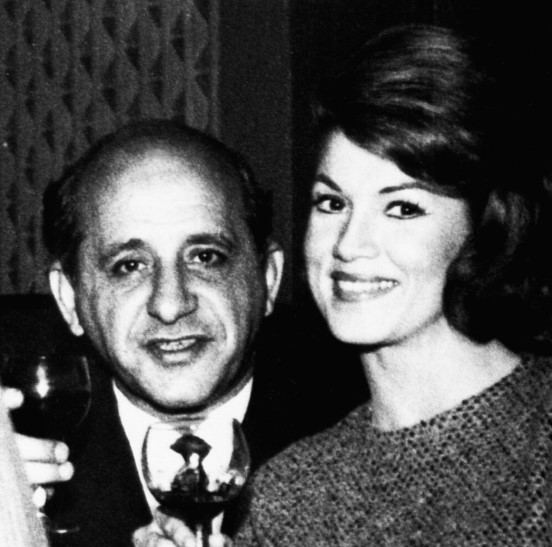
Enter Phyllis McGuire.
She was one-third of The McGuire Sisters, a squeaky-clean harmony group whose hits floated across 1950s airwaves like Sunday morning sunlight. They were marketed as wholesome. Church-going. America’s sweethearts.
Giancana, short, volatile, with eyes like chipped glass, was the opposite of wholesome. But he was powerful. And power attracts.
Their affair became an open secret. Then it became a spectacle.
Giancana trailed McGuire to Las Vegas. To Miami. To Los Angeles. He showed up at nightclubs. Sat ringside. Smiled for cameras. He wasn’t lurking in alleys—he was strutting through hotel lobbies.
For a man who controlled gambling skim operations in Nevada and labor rackets across Chicago, this was not just indulgent. It was reckless.
The Outfit had always prided itself on restraint. Bosses didn’t chase celebrities across the country like teenagers in heat. They didn’t create headlines. They didn’t make themselves tabloid material.
Giancana did.
When the Boss Becomes a Punchline
The problem wasn’t romance. Mob bosses had mistresses as routinely as they had bodyguards. The problem was visibility.
In 1962, federal investigators planted microphones in Giancana’s Oak Park home. The FBI was already obsessed with him. Director J. Edgar Hoover had long denied the existence of a national crime syndicate, but Giancana and his contemporaries were making that denial increasingly ridiculous.
Meanwhile, Giancana’s name began surfacing in gossip columns.
He wasn’t just feared in back rooms. He was whispered about at cocktail parties.
Other families noticed.
The bosses in New York—men from the Five Families—viewed leadership as a performance of control. Carlo Gambino built his empire by saying little and appearing even less. Silence was strategy. Discipline was currency.
Giancana’s public chasing of McGuire made him look weak. Distracted. Compromised.
If a boss can’t control his appetites, how can he control a city?
That was the unspoken question.
Chicago was too important to be run by a man who seemed more interested in nightclub spotlights than syndicate strategy. The Outfit controlled vast gambling interests in Las Vegas, including hidden skimming operations from casinos. Millions flowed through those pipelines. Precision mattered. Secrecy was oxygen.
Giancana was burning oxygen for attention.
The National Fallout
His exposure didn’t just embarrass Chicago. It rattled the Commission.
The American Mafia functioned through a delicate balance. The Commission—created in 1931 to prevent bloody turf wars—relied on discretion. The less the public knew, the better business ran.
But by the early 1960s, organized crime was facing unprecedented scrutiny. The televised Valachi hearings—sparked by mob soldier Joseph Valachi turning government witness—had already exposed internal Mafia structure to the American public.
Now Giancana was adding gasoline.
His flamboyant lifestyle fed the narrative of a glamorous, omnipresent Mafia. Politicians felt pressure. Law enforcement demanded bigger budgets. Federal task forces expanded. Public curiosity turned into public outrage.
Every time Giancana’s name appeared in print next to a pop singer, it reminded America that organized crime wasn’t a rumor. It was real. It was rich. And it was bold enough to date celebrities.
That kind of attention doesn’t just bruise egos. It threatens revenue.
The Kennedy Complication
There was another layer—more explosive.
Giancana had longstanding connections to political operatives. Through intermediaries like Johnny Roselli, he became entangled in schemes that allegedly intersected with national politics and even CIA plots against Fidel Castro.
Whether all the allegations were true or embellished, one thing was certain: Giancana knew things.
And he liked to talk.
That combination is lethal in organized crime.
After John F. Kennedy took office, his brother Robert F. Kennedy intensified federal prosecutions against organized crime. Giancana reportedly felt betrayed, believing his circles had helped the campaign in 1960.
Instead of retreating into silence, he fumed. He boasted. He hinted.
And he kept appearing in public with McGuire.
The optics were catastrophic. A mob boss who thought he influenced presidential elections now looked like a lovestruck celebrity hanger-on.
To rivals, it signaled instability. To law enforcement, it was an invitation.
Leadership Is a Discipline
In the underworld, perception is operational reality.
If soldiers believe their boss is distracted, they test limits. If rival families believe a boss is compromised, they maneuver. If politicians believe a boss is sloppy, they distance themselves.
Giancana’s obsession with McGuire created all three effects.
Reports suggest that key Outfit figures—men like Tony Accardo—grew increasingly uncomfortable with Giancana’s behavior. Accardo had long preferred the shadows. He understood that power survives when it is boring.
Giancana was no longer boring.
He was theatrical.
Instead of consolidating control, insulating operations, and reducing exposure, he was chasing headlines and nightlife. The Chicago machine began to feel less like a disciplined syndicate and more like a personality cult orbiting a temperamental boss.
In organized crime, that’s a red flag.
Because when business suffers—or even risks suffering—the Commission does not tolerate vanity.
Exile and Ego
By 1966, mounting legal pressure forced Giancana to step down and eventually leave the United States. He spent years in Mexico, exiled from the empire he once commanded.
The exile wasn’t just about indictments. It was about irritation.
Other families were tired of cleaning up Chicago’s mess.
Giancana had become radioactive.
When he returned to the U.S. in 1974, subpoenaed to testify before the United States Senate about alleged CIA-Mafia plots, the risk escalated again. A talkative former boss with a grudge and a flair for drama was a nightmare scenario.
He was scheduled to appear.
He never did.
On June 19, 1975, Giancana was shot seven times in the basement of his Oak Park home. The style was clinical. Intimate. Executional.
No dramatic chase. No public spectacle.
Just silence.
The message was unmistakable: a boss who cannot control his mouth cannot be allowed to keep it.
The Fatal Flaw
Giancana’s downfall wasn’t just law enforcement pressure. It wasn’t just politics. It wasn’t even just McGuire.
It was indulgence.
He confused attention with authority.
He mistook being talked about for being respected.
In a world built on secrecy, he courted cameras. In a hierarchy built on discipline, he flaunted impulse. In an organization that demanded silence, he hinted at secrets.
Other bosses saw it as weakness. And weakness, at that level, is contagious.
The Chicago Outfit survived Giancana. The Commission endured. The skims continued. The machine adjusted.
But Giancana’s legacy is a cautionary tale written in gunpowder.
Leadership—whether in crime, politics, or business—is not about constant performance. It is about control. Of message. Of ego. Of time.
When a leader becomes addicted to spectacle—when he spends more energy broadcasting insults, chasing validation, or feeding the next headline than doing the actual work of governance or management—institutions erode. Allies wince. Rivals circle.
And eventually, someone decides the distraction costs too much.
Giancana thought he could have it all: power, celebrity, revenge, romance, and relevance. But power in the shadows does not coexist comfortably with bright lights.
The Outfit corrected the problem the only way it knew how.
Quietly.
And in the end, the applause stopped.
References
Binder, John J. The Chicago Outfit. Arcadia Publishing, 2003.
Cain, Michael, and Sam Giancana. Double Cross: The Explosive Inside Story of the Mobster Who Controlled America. Warner Books, 1992.
United States Senate. Organized Crime and Illicit Traffic in Narcotics: Hearings Before the Permanent Subcommittee on Investigations (Valachi Hearings), 1963.
United States Senate. Alleged Assassination Plots Involving Foreign Leaders: An Interim Report of the Select Committee to Study Governmental Operations with Respect to Intelligence Activities, 1975 (Church Committee).
Raab, Selwyn. Five Families: The Rise, Decline, and Resurgence of America’s Most Powerful Mafia Empires. Thomas Dunne Books, 2005.
Russo, Gus. The Outfit: The Role of Chicago’s Underworld in the Shaping of Modern America. Bloomsbury Press, 2001.