Part of the “No, the Boss Ain’t Ill” Series
In the Mafia, weakness is fatal long before it becomes physical.
A boss who limps, coughs, or disappears too often invites speculation. Speculation turns into whispers. Whispers turn into meetings held without him. And meetings held without a boss are how dynasties end. Illness, in Cosa Nostra culture, is not merely a medical condition—it is an existential threat.
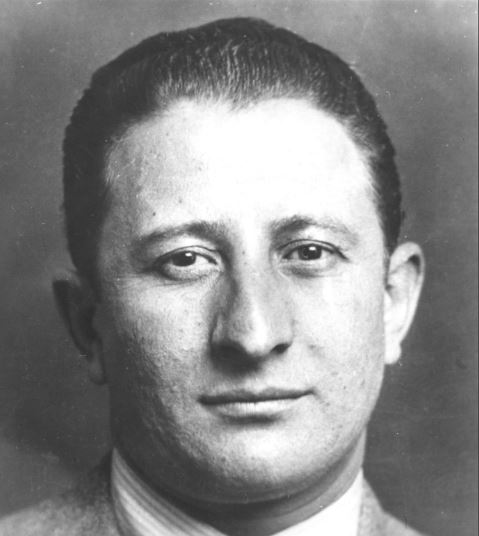
No one understood this better than Carlo Gambino, the most successful and least visible Mafia boss in American history. By the time his body began to fail him in the late 1960s, Gambino had already built a criminal empire designed to function without his physical presence. What followed was one of the most disciplined, effective concealments of a mob boss’s decline ever executed—an operation carried out not by doctors, but by loyal underlings who had everything to gain by keeping the illusion alive.
Carlo Gambino did not rule from a throne. He ruled from behind curtains, through whispers, intermediaries, and carefully rationed access. When illness came for him, that system became his shield.
Why Illness Equals Weakness in Mafia Culture
In Mafia mythology, a boss is supposed to be immortal until the day he’s murdered or imprisoned. There is no honorable retirement. There is no graceful fading away. A sick boss is a contradiction—a visible reminder that power is temporary.
Illness signals vulnerability. It suggests hesitation. It implies that someone else is already handling the work. For ambitious captains and calculating underbosses, a sick boss is not a tragedy; he is an opportunity.
Carlo Gambino came up in a world where bosses who appeared weak did not die peacefully in their beds. They were pushed aside, betrayed, or eliminated “for the good of the family.” Gambino himself had risen after the violent fall of Albert Anastasia, a lesson etched permanently into his thinking. Visibility was dangerous. Decline was deadly.
So when Gambino’s health began to deteriorate—heart disease, exhaustion, and the slow erosion of physical stamina—there was no public acknowledgment. There was only management.
The Vanishing Act
By the late 1960s, Carlo Gambino was rarely seen in public. He no longer attended large gatherings. He avoided social clubs, weddings, and funerals. His appearances became brief, controlled, and increasingly rare.
To outsiders, this looked like business as usual. Gambino had never been a public don. Unlike flashy contemporaries, he preferred anonymity. His absence raised fewer alarms precisely because it had always been his style.
Inside the family, access narrowed dramatically. Only a small circle—trusted capos and members of the administration—were allowed to see him in person. Messages were relayed verbally, sometimes through multiple layers, blurring the line between Gambino’s direct orders and administrative interpretation.
This was not accidental. It was a defensive architecture.
If soldiers could not see Gambino weakened, they could not confirm it. If they could not confirm it, they could not justify acting on it.
The Role of the Underlings
The men closest to Gambino were not acting out of blind loyalty alone. They were protecting their own futures.
A sick boss creates instability. Instability invites violence. Violence disrupts cash flow, attracts law enforcement attention, and shortens life expectancy for everyone involved. For Gambino’s top lieutenants, maintaining the fiction of strength was good business.
Underlings benefited in three critical ways:
First, they controlled access. By deciding who saw Gambino and when, they became power brokers. Information is currency in organized crime, and they were minting it.
Second, they interpreted orders. When instructions came secondhand, the messenger gained influence. Subtle shifts in wording could steer outcomes without overt insubordination.
Third, they delayed succession battles. As long as Gambino was perceived as alive and in control, no one could openly campaign for the throne without appearing disloyal.
This arrangement created a strange equilibrium. Gambino remained boss in name and authority. His inner circle quietly expanded its operational autonomy. No one rocked the boat because the boat was still floating.
The Myth of Control
Despite his failing health, Carlo Gambino remained mentally sharp. That fact made the concealment easier. He could still listen, advise, and veto. What he could not do was move, appear, or enforce physically.
In Mafia culture, enforcement matters. A boss who cannot show up cannot intimidate. He must rely on reputation alone. Gambino’s reputation—cold, calculating, merciless when necessary—was still formidable enough to do the work for him.
His underlings ensured that reputation never cracked.
Rumors of illness were dismissed as misinformation or wishful thinking by rivals. Any suggestion that Gambino was incapacitated was treated as an insult—or worse, a provocation.
The family projected stability. Money flowed. Disputes were resolved quietly. From the outside, the Gambino family appeared stronger than ever.
That was the point.
A Family Conditioned to Obedience
One reason the concealment worked was cultural. Gambino had spent decades grooming a family that valued obedience and discretion over ambition. Flashy personalities were discouraged. Public ambition was dangerous.
Unlike other crime families plagued by internal power struggles, the Gambinos were trained to wait. Waiting kept them alive. Waiting kept them rich.
By the time anyone seriously questioned Gambino’s health, the idea of challenging him had already become unthinkable. Even as his physical presence faded, his psychological grip remained.
This was not fear alone—it was habit.
The Quiet Succession Plan
Carlo Gambino understood that no illusion lasts forever. While his illness was hidden, succession was not ignored.
Paul Castellano, his cousin by marriage, was gradually positioned as the future boss. Castellano handled business matters, met with capos, and increasingly acted as the public face of leadership. To the outside world, this looked like delegation. Inside, it was transition.
Crucially, this transition occurred without open acknowledgment that Gambino was dying.
By the time Gambino passed away in October 1976, there was no chaos. No street war. No scramble. Castellano stepped in smoothly, precisely because the illusion had held long enough to prepare the ground.
The concealment of illness did not just protect Gambino—it protected the institution he built.
Death Without Drama
Carlo Gambino died in his own bed, a rarity in his world. There were no gunshots, no indictments, no public humiliation. For a Mafia boss, this was the ultimate victory.
His death shocked some, but it destabilized no one. That alone is evidence of how thoroughly his decline had been managed.
Only in retrospect did many realize how long Gambino had been ruling in physical absence. The invisible boss had been invisible not because he was weak—but because weakness had been carefully hidden.
The Final Lesson
Carlo Gambino’s illness reveals a fundamental truth about Mafia power: control is perception.
In a culture where strength must be absolute, the appearance of health is as important as health itself. Gambino’s underlings understood this instinctively. By hiding his condition, they preserved stability, protected profits, and delayed the inevitable long enough to shape the outcome.
Other bosses would fail to learn this lesson. Some would flaunt their power. Others would deny decline until it was too late. Gambino did neither.
He vanished slowly, deliberately, and on his own terms.
In a world where most bosses die violently, Carlo Gambino disappeared—and that may have been his greatest crime of all.
References
- Raab, Selwyn. Five Families: The Rise, Decline, and Resurgence of America’s Most Powerful Mafia Empires. W.W. Norton & Company, 2005.
- Davis, John H. Mafia Dynasty: The Rise and Fall of the Gambino Crime Family. HarperCollins, 1993.
- Bonanno, Joseph. A Man of Honor: The Autobiography of Joseph Bonanno. St. Martin’s Press, 1983.
- Federal Bureau of Investigation. Organized Crime Files on Carlo Gambino (FOIA-released summaries).
- Maas, Peter. The Valachi Papers. G.P. Putnam’s Sons, 1968.
- U.S. Senate Permanent Subcommittee on Investigations. Organized Crime and Illicit Traffic Hearings, 1960s–1970s.
Links to all of the “No, The Boss Ain’t Ill” Series
1 Carlo Gambino: The Invisible Boss
2. Vito Genovese Power Through Denial
3. Paul Castellano: The Sick Boss Nobody Wanted to Admit
4 Joseph “Joe Bananas” Bonanno: The Disappearing Don
5 Vincent “Chin” Gigante: The Oddfather Who Weaponized Weakness