
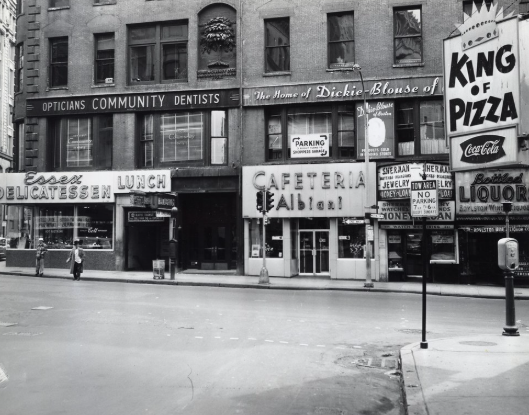
Step off the subway in Bensonhurst or wander Mulberry Street in Manhattan, and you’d be forgiven for thinking these neighborhoods are like any other slice of Brooklyn or Lower Manhattan: corner bodegas, greasy pizza shops, kids yelling in the streets, people hustling to make the day work. But look closer. Peel back the veneer. Beneath the everyday hum lies a history most textbooks ignore—the kind of order that comes from a shadow network nobody admits exists anymore. The mob. And for decades, their presence didn’t just breed fear. It kept certain crimes from happening.
Bensonhurst, Brooklyn: a post-war Italian-American stronghold, a neighborhood where the numbers rackets, bookmaking, and street crews were practically woven into the local economy. The thing outsiders rarely see is that while the Family ran its scams, it also policed its turf. Property crimes were surprisingly low. Car thefts? Minimal. Random street violence? Almost nonexistent. In a city where chaos could erupt like a broken bottle, Bensonhurst stayed relatively calm.
The numbers back it up. The 62nd Precinct, covering Bensonhurst, reported just 69 major crimes per 10,000 residents in 2010, placing the neighborhood among the safer precincts in Brooklyn. Property crime stood at about 10 per 1,000 residents, significantly lower than many comparable neighborhoods. The data reads almost like a contradiction: a place notorious for organized crime yet quietly safer than its peers. But walk the streets, talk to old-timers, and the logic becomes clear: when the Family calls the shots, it’s a different kind of law.
The principle was simple. You stayed in line, you didn’t poke your nose where it didn’t belong, and you didn’t steal from someone with muscle. Cross the line, and the consequences were swift, often invisible, and always effective. That wasn’t policing in the conventional sense. It was territorial control: a privately enforced peace enforced by reputation, fear, and, occasionally, a baseball bat wrapped in barbed wire.
Little Italy tells a similar story, though with its own iconic flair. Mulberry Street, home to the famed Ravenite Social Club—the Gambino family’s headquarters for decades—was both a symbol of fear and, paradoxically, a zone of relative calm. Street crime didn’t spike here because the Family didn’t allow it. Random violence wasn’t tolerated. Pickpockets? Gone. Open drug deals? Squashed. The mafia’s influence operated like a dark, invisible hand, enforcing order not through community programs but through intimidation, influence, and ruthless efficiency.
Journalists who’ve covered New York for decades describe the phenomenon in similar terms. In a 2016 piece in The Independent, Little Italy was noted for its transformation from a gritty, mob-controlled enclave to a tourist-friendly zone, with the lingering implication that the streets used to be safer precisely because the wiseguys were in charge.
It’s a paradox that city statisticians might quantify but never fully explain. On paper, neighborhoods under mafia influence should be chaotic, yet they often report lower rates of conventional street crime. Part of that is social enforcement. The mob had a vested interest in stability. Shops, bars, social clubs—they were their assets, and chaos threatens assets. If petty criminals ran amok, the Family lost control and risked law enforcement scrutiny. Stability protected revenue streams. It also, incidentally, protected residents from the kind of random violence that terrifies urban populations.
The enforcement was brutal when needed. You didn’t see it coming. A mugger who tried to shake down a local store could find himself roughed up, warned, or worse. And these were not empty threats. Stories circulate about the consequences of stepping out of line: doors left ajar, whispers in dark hallways, sudden “disappearances.” Yet the terror imposed a kind of public safety. People learned, quickly, which lines were untouchable.
Walk through Bensonhurst today, and the traces are subtle. Italian flags flutter in store windows. The corner deli still has the same old brass bell. The old social clubs, long shuttered or converted, still have the aura of controlled power. Crime isn’t gone, but it’s quieter than you might expect. And anyone who’s been around long enough knows why: the Family’s ghost still hovers over these streets, a spectral law enforcing a shadow order.
This isn’t to romanticize murder or extortion. The mafia’s code enforced obedience and punished defiance, often with lethal efficiency. It also kept entire populations under threat and stifled dissent. But it also created neighborhoods that were, paradoxically, safer in very tangible ways. Property wasn’t stolen as often, streets weren’t battlefields, and random violence—a defining feature of urban life—was suppressed.
In Bensonhurst, the numbers support the story: major crimes low, shootings rare, property crimes modest. Little Italy, while now a tourist attraction, once followed the same logic: territorial control over chaos.
The city has changed. Gentrification, law enforcement modernization, and the dismantling of old mafia networks have shifted the balance. But the story remains: organized crime isn’t just violence and extortion. In its own way, under the right—or wrong—conditions, it enforced an uneasy peace, a set of invisible rules that shaped how people moved, transacted, and survived.
In the end, the shadows teach a lesson most polished columns never admit. The Family didn’t need a badge. They didn’t need public meetings or press releases. Their authority was quiet, omnipresent, and absolute. And for all the moral compromise it entailed, the streets, in those old neighborhoods, were safer than they would have been without them.
If you walk Bensonhurst at night or trace Mulberry Street, listen closely. You might not hear the echoes of violence. You might just hear the silence of streets that once obeyed the Family’s rules, a dark testament to the law of shadows, the grim poetry of order in a city that never sleeps.